


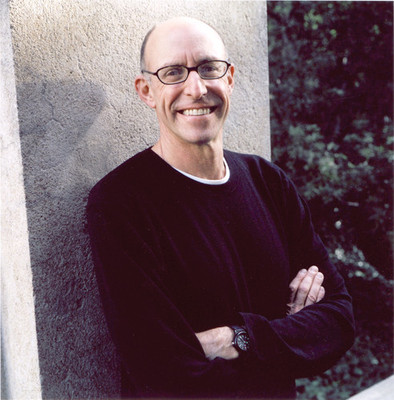
If you’re interested in food, eating or the environment, you will find the next Revelle Forum, sponsored by UCSD Extension on Tuesday, June 12, illuminating and thought-provoking. You may be surprised at the connections lecturer Michael Pollan makes between seemingly disconnected subjects.
Pollan has been described as a “sleuthing agro-journalist,” “foodie” and a “food and environmental author.” Pollan, now a professor of journalism at UC Berkeley’s Graduate School of Journalism and former executive editor of Harper’s, describes the focus of his last 20 years’ writing as “the places where the human and natural worlds intersect: food, agriculture, gardens, drugs and architecture.”
At 7 p.m. at the Neurosciences Institute auditorium, 10640 John Jay Hopkins Drive, Pollan will give a lecture based on investigative research on the American food system for his most recent book, “The Omnivore’s Dilemma: A Natural History of Four Meals.” In this he poses the question, “What should we have for dinner?” The response, his Web site states, “may well determine our very survival as a species.”
“The Omnivore’s Dilemma” last year garnered the California Book Award, the Northern California Book Award and the James Beard Award for best food writing and was ranked as one of the ten best books of 2006 by the New York Times and the Washington Post.
Pollan, whose earlier books include “The Botany of Desire: A Plant’s Eye View of the World” (2001), “A Place of My Own” (1997) and “Second Nature: A Gardener’s Education” (1991), examines the American way of eating along with the ethics of the current American food production system and our public policy choices in “The Omnivore’s Dilemma.” He focuses on the long-term health impacts of our consumption choices, both for individuals and the overall environment.
Analyzing the often-ignored federal Farm Bill from a novel perspective, Pollan targets the unintended, long-term adverse health consequences for Americans from price supports for commodity crops such as corn, soybeans and wheat, which are produced predominantly by agribusiness. He connects Farm Bill subsidies and U.S. agricultural policy with Americans’ addiction to processed and junk foods, the obesity epidemic, American trade policy and even the flow of illegal immigrants from Mexico into the United States.
Stimulating programs are typical of the Revelle Forum, named for UCSD’s visionary “founding father” Roger Revelle. Dan Atkinson, director of arts, humanities and languages, began the program soon after joining UCSD Extension in 2001. Past speakers have included Salman Rushdie, Lewis Lapham, Margaret Atwood and Seymour Hersh.
“Part of the intent of the series is to encourage public dialogue and a public role for writers to enrich the discussion of public issues,” Atkinson explained. “This is definitely within the realm of the university extension’s role to be the ambassador to the community and a bridge to the community to access the people and resources of the campus.”
Pollan was selected because of the timeliness of his topic.
“His book is an investigative tour-de-force. He’s managed to bring together a lot of disparate material. It’s very relevant,” Atkinson said.
To learn more about Michael Pollan and to sample his writings, including a chapter from “The Omnivore’s Dilemma,” visit his Web site, www.michaelpollan.com.
Tickets for the event are $35 per person and are available through UCSD Extension by calling (858) 882-8000, or online at extension.ucsd.edu/revelleforum. Advance purchase of tickets is recommended, but tickets may be available at the door.


