


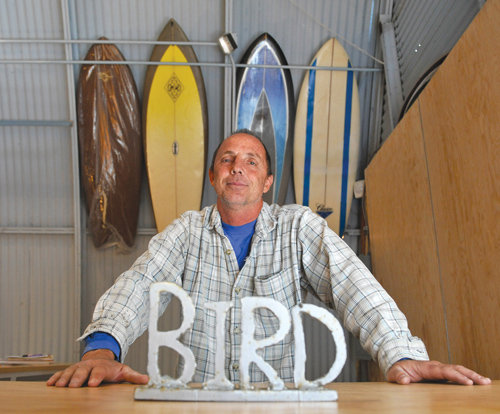
Having been in the surfing world for more than 50 years now, I have learned a thing or two about surfboards. Bird’s Surf SHED now houses more than 1,000 surfboards and counting. It has grow so large that I need an additional location as a clearinghouse to view boards before I can decide if they will be make it into the SHED itself. Although all boards have some value, expectations are often much larger than what the board is really worth. This is most often the case when an uneducated friend or salesperson pumps them up or when a personal attachment is involved. Read on if you care to see how I have come to place values on boards.
There are many ways to achieve an appraisal request, depending upon the client’s needs and how detailed the appraisal required. Due to surfing’s limited appeal, there are no licensed appraisers that I am aware of. The few of us that do this are often different in their approaches. Most work off a basic book value comparing auction results and sales trends, et cetera. I take that into consideration – but since I personally appraise and sell boards on a daily basis, I work off a current value in today’s market. To keep things cost effective, I can work off decent photos (I have worked this way often for property settlements). A hands-on appraisal, wherein I physically handle each board individually, can be called for at times too. It really depends on how detailed the client needs the information to be. Time spent is a factor as well. For a board to be valued at a high dollar amount, it will take some serious research to fairly establish values. You’ll be dealing not only with the board itself but also with the historical value and the importance and status that comes along with the prior owner’s or builder’s reputation in the surf community. Overall condition and availability of inventory plays a large part in a board’s value, as does the location the board was built in and where it is now located. Finding a decent-priced board on the East Coast may seem great until you factor in hipping and trying to judge the item off of eBay or craigslist photos. A physical viewing is always the best way to establish a fair market value.
As with most things people collect, you should enjoy owning the item more that just thinking of what the dollar value is or someday may be.


