


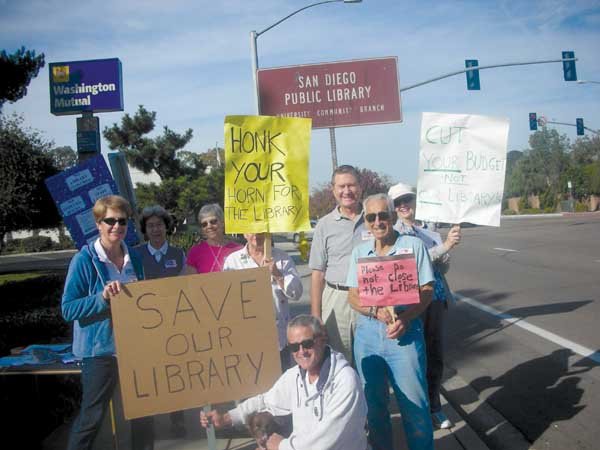
National Library Week begins a week and a day after April Fool’s Day, on April 8. Are you being fooled by the latest move by the city to increase library hours by four — a kind of cosmetic change but not an essential one? Normally, La Jolla and University City libraries, along with all other branches, are closed on Mondays. With the improving economy and the strong-mayor form of government, Mayor Jerry Sanders has new found money. Beginning on June 4, the libraries will be open on Mondays from 9:30 a.m. until 5:30 p.m. That is the good news — but wait. On Fridays, the libraries will be closed in the morning, opening at 12:30 p.m. and closing at 5:30 p.m. That is the bad news. Confused? Many library advocates celebrating National Library Week would prefer an essential change in budgeting for libraries. San Diego, under the guidance of former Mayor Dick Murphy, had an ambitious 21st-century plan for libraries, promising to build 13 new libraries and expand nine other branches. In 2000, the City Council passed an ordinance that took an incremental increase of the general fund to improve the library budget, with the eventual goal being 6 percent allotted to the libraries. That, however, never happened and the library budget floundered. In 2002, the plans for library expansions were to be paid for by redevelopment money, grants, impact fees and bonds that would be paid back by hotel taxes and tobacco settlement money. The city’s 2004 demise of its credit rating and pension scandal ruined that plan. City leaders stopped using hotel tax money for library expansion in 2005 when the budget got tight and the library ordinance was left unfunded. With the economic downturn in 2008, Sanders decided to shutter seven branches, including the University Community branch on Governor Drive, even though the U.C. library was still on the expansion list. Public protests at many branches delayed the mayor’s plan and the City Council listened to its angry constituents by voting against closing library branches. Libraries were considered critical core services during the shaky economic times and librarians reinvented them as community centers, as well as a place to check out books. San Diego’s library hours have been anemic while the neighboring San Diego County libraries stay open at least six days a week. Our library hours in the city have dropped from 54 hours in 2003 to 36, with the additional four hours bringing the weekly current total to 40. This small change — as opposed to an essential one that would see a committee revisiting and reinstating the library ordinance — makes celebrating this National Library Week a bit anticlimactic. The Library Organizing Project, an ad hoc group of volunteers, has presented a wish list for San Diego elected leaders to consider during this year’s National Library Week: • Open all branches at least six days a week; open the Central Branch every day. • Stay open until 8 p.m. at least three days a week at all branches. • Restore Saturday and evening hours at the Central Branch. • Close only on official holidays; stay open every week, including holiday weeks. • Create minimum staff requirements that include a library manager, a youth services librarian and sufficient clerks and aides. • Fill vacant positions in a timely manner. • Fund budgets to adequately provide needed books, digital information, equipment, furnishings and delayed maintenance. According to retired librarian Anna Daniels, a founding member of Library Organizing Project, a promise was made to San Diegans: the library ordinance would set aside tax revenues to be used for library services (not capital expenses). The designated funding was to increase until it reached 6 percent where it was to be maintained. In fiscal year 2012, libraries in San Diego received a paltry 2.6 percent of the total budget, a reduction from the 4 percent libraries were receiving when the ordinance was passed. The 0.7 percent of tax revenue paid by residents only benefits county libraries. As you settle into your celebration of National Library Week, remember the words of Brad Miltzer, honorary chair and author of “Heroes for My Son:” “Investing in libraries is an investment in education.” We need stable, long-term funding for libraries. Think of the many ways we use our libraries and how branch libraries impact our communities in La Jolla and University City. Shutter a library and home values decrease. Shorten library hours and academic and social opportunities for San Diego decrease. Shut down the library ordinance and a critical core service crashes and burns. — Sandy Lippe is a 36-year resident of University City and the former president of the University City Community Association.


