


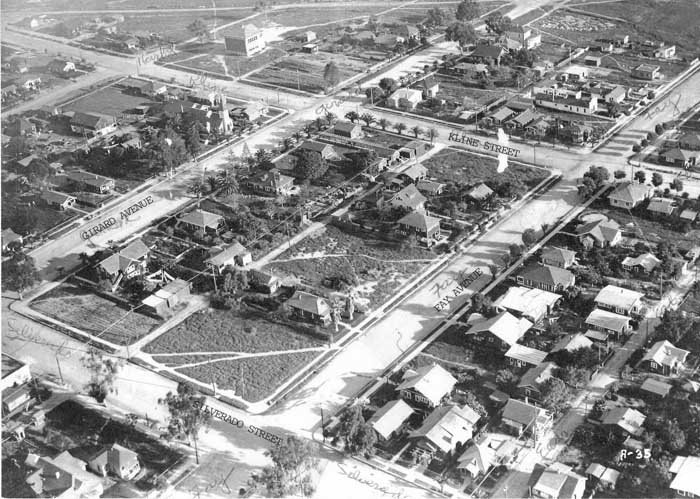
From Linda Pequegnat’s “This Day in San Diego History” May 22, 1900 A sweeping change was made in the street names of La Jolla. Most of the original streets were named by the original developers of La Jolla — Frank T. Botsford and George W. Heald — in the 1880s. The Botsfords had lived in New York City, and so they had named some of the La Jolla streets after streets in New York. These streets have retained their original names: Wall Street, Exchange Place, Park Place and Pearl Street. When the city fathers decided to change the names of so many of the other La Jolla streets, they followed the same alphabetical pattern that had been used in other parts of San Diego, such as alphabetical names of gemstones in Pacific Beach, alphabetical names of birds in Mission Hills and alphabetical names of authors and poets in Point Loma. In La Jolla, they decided to give streets the names, in alphabetical order, of famous scientists. The following street names were changed on this date — May 22, 1900: • Agassiz Avenue (now Olivetas) was formerly Vine Street and was named for the famous Swiss naturalist and teacher, Louis Agassiz (1807-73). • Bordon Avenue (now La Jolla Boulevard) was formerly Olive Avenue and was named for the America civil engineer, Simeon Bordon (1798-1856). • Cuvier Street, formerly Palm, was named after Baron George Leopold Cuvier (1769-1832), French naturalist who was the founder of the science of comparative anatomy. • Draper Avenue, formerly Orange, was named after John William Draper (1811-82), the American chemist and physiologist. • Eads Avenue, formerly Washington, was named for James Buchanan Eads (1820-87), American engineer who built the bridge over the Mississippi River in St. Louis. • Fay Avenue, formerly New York Avenue, was named for Theodore Sedgewick Fay (1807-98), American author. • Girard Avenue, formerly Grand, was named for Charles Frederic Girard, (1822-95), American naturalist and zoologist. • Herschel Avenue, formerly Lincoln, was named for Sir William Herschel (1738-1822), German astronomer who lived in England and who discovered the planet, Uranus. May 24, 1915 A contract was signed between Ellen Browning Scripps and the Mercereau Bridge & Construction Company for the construction of a 1,000-foot pier to be built at the Scripps Institution for Biological Research — now known as the Scripps Institution of Oceanography. The cost for the pier was $26,184. The contract that was signed on this date also included provisions for the construction of a seawater pumping station, seawater reservoir and sea wall — at a cost of $7,048.50. The 1,000-foot pier was used for more than 70 years by Scripps scientists and students for studies of temperature, salinity and biology of the ocean water. Small boats were launched from the pier for scientific studies of the nearby ocean areas. Despite its length, the pier was not suitable for docking or launching the large Scripps oceanographic research vessels, since the depth of water at the end of the pier is only about 25 to 30 feet. The vessels are docked instead at Point Loma. The old pier was replaced in 1988 with an all-concrete structure and was named the Ellen Browning Scripps Memorial Pier.


