


La Jolla has been for the most part extremely lucky to have avoided any massive destructive fires such as blazed through San Diego County last month.
But 1915 stands out in local history as the year of the one great fire. (Another large fire occurred in midcentury when the lumberyard burned at the location of the present Vons market, but it was not as destructive as the much earlier one.) The 1915 fire was the work of an arsonist and multiple buildings were burned and some destroyed before the town’s small fire engine responded. With the help of crews from San Diego, they finally squelched all the flames.
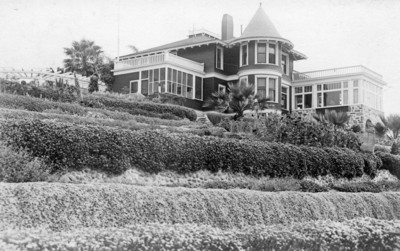
It was a warm, quiet evening in August for La Jolla’s population of only a few hundred people when the first call to alarm went out that St. James-by-the-Sea Episcopal Church was on fire. Everybody in the neighborhood rushed to the scene along with firemen and equipment from the little wood station that had been built on Herschel Avenue only two years earlier. The church fire almost out, the group turned to look across the street only to spot Virginia Scripps’ “Iris” cottage aflame. Next, the whole of Ellen Browning Scripps’ South Moulton Villa estate on Prospect “” a massive Victorian-style residence with a turret “” was going up in smoke.
While it is hard to imagine the fear and outrage the small community experienced as victims and observers of the 1915 fires, the San Diego Union and Daily Bee recorded the catastrophe and its aftermath with front-page banner headlines over several days. The first, on Aug. 8, 1915, read: “Firebugs Burn Scripps La Jolla Homes, Chapel.” It was followed by a lengthy report of the disaster, the great alarm it caused in the community and the concern engendered for the two devoted Scripps half-sisters who had come to La Jolla seeking a peaceful retirement, especially Miss Ellen.
The reporter wrote: “Calling for help at the top of her voice, Miss Scripps (Virginia) rushed back toward her sister’s residence where Miss Ellen, an aged woman, had just settled down to rest after the strain and excitement of the first fire . . .” But, scarcely before they knew what was happening, both sisters quickly evacuated that house, too, as smoke and flames quickly began to billow through it as well. Ultimately, everything but a sun porch was destroyed, including a valuable collection of paintings and artwork.
Ellen Browning Scripps originally had built the home after retiring to La Jolla in 1896. Situated on Prospect Street at the site of the present-day San Diego Museum of Contemporary Art, the house had stupendous ocean views and was valued at $50,000. During the hectic, panic-ridden days after the fire, police discovered remnants of kerosene cans and rags that an arsonist had used to set the fires. A dragnet was formed and several suspects were arrested and then released. Fear continued to spread through La Jolla for months after the fire that the arsonist, whoever he was, might strike again.
Finally, an arrest was made in Perris, a small town in Riverside County, of a 43-year-old Australian man named William Peck. He confessed to setting the fires due to being angered after a dismissal as one of Miss Scripps’ gardeners the previous year.
Peck was sent to prison. Ellen Browning Scripps built another home at the same site, a far more modern structure designed by architect Irving Gill. She resided there until her death in 1932. La Jolla’s year of the great fires was over.
” “Reflections” is a monthly column written for the La Jolla Village News by the La Jolla Historical Society’s historian Carol Olten. The Society, dedicated to the preservation of La Jolla heritage, is located at 7846 Eads Ave. and is open from 10 a.m. to 4 p.m. Monday through Friday.


