


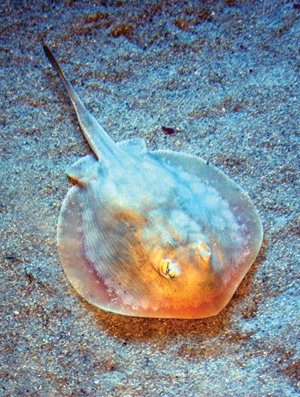
As warm weather arrives in La Jolla and locals and tourists alike flock to nearby beaches, instances of stingray stings are on the rise. The numbers peaked on July 14 with 69 people reporting injuries between La Jolla Shores, Scripps Beach and Blacks Beach alone. In the following days from July 15 to 20, a total of 65 stings were reported on the same three beaches. John Everhart, San Diego lifeguard lieutenant, said three people were hospitalized as a result of stings July 14 and one July 17, and all were treated and released. “When we have small surf and calm water, the stingrays come close to shore,” Everhart said. “If you put lots of bathers in those areas, there’s a pretty good likelihood that some people will be stung.” Everhart added that “it’s not unlikely” for lifeguards to treat about a dozen stings on an average day. While the 69 stings on July 14 were unusual, he added, the number of injuries throughout the rest of the week appears to have stabilized. “This happens on a daily basis throughout Southern California, and I don’t think there’s any cause for alarm,” he said. Lifeguard Lieutenant John Sandmeyer said that though stings have continued to occur with some consistency throughout the week, incidents have decreased since July 14. “That was so different from a typical situation because victims were coming in by twos and threes, not just a single person every half hour or so,” Sandmeyer said. “We had 12 to 14 people sitting on the wall and being treated at one time.” Sandmeyer said he called in two medical units from the fire department to assist. “It was an all hands on deck situation,” he said. “We were losing the ability to effectively patrol.” To avoid contact with stingrays, Everhart recommended the “stingray shuffle.” “When you walk into the water, instead of picking up your feet and putting them down again, shuffle them along the bottom,” he said. “This causes vibrations in the sand which the stingrays might sense and it could nudge them away. It doesn’t work 100 percent of the time, but it seems to be a good mechanism.” If stung, Everhart said victims should seek treatment from lifeguards, which involves soaking the wounded area in water that is as hot as the victim can stand for 40 minutes to an hour. The heat helps break down proteins in the venom and reduce pain significantly, Everhart said. Symptoms include a puncture wound from the sting and “pretty intense pain” that starts at the injury site — usually the foot — and spreads up through the limb, Everhart said. One additional word of caution: for those who choose to treat themselves, Everhart advises to make sure that the water is not so hot that it causes additional injuries or burns.


