


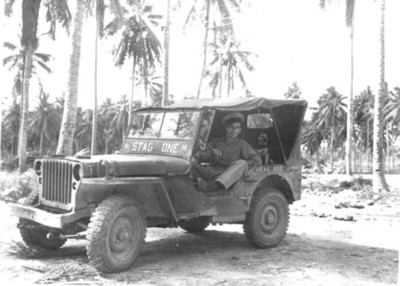
Judy Merry remembers her late husband, Robert, as a man who loved his community and served his country proudly.
So when the U.S. naval officials in Point Loma paid tribute to the World War II veteran for his pioneering work on unmanned aerial vehicle (UAV) technology during the war, Navy officials presented Judy with a commemorative plaque in his honor Sept. 4.
“In recognition of the pioneering contributions of Chief Aviation Machinist Mate Robert Merry, Special Task Air Group One (STAG-1), United States Navy, WW II Unmanned Air Vehicle Technology,” Judy said as she read from the plaque during a phone interview with The Peninsula Beacon. “Presented by Robotic Systems Combat Support Platoon Unmanned Systems Reserve Unit, Space and Naval Warfare Systems Center, San Diego.”
Robert’s work with the STAG-1 led to the first successful “television-guided” UAV, called the TDR-1 assault drone. The aircraft played a crucial, top-secret role in WWII and could deliver a 2,000-pound bomb to targets in the South Pacific during battle. It was the first successful use of a true guided-missile system, according to the historical aviation website, www.aero-web.org.
During the early part of his 20-year service in the Navy, Robert spent five years as an original member working on the top-secret technology until the Navy decommissioned STAG-1 in 1945, Judy said.
What Robert could not have known at the time was that his pioneering work would pave the way for future unmanned aerial missions during the Korean and Vietnam wars, said Ann Dakis, a SPAWAR spokeswoman, in a written statement.
Today, the technology has evolved into an indispensable tool in modern warfare, Dakis said. One of the latest examples is the U.S. Air Force’s Predator RQ-1/MQ-1/MQ-9, a medium-altitude, unmanned aircraft system used for surveillance and reconnaissance missions, according to www.airforce-technology.com.
The only surviving original TDR-1 model like the type Merry worked with is on display in a Naval Aviation Museum in Pensacola, Fla.
Robert’s subsequent retirement from the Navy led to a 17-year civil service career at North Island Naval Air Station as an aircraft mechanic and damage assessor, Judy said.
But while the country benefited from almost 40 years of Robert’s technical expertise, Judy remembers her husband of 11 years as a life-loving man she met about 30 years ago while he was a community volunteer. At the time, she was an elementary teacher for San Diego City Schools, she said.
By the time Judy and Robert met aboard the single-engine Cessna of a mutual friend in 1977, he had already retired from his Navy and civil service career and she had already graduated from California Western University “” now known as Point Loma Nazarene University ” landing a teaching job in Kearny Mesa.
Although she lived in Mission Valley and he in Chula Vista, their chance encounter during a flight over San Diego led to a courtship lasting 19 years and 10 days, she said.
“It worked well for us,” Merry said, “Being a teacher, I devoted so much of my time to my profession and him to his volunteer work. So it worked well.”
The Merrys were married in 1996 and moved to Carmel Mountain near Poway, where they became involved with the beautification of their community, she said.
In the mornings, the Merrys would take walks around their neighborhood and survey the landscape to see what improvements could be made. The Merrys were honored for their work on the improvement of the corner of Camino Del Norte and Carmel Mountain Road, she said.
Robert was known for his community volunteer work with Scripps, Chula Vista, where he would offer counsel to patients as a patient representative. He was also recognized for his work with the Scrippsline newsletter, she said.
In December, Robert suffered a massive stroke and passed away in February at the age of 85.
After his passing, a reunion group made up of retired Navy personnel who had been stationed at NAS Midway Island honored Robert with a commemorative placard mounted to a bench on the USS Midway. The ceremony took place in June during a reunion in Oregon, Judy said.
She said many people remember Robert for his fun-loving attitude and people-person mentality that touched those around him, she said.
“He was so full of life and very young at heart,” Merry said.
Judy, who turned 65 in September, still lives in her home in Carmel Mountain, where she plans to volunteer and become involved further in her local community.
She said she wants to continue pursuing her interests in literature, gardening and the passion for aviation that she and Robert shared since their chance meeting on a flight over San Diego 30 years ago.


