


Aug. 23 marks two years since Hurricane Katrina did a cakewalk through New Orleans’ unstable levies and changed the Big Easy forever. A city where 450,000 people once lived is now home to 265,000. For whatever reason “” lack of money to rebuild, a better life elsewhere or utter disgust and defeat “” many people did not return.
In neighborhoods on higher ground, there are houses with signs in the yard that promise “We’ll Be Back!” next to empty houses with “For Sale” signs on the lawn. There are unsafe homes whose owners now live in the yard in tiny FEMA trailers. In low-lying neighborhoods, like the poorest areas of the Lower Ninth Ward and Jefferson Parish, homes are boarded up and possibly abandoned forever.
But hope and salvation remains for others, thanks in large part to helping hands coming from hundreds and thousands of miles away ” including Point Loma.
Despite the despair and misery of the post-Katrina era, the homes of at least 5,460 Jehovah’s Witnesses have cleaned, repaired and rebuilt through the efforts of a network of volunteers who have accomplished what the government seemingly could not.
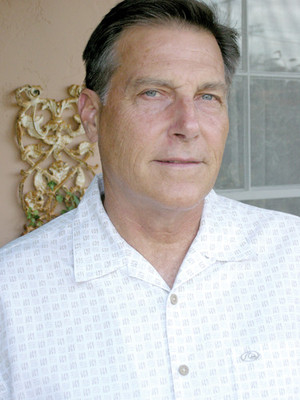
“Most people see Jehovah’s Witnesses as people who knock on doors,” said Point Loma resident Larry Svelmbe. “They don’t see the other aspects of what we do.”
Svelmbe, a cabinetmaker and Point Loma resident of 37 years, has traveled to New Orleans twice in the past two years at his own expense and time taken off work.
He was one of 17,000 Jehovah’s Witnesses worldwide who poured into the Louisiana area within days of the disaster.
“Many of the people were poor and black,” Svelmbe said. “The government failed those people. To see it brought me to tears.”
Svelmbe and his wife, Debbie, live in a modest home made elegant by his talent and craft. Rooms are filled with handmade and one-of-a-kind armoires, chairs, kitchen cabinets, desks, even his front door, all of which were crafted by him or rebuilt from recycled furniture.
Svelmbe traveled to New Orleans with his own tools and stayed two weeks each time in a Kingdom Hall converted to volunteer housing with rows of bunk beds.
The Witnesses worked in teams ” covering every facet of the home rebuilding process ” laboring to put houses back together.
“We received corporate donations from lumber to food, paint, carpet, doors, windows and cabinet tops,” Svelmbe said.
Of the 21 Kingdom Halls in New Orleans, three are operational today while the others are used for ongoing repair efforts.
“The first year we worked on homes with wind and water damage,” Svelmbe said.
And despite a jobsite roof fall in Ocean Beach that left two rods and eight titanium screws in his back, the 57-year-old Svelmbe returned this year to volunteer again.
“The second year we worked on homes that were initially underwater,” he said.
For homes that suffered water damage, dryers and dehumidifiers were set up to reduce the moisture level. Once dried out, a house was gutted, or “taken down to the studs.”
“The volunteers who went in for mold remediation were my heroes,” Svelmbe said. “Men and women went in the 90-degree heat in plastic suits with helmets. They blasted very inch of a home with ground-up corn cob. It’s the tool of choice because it takes off the mold but doesn’t destroy the wood.”
Once air samples from a home were sent to a lab and given a passing grade, the home was completely rebuilt “” drywall, air conditioning, heating and plumbing, at an estimated cost of $12,000 per home.
Homeowners were not charged, “but they could make a donation if they wanted,” Svelmbe said.
All homes received the same color of carpet, paint and cabinets.
Homeowners could choose from five solid cabinet surfaces and five doors and fixtures of chrome, brass or white.
With only 30 homes left to complete in the post-hurricane efforts, Svelmbe reflects on the main drive to rebuild: “We got them back into their houses so they can resume their spiritual activities.”


