


Giving input on North Park infrastructure
By Omar Passons
I started the website Understanding San Diego (understandingsd.com) to make our City’s backbone – its pipes, bike lanes, roads, buildings, fire stations, parks, et cetera – easy for people to understand.The goal is simple: to make it easier to understand the physical assets that make our community function so that we can be partners in the discussion about our City’s future. How much do things cost? What things matter when we make decisions? How do we take a bigger role in those decisions?
We call this backbone infrastructure, and it is a technical term for the things I mentioned above. I want to make it uncomplicated for you to help decide on priorities for fixing and replacing the City’s backbone, in this case for North Park. If you live in some other part of the City, the information is just as useful. Contact your City Council office to find out how to get connected.
What can you do?
You can give your input. Here are three things to know:
•This input is only for “capital” projects like major reconstruction, new buildings, storm drains, segregated bike lanes, fire stations, et cetera.
•You can provide any input you want, but try to give thought to what impact your idea for a priority project will have.
•It is perfectly OK to choose to support projects that are already waiting for funding. Yes, surprising as it may be, we have a long, long list of things already in our North Park neighborhoods that still need attention.
What now?
Check out the priorities the North Park Planning Committee (northparkplanning.org) submitted last year to the City, then see what other projects have already been submitted for our area (or other communities) at infrastructure.opensandiego.org. You can “support” already proposed projects on this page as well.
To see the other projects from all over the City in a list, visit sandiego.gov/cip/.
How to submit your priority project
Submit your own idea to [email protected] by Aug. 31. Feel free to attach photos (not more than 1 MB in size) and any comments about why you think it’s important.
Please know that you can also attend one of the group’s meetings and give your input in person, and the Planning Committee will be weighing all submissions to help present a cohesive list of projects. Not every submittal will be on the final list.
Want more information?
Our City’s Independent Budget Analyst, or IBA, has a detailed but plainly written guide for understanding infrastructure (sandiego.gov/iba). The IBA’s job is to make sure we have enough money for the things our City buys, and to tell us the impact of choices to buy one thing versus the other.
The San Diego Infrastructure Committee, which is part of the City Council, is working on a plan to identify, prioritize, pay for and monitor all the holes in our infrastructure across the city, and there is a ton of information available, including resources from the Community Budget Alliance, formed by The Center for Policy Initiative. There’s also a group called the San Diego County Taxpayers Association, whose goals include making sure our city is being careful with the taxes we pay.
Please consider offering your input to help North Park, or whatever community you live in.
Omar Passons is a public works construction, land use and civil litigation attorney with the law firm Stutz Artiano Shinoff & Holtz APC. He is President-elect of the Earl B Gilliam Bar, and is passionate about regional issues affecting all San Diegans. He serves on the San Diego Foundation Center for Civic Engagement Leadership Council, the San Diego Workforce Partnership Workforce Investment Board, the Greater San Diego Chamber of Commerce Subcommittee for Infrastructure, Housing and Land Use and the North Park Community Planning Group and North Park Community Association. He is a committed advocate for better, safer neighborhoods, a foodie and heavily involved in supporting San Diego’s craft beer community.
Regional transportation plan needs rework
By Jack Shu, President Cleveland National Forest Foundation
For anyone who has traveled to other modern cities whether in the United States or abroad, they would know that San Diego rates poorly when it comes to having an effective transit system. This hurts our region’s economy and our health.
As we grow with more residents and jobs, any delay in developing a vital transit system will only increase its cost. Yet the SANDAG board, consisting of our political leaders and responsible for regional transportation planning, are continuing to invest most of our tax dollars on additional freeway lanes. Such a policy will only give us traffic relief for a few years, not to mention that we don’t have parking spaces for all the cars that these roads will bring to the city. We know this because we, along with other cities, have and are experiencing it.
Transit experts know that a light-rail system connecting all our city centers has the capacity we need to make major transit routes work far better than bus lines.
When there is a Padres game or a major event at Qualcomm Stadium, what’s the transit system that is helping most people get there without driving? Trolley lines, not buses.
Cities throughout the world are investing in rail and abandoning failed Bus Rapid Transit (BRT) lines for major routes. SANDAG’s own Urban Transit Strategy also calls for more rail lines; only their plan does not have them completed until 2040 or 2050.
In the next few weeks and months, SANDAG plans to commit billions of dollars implementing its 2050 Regional Transportation Plan. This is a plan which has been ruled a planning failure by the Superior Court. The plan calls for substantial expenditures on expanded freeway/BRT systems which will ultimately clog our communities with buses – starting next year – without delivering a real mobility answer to commuters, businesses and pedestrians.
It’s time to stop investing in a system that no longer meets the mobility challenges of a changing economic and social world. Since we don’t produce gas or cars in San Diego, additional auto commuters will cause more capital to leave our region.
On the other hand, investment in an effective transit network that connects our region’s urban centers will provide real economic returns for businesses as well as improve the quality of life for everyone in the region. At the very least, our elected officials who govern SANDAG need to assess more viable alternatives.
Residents, restaurant owners, retailers and anyone who works in Uptown need to get involved now. Regardless of which neighborhood you live in, contact your Mayor and City Councilmember, and ask what their position is on upcoming transportation projects. Ask them if they will stop these projects so that better investments in our transportation systems can be considered and implemented.
Act now so that we can have a vibrant San Diego.
The Urban Transit Strategy can be found at sandag.org. Information comparing light rail to BRT and the economic benefits of transit development can be found at transitsandiego.org.
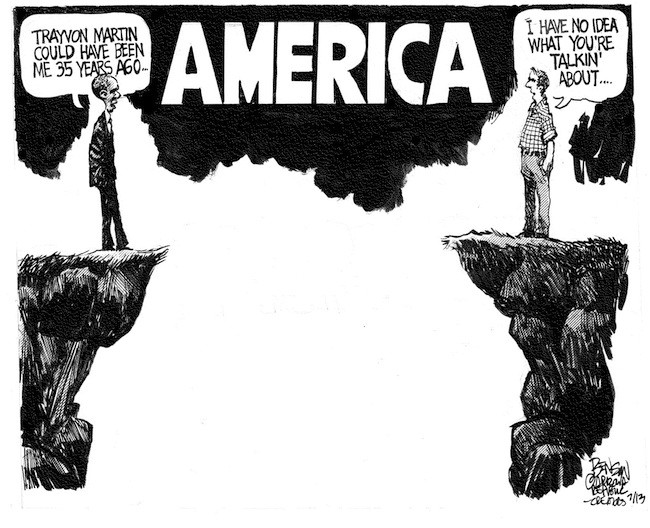
Cartoon


