


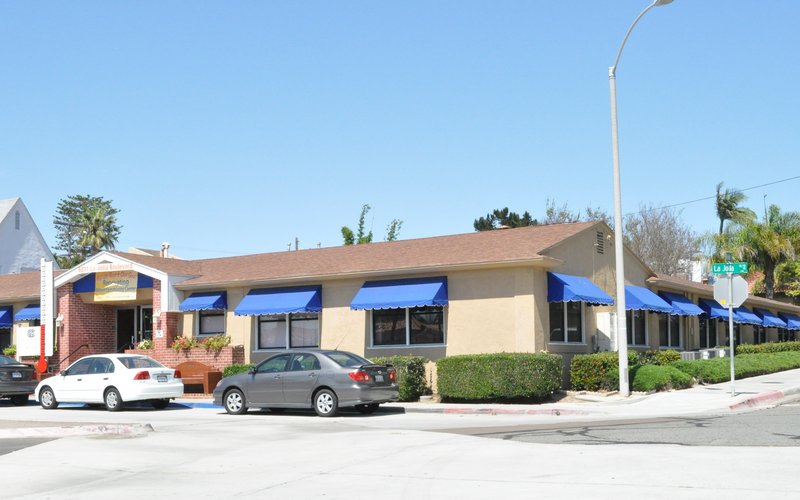
Two years ago, Friends of the Riford Center were informed as the lessee of the city-owned Riford Center that the building did not comply with the Americans with Disabilities Act (ADA), a law passed in 1990 that prohibits discrimination based on disability. The act defines certain guidelines for accessibility to buildings — one of which requires that an access route into a building from the public street or sidewalk must “to the maximum extent feasible, coincide with the route for the general public,” according to ADA’s Accessibility Guidelines for Buildings and Facilities (ADAAG). The feasibility of the route into the main entrance of the Riford Center is the source of debate for the Riford Center board and the Bonair Street Neighborhood Group, a collection of neighbors who oppose the board’s proposal for a 3-foot-wide side access entrance. Glen Rasmussen, Riford Center’s board chairman, said a front entrance access is simply not feasible due to time, budget and permitting constraints. “The property line is on the sidewalk,” he said. “We’d have to demolish the sidewalk, and the planned district ordinance (PDO) requires sidewalks to be 8 feet wide.” He said the neighborhood group got preliminary, discretionary permission from a city engineer that would allow for a 6-foot-wide sidewalk, although he believes the city would not go against their own PDO. “Our current proposal is entirely within our property, does not impact city improvements and does not submit us to any uncertainties,” he said. Additionally, because the board will be using a $207,000 federal community development block grant for the project, certain constraints such as the prevailing wage requirement make the project more expensive. He said he has already ceded to neighbors’ concerns about an original plan to relocate the main entrance from La Jolla Boulevard to Bonair Street. Instead, the board plans to construct a 3-foot-wide, ADA-compliant door on Bonair Street, offset with landscaping. “We want to accommodate our neighbors as much as we reasonably can, and we have many times,” he said. “We’ve bent over backwards and we’ve considered every proposal. There’s just no way to satisfy this situation. They are entirely motivated by their desire not to have people on their side of the street. It’s for their own interest, not the community’s.” Don Goertz, the La Jolla architect who drafted the front ramp proposal, said a front-access entrance option is both feasible and preferable. “There are a lot of people with walkers going into that building. They don’t want to walk up the side of the building then up to the front,” Goertz said. The Bonair Street Neighborhood Group wrote a letter to the Riford Center board, detailing why its members object to a side entrance. “The front ramp meets the legal requirement for equal access for all persons — the side ramp does not. The side ramp discriminates against persons in wheelchairs, requiring them to traverse a further distance of more than 100 feet on an uphill sidewalk to reach the primary entrance from the main parking areas,” the letter stated. The written statement also outlined concerns about the degradation of the residential character of Bonair Street and the precedent for commercial creep on the residential street. Goertz argued that the board is solely concerned with improving aesthetics at the entrance of the building, not with the rights of persons with disabilities or Bonair Street residents. “Supposedly, they have a grant to make ADA accessibility and rehabilitation of the building,” he said. “All they’re doing is making the front entrance better.” Rasmussen countered Goertz’s claim, stating that all of the funds are related to access construction and “the most basic aesthetics you can imagine.” Rasmussen said he doesn’t believe a tremendous increase in pedestrian traffic will result from a 3-foot-wide side entrance and said he finds no credence in the neighborhood group’s claim that the entrance is non-compliant.


