


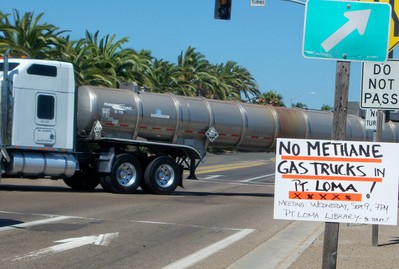
The city’s original plan to truck excess methane gas through Peninsula neighborhoods is being transformed by progress on a viable underground piping alternative. A feasibility study conducted by San Diego Gas and Electric (SDG&E) – the first step in the possible piping process – revealed that its lines would be able to accommodate the excess gas bled from the Point Loma Wastewater Treatment Plant. “I’m pleased that SDG&E’s feasibility study shows that there is adequate capacity to transfer the methane gas through their existing underground fuel lines,” said District 2 Councilmember Kevin Faulconer. Matt Awbrey, a spokesman for Faulconer, announced the findings of the SDG&E study at the Peninsula Community Planning Board meeting Oct. 15. The next step in this process is completing designs for the project that will show the changes necessary to the entrance and exit points on the pipelines in order for it to send and receive the gas. Awbrey said drafting the designs will take a couple of months. Once the project designs are completed, a proposal for the alternative method of transport will be sent to the city. “I am committed to continuing to work with Point Loma neighbors to make this project a reality,” Faulconer said. “It’s good for Point Loma and our environment.” Faulconer first presented the alternative to trucking the volatile gas at a community meeting Sept. 9. He was originally apprised of resident opposition to the trucking option by Homeowners for a Green and Safe Point Loma, a citizens group that has been vocal in opposing the city’s gas-hauling option. Catalina Boulevard resident John Pedersen spearheads that group. If the piping alternative is not adopted, the city’s current plan is to begin construction on the so-called Beneficial Use of Digester Gas project next spring, with the first trucks hitting the road in fall 2010. If it starts, six to eight trucks per night will transport the compressed methane gas from the wastewater plant through Point Loma to Interstate 5.


