


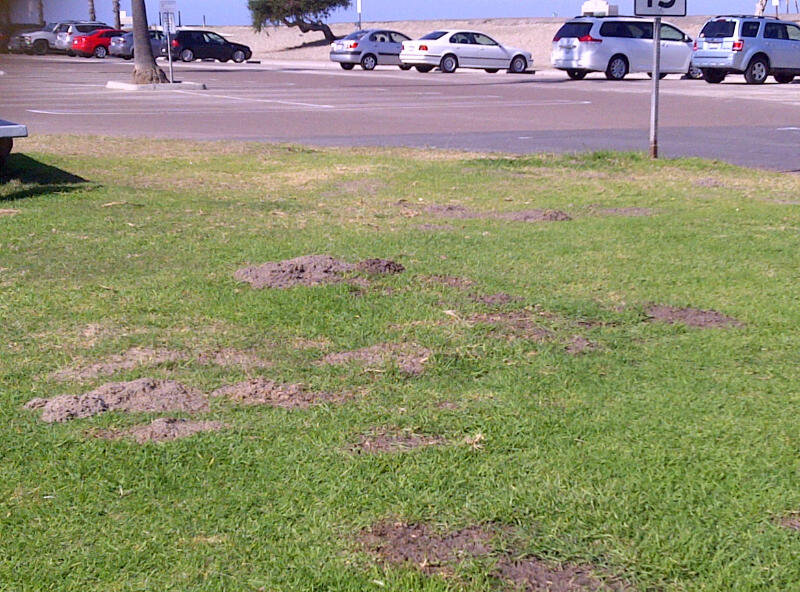
Which population-control method would you gopher? Several recreational parks in Ocean Beach give residents an opportunity to exercise their pets and themselves. The parks are also a nourishing home to local wildlife. Sometimes the presence of this wildlife — at least the ones classified as nuisances — means city intervention using various methods of population control that frequently pit animal activists and enthusiasts against those who simply want the problem taken care of. A prominent example of this dilemma is that involving a furry, reclusive creature that takes up residence in OB’s grassy havens — the pocket gopher. Known for building complex underground tunnel systems, the massive digging work is done by only one gopher per labyrinth. Experts say gophers are solitary and do not like company. A single gopher can be responsible for hundreds of dirt mounds and is frequently blamed for destroying parks and gardens, killing trees, plants and shrubbery. Their vegetarian diet consists only of roots from trees, shrubs and grass, as well as flowers and other plants. The furry critters’ destructive eating behavior often leads to being categorized as rodents or pests. Gophers are easily identified by their long front teeth, small ears and eyes and very short tails. They usually don’t grow longer than 10 inches in length. Oversize front legs and teeth are used to push dirt through the tunnels onto the grass above, frequently causing holes and hazards that can seriously injure an animal or jogger. Parks like Dusty Rhodes, Robb Field, Cleater Park and Dog Beach Park all demonstrate signs of gopher intrusion and damage. Gopher enthusiasts like to emphasize the animals’ positive influence on the local ecosystem. The burrowing helps aerate the soil and helps speed up the formation of new, richer soil by bringing minerals to the surface and mixing plant materials and fecal waste into it — leading to better plant growth. Not everyone, however, is a gopher fan and not everyone appreciates the destruction resulting from the gopher burrowing. To prevent the local parks from being destroyed, trees and plants are often protected by screen fencing and underground netting, bare ground or barriers of six inches of coarse gravel, according to gardening enthusiast Jay Kurcaba . “The trick is,” Kurcaba said, “to plant annual grains rather than seasonal plants. Their roots don’t provide enough food or nutrients to the hungry gopher.” Normally, gopher overpopulation is mitigated by natural predators like coyotes, weasels, large snakes and owls. Only one of these four hunters is a regular in the Ocean Beach area, however — the white barn owl. A couple of years ago, white barn owls began nesting between the area of Sunset Cliffs Boulevard and Beacon Street and between Cape May and Del Monte streets. The owls mainly feed on rats and mice in those areas. Instead of pesticides or other pricey methods used by the city’s Park and Recreation Department to control the gopher population, some Ocean Beach residents have suggested relocating a few of the owls to the Cleater Park, Dusty Rhodes/Rhodes Ranch and the Dog Park areas. OB residents like Mary Richards and Scott Richard exercise their dogs daily at Dusty Rhodes Dog Park. The two share similar views on the gopher problem. They both take a “live and let live” approach. “Gophers are here for a purpose,” said Richards. “Let nature take its course. I definitely do not agree with poison. It pollutes the ocean.” Richard agreed. “I wouldn’t want my dogs to get sick from a poisoned gopher or from pesticides they come in contact with,” he said. “It should be a natural, inexpensive solution.” Richard and Richards said they believe relocating the owls would be very beneficial. James Whalen of Ocean Beach also supports a more natural approach to the removal of gophers. “They shouldn’t be eradicated, but they definitely need to be controlled,” Whalen said. “It got out of hand last year when the main park [Dusty Rhodes/Rhodes Ranch] was overrun with hundreds of gopher holes. People ended up injured from stepping into holes all over the place.” While Whalen said he doesn’t object to relocating owls to the local parks, he sees other natural solutions already taking place. “Inside the dog park [the fenced-in area inside Dusty Rhodes Park], we don’t have a problem,” Whalen said. “It’s self-regulating, our dogs take care of it. They dig them up [the gophers]. Not a day goes by without the dogs catching a gopher or two.” Of course, more traditional methods are being applied by the city in lieu of an owl relocation, often becoming the source of local myth as to how gopher control is actually being done. Clay Bingham, director of community parks for the Park and Recreation Department, said city officials are aware of resident concerns over the gopher-control methods being used and sought to set the record straight. “To keep our parks safe for house pets and the public, we apply a very low-level gopher-control pesticide product called ‘Gopher Getter 2’ at all four [Ocean Beach] parks,” Bingham said. “The only difference is in the frequency of applications of the product. “Dog Beach Park, Robb Field and Dusty Rhodes get treated with the same frequency — once every week,” he said. “Cleator Park, on the other hand, only receives an application of the gopher control product once a month. … To insure the most professional and safest handling of the product, a professional applicator contractor has been hired by the city of San Diego to apply the gopher control.” Bingham said community parks staff members are available to answer questions or field concerns over the gopher control, and to collect suggestions or ideas about alternate means of nuisance abatement. Residents may call (619) 221-8901 — a direct line to staff members Mondays through Fridays from 7:30 a.m. to 4:30 p.m.


