


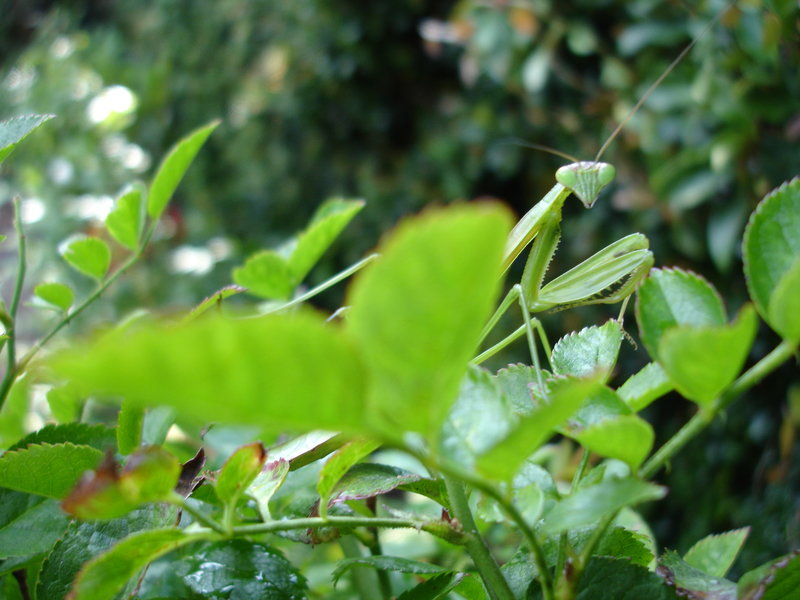
Since I’m getting ready to purchase a praying mantis egg sack for my garden, and continue to receive inquiries about these fascinating creatures, I decided to write about them again. In all the years that I have lived in San Diego, I had never seen a praying mantis in my garden and a few years ago when I saw praying mantis egg sacks available for sale at Green Gardens Nursery in Pacific Beach, I purchased one right away. In February that year, I placed the mantis egg sack on a high branch of a large camellia bush, leaving it encased in the plastic mesh bag it came in, so that the birds could not steal it. In June, I was working in the garden and noticed a tiny insect sitting in the center of a Shasta daisy and, since grasshoppers have been quite successful at raising their families in my garden, I thought it was a baby grasshopper. Luckily, I realized that the ant-sized insect was actually a baby praying mantis before it ended up between my thumb and forefinger.
Each praying mantis egg sack encloses about 200 eggs, and these tiny babies are referred to as nymphs. Once the nymphs emerge from their sack and scatter into the garden, they immediately begin eating aphids and other small insects. However, at this stage of their life, they can also become prey. One day, I removed a tiny mantis from a hungry spider’s web just before it became lunch and placed it on a rose bush. As months went by, this tiny creature stayed on the same rose bush and grew into quite a specimen measuring about 5 inches long. In all, I counted about six mantises in my garden that year that survived to adult size.
Females will stay in one place as long as there is a food supply, and the males will wander here and there throughout the garden, but each will stake out its own territory and guard it with passion. Masters of camouflage, they lay in wait for their prey to approach and then attack with lightning speed. By December, the mantises will die and hopefully, they will have laid their eggs so that the next generation will stand guard in your garden. Most nurseries stock mantis egg sacks in late winter and early spring, before the weather gets too warm. One egg sack will cover a 5,000 square-foot area. For several years, the praying mantises I had in my garden laid eggs and year after year I had several families thriving there. Last year, they did not reappear and it may have been because their egg sacks were eaten by hungry birds or ants. Since I find them to be very beneficial in keeping the grasshopper and walking stick population down, and have noticed a difference since they have not been present, I am looking forward to hanging another egg sack this winter and welcoming them back to my garden this spring.


