


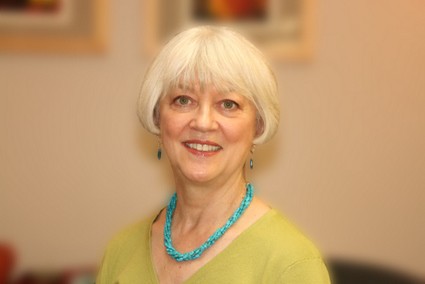

Senior Editor Christy Scannell talked with Carol Schultz, executive director of Uptown Partnership since 2005; Anne Rast, president of Uptown Partnership’s board and a retired San Diego city planner; and ben báltico, an Uptown Partnership board member and Bankers Hill business owner, about the future of the Partnership and parking in Uptown.
P: Why do you think Uptown Partnership was investigated?
Schultz: The (Uptown Partnership) board had an objective to have one big capital project and had thought that would be a parking garage in Hillcrest and then recognized the fact that for a number of reasons the financial package that the board at one time thought it could put together would not be feasible any longer. With that in mind, the board said, “Well, if that’s not what we can do, let’s look at doing more projects in more neighborhoods.” And I think there came to be a great awareness of how much money there was and what it could be spent for.
Baltic: It’s interesting that a lot of the organizations – and even some of the individuals – that are so critical now of the board and the numbers and that sort of thing were supportive of that strategy back then. I spoke extensively with a past chair of the Uptown Planners organization. He was a member for 20 years and a chair for six years. The Partnership would go [to Uptown Planners’ meetings] every month, talking about the garage and the project and everything, and he said there was no opposition in the community to that strategy. And so if the board’s job is to respond to the community, it certainly was doing that then. Now I know Uptown Planners has changed all their staff, they’ve changed their focus and all that, which is fine and that’s a good thing. But this board has changed as well and we’ve changed our focus. No longer is it dominated by one neighborhood and the projects reflect that.

P: The grand jury report centered on an alleged misuse of funds. You submit your expenses to the city monthly, correct?
Schultz: Yes, we do.
P: Did anyone ever question your expenses?
Schultz: No, certainly not in the five-plus years I’ve been here there’s never been a question about what we’ve submitted or any hint of that.
P: Have your expenses increased dramatically?
Schultz: For the five years I’ve been here I think that there’s been relatively slight increase, perhaps, but you would expect that with cost of living.
P: The grand jury’s forewoman accused the Partnership of creating only 20 parking spaces but in some media reports you’ve argued, Carol, that the Partnership is adding as many as 90.
Schultz: Neither of those is exactly right. There are 25 new parking spaces on San Diego Avenue in the Five Points neighborhood. There are 15 new spaces on Normal Street. We are looking at expanding the parking in the next block of Normal Street where that median that the farmers’ market currently uses is. It would still accommodate the farmers’ market but we are looking at probably a minimum of 90 new spaces and we’re working with the city on a design for that right now.
P: When do you project that parking to be available?
Schultz: Best-case scenario is a couple of years.
P: Even using 90 parking spaces as your base, the Partnership spent $12,000 per space. How do you respond to that analysis?
Schultz: If you only want to accept the standard of creating parking spaces as the only thing we do, that’s a mistaken idea about what the Partnership does. We’re managing parking but we’re also improving mobility and traffic flow. If you look, for example, at the intersection of Washington and Goldfinch (in Mission Hills), a significant portion of that funding also came from meter revenues. So it’s a false measure to simply say the only thing we do is create parking spaces.
P: Those who live in or own businesses near metered areas complain they aren’t seeing any results, not just that there is a lack of new parking spaces.
Baltic: I would say that that has to do with the history, where the consensus of the community was “we want one big project.” And there is a lag time (for new projects). If there’s a finger of sloth that needs to be pointed anywhere, we’ll just look at those 15 spaces on Normal Street. Fully funded by the [vote of the] board, it took the city over two years just to produce the drawings. We’re as frustrated with making things happen as the rest of the community.
Rast: The other thing is, we can’t put in enhancements. The policy is very restrictive in terms of what we can do with that money.

Baltic: We have projects for bicycle parking. We have projects for motorcycle parking. It’s not just four-wheeled vehicles. And pedestrian safety and mobility. We say we want it now, here’s the money, and it’s two, three, four years down the road before it shows up.
P: But even when you add all that up, $3.6 million in operating expenses vs. $1.1 million in projects appears imbalanced.
Schultz: We have 31 projects proposed for the coming fiscal year. Ninety-five percent of the available funds are allocated to projects. I think that’s a pretty good number.
P: But can you see how people looking at those numbers might say you’re just reacting to the grand jury report and should be held accountable for a past misuse of funds?
Baltic: Absolutely and I was one of those people when I walked into the first meeting (of Uptown Partnership’s board).
P: What changed your mind, Ben?
Baltic: First of all, I attended the meetings for a year and I saw the roadblocks – what they were trying to do, the restructuring process. It just doesn’t happen overnight. But what I also saw was a core of people that are really dedicated to getting results for the community and striving to get things done. I don’t see a better organization anywhere out there to do what this board is trying to do right now in the community. The focus has changed. They’ve responded quickly to the change. But the lag, of course, is in the results.
P: Some groups are organizing to break away from the Partnership, such as Five Points. What is your reaction to that effort?
Rast: Our challenge is to continue to look at things from a regional perspective. We have to balance between individual interests and the community interests, and that’s what we’re attempting to do. So there’s always going be people who want more of the pie.
Baltic: When I was sitting on the outside looking in, I was saying, “How hard can it be to change those five parking spaces to seven angled ones?” Well, did you know you have to go all the way to the City Council to do that? And that’s going to be the same for them. They’re going to find that it takes them two and a half years to get a set of drawings for a crosswalk. That part of the equation isn’t going to change.
Schultz: And the city would have to work with five entities instead of one. So that’s a transfer of costs, not a savings.
Baltic: That’s why I think this organization is unique because there will be times when we can leverage the funds from the Uptown community. The Five Points project is a good example of this. If Five Points had been its own little parking district all these years and it saved every single nickel it had ever gotten in parking meter money, they couldn’t have done the project that’s happening right down there now. If [Uptown Partnership] wasn’t able to take just a little more money and make it happen, we wouldn’t get that. So if you dissolve this and make five little neighborhood things, the community will lose the option of the overall view of everything.
P: Some business owners say Uptown’s parking meters should be removed, that they are a tax on customers.
Baltic: The 15 new spaces on Normal Street were metered because the business people wanted them, so they see the value in that.
P: But how do you respond to a business owner who says, “I can go over to North Park and open a business and my customers won’t be subject to parking meters”?
Rast: I might say that in North Park you might have an employee parking in front of your establishment for the whole eight hours and there won’t be parking for your customers.
Baltic: I would say come to south Bankers Hill where every parking space from seven in the morning til 5:15 in the evening is packed solid all day long with one car – there’s no turnover. Meters are a tool that neighborhoods can use to optimize or help create turnover and manage the parking supply.
Schultz: And in terms of managing one of the things we’re looking forward to with eager anticipation would be the opportunity to do more management. The mayor’s office has put forward a meter plan that would allow for adjusting rates and meter times as they’ve done in some pilot areas downtown. And what they have found, for example, is that dropping meter rates to 50 cents an hour in some areas and letting people park there for as many as nine hours at a time increased the usage so much that even at the lower rate they were collecting more money than they used to get from those meters. This is why we want to talk about being able to provide incentives for people to park at a lower rate a little farther away from the ideal destination and, if they’re so inclined, save a little money.
P: Doesn’t that also mean they would pay more to park closer?
Rast: No, let’s make this absolutely clear. None of us are at all proposing to increase parking rates anywhere. We will not be raising rates.
P: You are proposing to use $4 million in reserve funds for projects. What can we expect?
Baltic: In Bankers Hill/Park West, we have crosswalks, we have pedestrian pop-outs. We have angled parking. Increased supply of parking for not just cars – bicycles, motorcycles.
P: Do you have a projected date for these projects?
Schultz: The city needs to approve our contract in September before anything can get started. We’re currently under an extension of our FY10 contract through the end of September. We’re continuing to work on the projects that we have in that budget but the new projects won’t be initiated until we have a new contract.
P: Is there any tangible item you can tell people to expect soon?
Baltic: We hope that in a very short order that we can get a validation program going in Hillcrest. That’s a top priority.
P: How would that work?
Baltic: The idea is that if you have metered parking on-street, which is pay, and then you have free parking in an underutilized or distant garage or parking lot, people will go fill those first, leaving the neighborhood less congested and more available parking for those who want to pay it. We hope [the program will be in place quickly] because we don’t have to build anything – it’s just utilization or management of the asset.
P: Where would this validated parking be?
Schultz: For example, Village Hillcrest. Based on just our casual surveys it has a lot of underused parking pretty much any time of the day or night.
P: But wouldn’t the businesses need to pay to provide the validation?
Schultz: And that’s potentially where we come in to help them subsidize the cost.
P: If you could broadcast one message to the public about Uptown Partnership, what would it be?
Baltic: We’re pushing the board to be more accountable and more responsive and more results oriented. The whole thing in the community is “Where’s the beef?” Well, we’ve got the beef. Last year it was 14 projects; this year it’s 31 projects. We want to put these things out there as fast as we can.
Rast: One of the things that I’ve been saying to everybody is you’re going to see the board at your neighborhood meetings. You’re going to get to know us. We want to encourage when the community is upset to come to us and we’ll deal with it.
Baltic: And as far as the grand jury report being critical of the Partnership, this is the same grand jury that thought it would be a good idea to privatize libraries. Seriously. The community rejected that idea. I think the Partnership as an entity is a valuable asset for the community. I know City Hall has their budget problems but the community should value this asset because that’s what it is.
In our next issue on newsstands July 9, Noticias de la zona residencial de San Diego will continue its report on Uptown parking, including comments and analysis from community and political leaders.


