


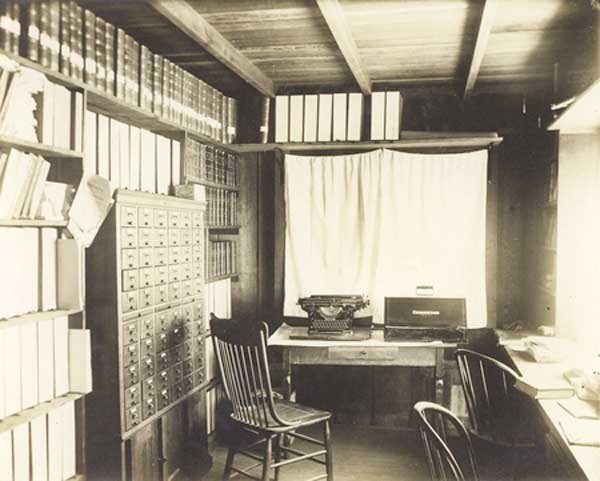
— From Linda Pequegnat’s book, “This Day in San Diego History,” available at Warwick’s and at www.sunbeltbooks.com March 23, 1903 Elisha Babcock, owner of the Hotel Del Coronado, wrote a letter to the president of the University of California to offer the use of the hotel’s boat-house as a laboratory for the newly formed Marine Biological Association of San Diego. The zoologist and naturalist William E. Ritter was a professor at the University of California at Berkeley. He had been conducting summer field studies with students where they collected, sorted and classified marine organisms from coastal areas of California for 11 years, from 1892 to 1903. Ritter had been hoping to find a permanent location for a marine biology field station. He went to Pacific Grove on Monterey Bay one summer, but Stanford University had already established a marine station there. He went to Avalon on Catalina Island, which was a lovely, pristine location, but it was too remote from the mainland. He worked out of San Pedro Harbor near Los Angeles, but that location was spoiled by plans to construct a large commercial harbor. One of the first contributors of the effort for a permanent biological station for Ritter was E.W. Scripps, head of the Scripps-Howard newspaper chain. He and his half-sister, Ellen Browning Scripps, became important financial backers for what is today the Scripps Institution of Oceanography. After two summers at the Hotel Del Coronado boathouse, the Marine Biological lab moved to the La Jolla Cove — to a small two-room building that was built in 1905 at a cost of $1,000, funded by the Scripps family. It was known as the “Little Green Lab” or the “Bug House.” Later a 177-acre seaside tract was purchased at La Jolla Shores for $1,000, and the lab was moved there in 1910. This is where the Scripps Institution of Oceanography is located today.


