


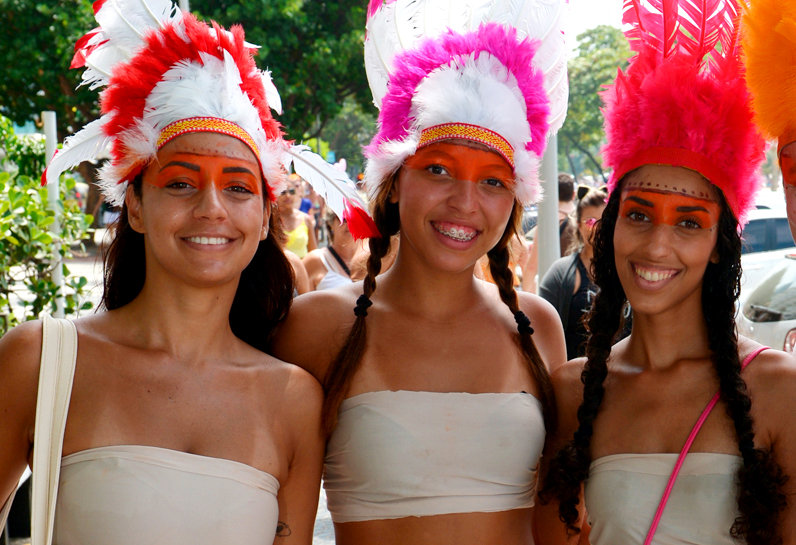
This year was like all others. Carnival arrived and so did the people. Brazilians from around their country as well as people from all over the world descended upon Rio de Janeiro with one idea in mind, party! Just recently, the World Health Organization declared the Zika virus a worldwide threat but here in Rio the fear of Zika was not immediately evident. The people did what they came to do, drink lots of beer, get drunk and dance to the music that started as early as 9 a.m. and continued until late into the night. The revelers were all sweating profusely as the torrid 95-degree days gave no relief. Unfortunately, this is the perfect environment for mosquitos to breed and feast. A pregnant young Brazilian woman, Dee Sousa, 23, when asked if she was worried about the Zika virus, replied, “Of course I am, for both me and my child.” She added, “I use both spray and cream (insect repellant) several times per day and remain inside as much as possible but right now it’s Carnival. You do not expect me to give that up, do you?” She heard the warnings of keeping fully covered with long pants and long sleeve shirts to avoid the bites. “It is much too hot. We are all sweaty here in Rio, hopefully the mosquitos prefer the others over me,” she said.
The Sambadrome, which hosts the annual four-day Samba Parade and Contest, was overflowing as usual. The parades ran as scheduled and all in attendance seemed to enjoy themselves to the fullest. “Business is good,” said a local ticket scalper who declined to give his name. “I have sold all my tickets much earlier than expected and almost every one was purchased by gringos.” Without a doubt the rise in tourists can be directly correlated to the decline of the Brazilian real, making dollars and euros almost twice as valuable as they were only 18 months ago. Today’s exchange rate is 3.98 Reais to 1 U.S. dollar.
Brazil has experienced a severe economic slowdown and this has left multitudes out of work, giving most Brazilians only one choice when it comes to Carnival, enjoying the Blocos. Blocos are a Carnival tradition. They are free live music festivals put on all over the city. Each one is themed and the attendees are encouraged to come dressed in “fantasia” (fantasy costumes that are much like Halloween).
Some Blocos are stationary and can have crowds in excess of 100,000, while others are in open-roof style buses that transport live music and costumed dancers, and slowly drive from one point in the city to another a kilometer or two away. The crowd dances in the street with the music and follows the bus as it wends its way through the crowded streets. Revelers buy their drinks and beers from the local vendors who set up alongside the Blocos route.
Carnival has ended and the city is back to normal but the threat of Zika remains. Tourists are starting to leave and the local Carioca (Rio native) is back to work, patiently waiting for their next holiday.
Rio was and always will be, a city ready to party, with or without Zika…. (Joseph Capp is a long time Pacific Beach resident who has lived part-time in Rio de Janeiro for the last five years. He will be sharing news and updates from Rio with sdnews.com readers through the 2016 Summer Olympic Games. Have a question? Write him at [email protected]. He will be happy to reply.)


