


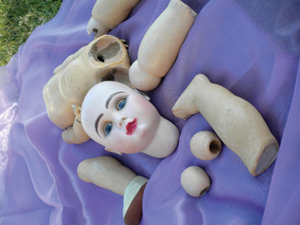
Despite electronic media, old-fashioned stories printed in newspapers still get great results. In December of last year, it was reported in this column that a rare late 19th century doll that had once been La Jolla Green Dragon Colony founder Anna Held’s most prized possession was missing. La Jolla resident Terre Edwards read the story in the Village News and saw the vintage picture of the doll. She quickly surmised it was the very doll she had stored away in a shoe box. She had hoped someday to get around to its proper conservation and then donate it to the La Jolla Historical Society (LJHS) at the request of her late mother, Harle Garth Montgomery. The newspaper story inspired Edwards to bring the doll more immediately to the La Jolla Historical Society for safekeeping. It arrived with all body parts intact, although the arms, legs, head and torso need to be put back together by a professional conservator. The doll — surreptitiously named Miss Olive Mishap when it was in the possession of the original owner more than 100 years ago — also is in need of a new wardrobe, as she arrived at LJHS totally clothes-less. Plans are underway to restore the doll and create a wardrobe, so she can be put on exhibit as one of the few artifacts remaining from Held’s time in La Jolla and the start of her internationally known Green Dragon, the colony of artists, musicians and literary figures living in a small group of 12 houses built on the cliffs near Cave Street. After Held’s death in 1941, Miss Olive had various “mothers” — including Montgomery, who played with the doll as a child. Held was a German woman who came here in 1894 and was the grande dame of the colony until she left to return to Europe in 1938. She lived in La Jolla and was known for her love of culture as well as her unique doll collection. The star of the collection was Miss Olive, who had been given to her by British stage actress Ellen Terry. Terry had purchased the doll in Paris for Miss Held, who complained of missing her “babies” since she had left her profession as a nanny to become involved with Miss Terry on the stage. The doll is about the size of a human infant and was among a group of “bebe” dolls created in France after they no longer were designed as miniature adult figures. An identification on the back of Miss Olive’s neck connects her with the extraordinary doll world of Jules Steiner, one of the foremost dollmakers in France in the late 19th century. Steiner, also a clockmaker, created many unusual dolls that are highly collectible in the antique market, including one that actually waltzed. They frequently were costumed in the latest Parisian fashions using fine silks and laces. While Miss Olive was in Held’s possession, she was often dressed in Shakespearean costumes made from garments worn by actors and actresses on the British stage. Her wardrobe of the future seems to have an Orphelia on the list. Cleopatra may be a reach.


