


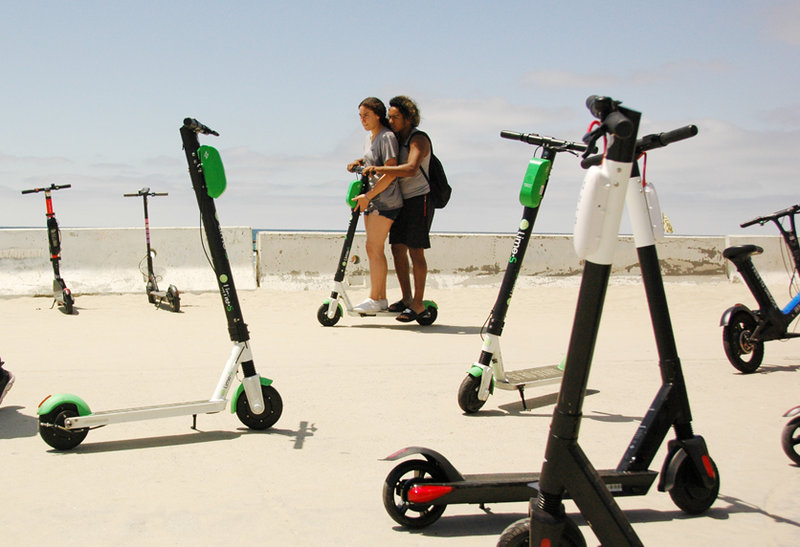
Pacific Beach Planning Group nixed a proposed moratorium on electric scooters at their meeting in September. The planning group voted against the moratorium following a debate between board members. Bill Zent, author of the petition scooterban.com, advocated barring scooters region-wide. Immediate past president of Pacific Beach Planning Group Henish Pulickal defended scooters, claiming their benefits outweigh their detriments. “We need to get away from car worship and focus on shifting to something else (alternative transport),” Pulickal said.
Mayoral candidate and District 1 Council President Pro tem Barbara Bry has called for a moratorium on scooter proliferation until the City can catch up on properly regulating them. She also intends to re-introduce a ban on scooters on boardwalks, that failed once before, this October.
Zent’s petition over the past few weeks has easily surpassed its goal of obtaining 1,000 signatures supporting scooter expulsion. The petition drive has also solicited scores of comments from signers explaining their rationale for ousting or more strictly regulating the scooters.
Zent led off the debate with a laundry list of complaints about scooters alleging lack of proper enforcement, inadequate containment corrals, and users ignoring regulations.
“I support a moratorium because scooters are adversely affecting home values, with some corrals even being sited below people’s bedrooms,” Zent said.
Noting his scooter petition page has received 21,000 views, Zent contended scooters “are causing clutter all over the beach and pose safety threats from tandem, underage and intoxicated riding.”
Zent also disputed the claim that scooters are environmentally friendly. “It takes two trips (by fossil-fueled cars) to pick them up to recharge and return them,” he pointed out.
“I’m the voice for the silent majority,” countered Pulickal, likening the advent of scooters to early bikes replacing horses.
“Back in the 1860s horses died because of a famine in Europe and the number of people owning bikes went from one million to 10 million,” he said. “People then were arguing they were a menace to society, scaring women and children.”
Conceding scooters have been problematic, Pulickal nonetheless argued progress is being made in regulating them. “They’re less intrusive now and managing them is getting better,” he said, contending the government needs to keep up with technology.
“Change is happening quickly,” he said. “We need to move at the speed of business, the speed of people — not the speed of government.”
Other board members weighed in.
“I wouldn’t vote for a ban,” said Marcella Bothwell. “They’re innovative. This has really been a missed opportunity. We’re all a big experimental lab.”
“I agree with the points made by both sides,” said Ed Gallagher. “The question before us should be, What is the best way to move this forward most effectively?”
Eve Anderson suggested it might be necessary to “take a step back in looking at regulations and reducing the number of scooters and scooter companies.”
“Micro mobility is here to stay,” argued Steve Pruett.
“This has not been properly vetted,” said Scott Chipman. “A moratorium might force the issue. We are the most impacted community by far.”
“This is a step in the right direction,” said Junior Leoso.
Joe Bettles questioned the wisdom of voting on a proposed moratorium that is presently little more than a campaign promise.
“The only way to get scooters and bikes off the sidewalks is to provide safe spaces on the streets,” said Paula Gandolfo.
Zent proposed voting in favor of Bry’s proposed scooter moratorium. That motion was defeated by a board vote of 4-6-1.


