


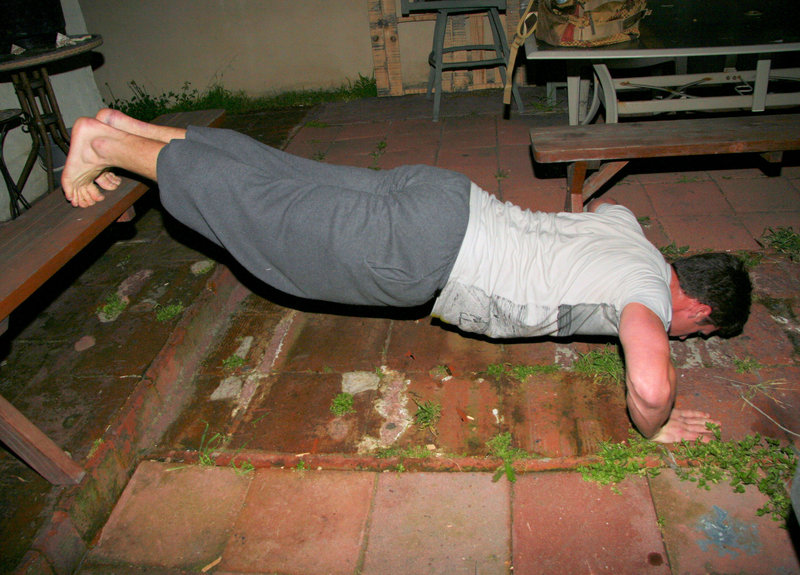
Longtime Mission Beach resident Sean Burns is readying himself for one of the most difficult challenges of his life. Even months of physical and mental training — including miles of running, heavy weightlifting and an intensive 12-hour overnight workout once a month — may still not be enough to overcome the daunting task that lies ahead. Regardless whether his muscle and brawn is enough to keep him in the race, his mind must be equally tough to get him through an unusual challenge that makes every attempt to break down its competitors — mind, body and soul. After receiving his Masters of Business Administration from San Diego State University and maintaining a successful career, Burns set a new goal. “I want to be one of the few people on the planet to complete the Spartan Death Race,” he said. “The race — never the same from year to year — is meant to break the physical and mental limits of every competitor.” Organizers of the Spartan Death Race do nothing to sugarcoat the difficulty of the race. The domain name of its website — www.youmaydie.com — is a testament to that. “The Death Race is designed to present you with the totally unexpected and the totally insane,” the website warns. “90 percent of you will not complete this endurance race. Please only consider this adventure-style race if you have lived a full life to date.” The race will take place in Pittsfield, Vt. on June 15. Aside from the date and location, not much is known about this year’s race — not even to its competitors. “The actual start and end times are not known, along with the expected distance or any of the task details. It’s truly a walk into the unknown with the exception of knowing that it is meant to break you,” Burns said. “Only 300 people from around the world are allowed entry each year, and nearly everyone quits. I believe last year six people finished and another 10 or so were still going when the time ran out.” During the race, which can range between 24 to 48 hours, competitors are challenged to do any number of mind and body-breaking tasks; from chopping wood for two hours, carrying a 20-pound stump around for hours, lifting 10 to 30 pounds for hours, cutting a bushel of onions, crawling through mud under barbed wire or — after 20 hours of racing — memorize the names of the first 10 U.S. presidents or a Bible verse, hike to the top of a mountain and recite them back in order. “The race challenges are never explained to you,” Burns said. “Just before the race, maybe a month, we receive a gear list and are told where to report for registration. Aside from that, no details are given, as far as I know.” Burns first heard about the Spartan Death Race after participating in the first-ever Super Spartan race last year in Temecula. “I was in terrible shape after working full-time and completing my MBA in the evenings,” he said. “The schedule forced me to eat out almost all the time, consume large amounts of coffee, work out very little, and spend my spare time at the bars catching up with friends. I was not healthy.” After taking 37th place at the Temecula race, he discovered what taking care of himself could do, and he became inspired to continue. Although he never imagined he would compete in the Spartan Death Race, he dove into training with the Gut Check Fitness Group, led by two-time Spartan Death Race defending champion Joe Decker, who is also dubbed the “World’s Fittest Man” after winning the Guinness World Records’ 24-hour physical fitness challenge record in 2000. “A couple of the other gentlemen that train with Gut Check attempted the Death Race, but only Joe has completed it, as far as I know,” said Burns. “It’s a testament to his workout regimen and the difficulty of the race, since many of these guys are ex-military and hard as nails. When I’m not training with them, I’m usually on my porch training, running around the bay or surfing.” A typical day of training involves mid- to high-speed running between three and six miles, broken up by weightlifting and general exercises like push-ups, sit-ups and pull-ups. “Joe mixes each class up so that you’re never doing the same thing, but there are a lot of exercises similar to cross-fit,” said Burns. “The goal of the average one-hour workout is to never stop moving, resting muscle groups, while working other areas of the body.” Once a month, Burns also competes in the local King of the Hill series, which is also hosted by Gut Check Fitness, where he summits local mountains with 50 to 60 pounds of gear on his back in a footrace to the top and back. The series includes four races, which increase in difficulty and length, culminating in a nearly marathon-length race in the desert. In addition to rigorous physical training, Burns’ psychological traits — namely stubbornness, his ability to remain calm and his capacity to push through pain — will be significant attributes during the Spartan Death Race. “They are traits that got me into and out of a lot of trouble in the past,” he said. “For better or for worse, I always made it out on the other side, although not unscathed. My sincerest doubts are in my stability after 24-plus hours of nonstop physical and mental exertion.” Mistakes made during a race of this caliber can be detrimental, causing serious injuries that could immediately end competitors’ chances to finish. “My only other concern is the time constraint,” he said. “None of the tasks individually could put me over the edge, but spending too much time on one task could put you out of the race. Aside from these two variables, I will never quit.” Burns said he decided to attempt this once-in-a-lifetime feat for several reasons. “‘Life is too short’ is a general phrase that encompasses them all,” Burns said. “It is partly to show myself, my friends and my family that anything is possible.” Another factor that has served to inspire Burns and his involvement in the Spartan Death Race was the recent passing of his grandfather and the poor health of his living grandparents. “I would like them to see me accomplish this,” he said. “Also, I have looked up to accomplished generals, adventurers and explorers my whole life. The stories of many great, often conflicted individuals make me feel like there is so much more I have to accomplish.”


