


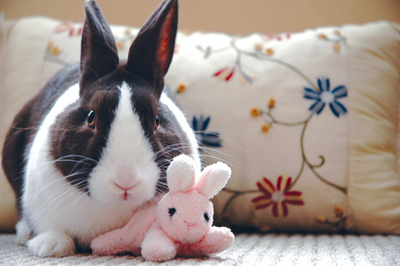
Major advances in veterinary medicine and a better understanding of the needs of our companions means that rabbits are routinely living into their teens. Elderly rabbits have special needs of their own. They tend to move about a little more slowly and with less agility. They often lose weight and will have less elasticity in their muscles, causing atrophy or muscle weakness. You may notice them sleeping more or not venturing as far as they used to. This is part of the normal aging process. Senior rabbits are subject to common rabbit ailments, such as dental disorders, cataracts, kidney disease, cancer and cardiovascular disease. Arthritis and degeneration of the spine are common in geriatric rabbits, particularly in the lower back. Anti-inflammatory medications from a veterinarian can help ease the symptoms, as can acupuncture and nutraceuticals (pharmacy grade nutritional supplements) such as glucosamine. Taking your rabbit to the vet every six months for baseline blood and urine tests can help catch any changes early. At home, observe your older rabbits more closely — are they drinking more or less water than usual? Has their appetite or eating habits changed? Are they drooling? Have they lost weight? Has their fecal output changed? Any changes are reason to visit your vet. Preventing muscle atrophy through activity is another way to help your rabbit enjoy life into her twilight years. Encourage exercise and move the litter box or put toys and treats where the rabbit has to move to get to them. Loss of litter box habits is one of the most common problems with aging rabbits. Impaired mobility, injury, bladder sludge, incontinence or loss of bladder control can all be underlying causes. Many litter boxes are too high for impaired rabbits and can be difficult to hop in and out of. Consider replacing your box with a larger, roomier one with a cutaway door that has a low threshold. This makes it easier for a stiff-jointed elderly rabbit to access the inside. Some rabbits may need a flat toilet area that has no barriers to cross. Plastic-backed puppy training pads or human incontinence pads work well. You can also use synthetic fleece as a top layer, which provides cushioning for bunnies while wicking away the moisture. It is also machine washable, so you can change a rabbit’s bedding daily if necessary. When litter habits are lost, free roam is not always possible anymore. Housing a bunny in an exercise pen allows you to set up a safe, comfortable environment without the restrictions of a cage. It also eliminates the need for the rabbit to hop into a cage and reduces the chance of injury from catching paws on the frame. A bunny’s new living area could even be as simple as a pile of pillows arranged so they have something to lean against and keep themselves upright. The ideal house rabbit diet should be low in calories and high in fiber. Metabolism slows down in older rabbits, and they generally need to eat fewer pellets but should have unlimited grass hay. However, weight loss is common in senior buns, and frail or older rabbits may need unrestricted pellets to keep their weight up. Alfalfa hay can be given to underweight rabbits only if calcium levels are normal. You can also supplement the diet with extra veggies. Oxbow’s Critical Care for herbivores is another supplement that can help rabbits put on healthy weight, and it comes in a variety of flavors such as apple, banana and anise. Bunnies are social creatures that often bond with other rabbits for life. When one bunny dies, the surviving rabbit may become depressed and sick. Many grieving rabbits lose weight and are no longer interested in treats or toys. Often the best solution is to bring another senior bunny home. Senior rabbits can provide the mellow companionship that an older rabbit needs. The newly bonded pair may not behave exactly the same as the original pair, but they can be good friends to each other in their twilight years. Plan ahead for the life of your rabbit. Feed them for longevity, set aside money for medical expenses and adjust your environment to meet their changing needs. You can assist your rabbit through the natural aging process with grace and dignity by supporting her health and making sound choices. Cherish every day that you have together, and enjoy her at every stage of life.


