


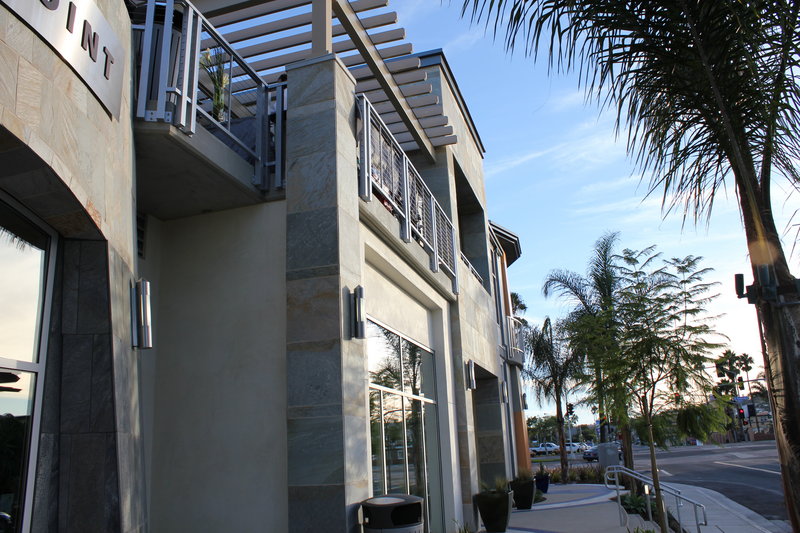
Harbor Point — initially nominated as an Orchid Award for architecture —instead received an Onion Award for architecture at the Orchids and Onions Awards ceremony Oct. 27. The annual San Diego Architectural Foundation’s awards program promotes positive and negative community dialogue on architecture, sustainability efforts, interior design, historic preservation and landscape architecture by offering residents the chance to nominate and comment on recently completed or developing projects. Suzanne Clemmer, 2011 Orchids and Onions Awards co-chair, said jurors scored the Harbor Point project highly in online voting, but after they visited and toured it, the jury found the project was more onionworthy. Grant Barrett, the awards ceremony’s emcee, explained the jury’s 180-degree flip decision. “The Orchids and Onions jury determined that this project’s missed opportunities greatly outweighed its merits,” he said. “From the reflective windows on the ground floor disallowing pedestrian engagement to the narrow units that don’t allow for natural cross-ventilation, they found Harbor Point to be a hodgepodge of contours, questionable color and material combinations, funny little corners, strangely-shaped balconies and awkward setbacks and overhangs.” The two-level mixed-use building located at 5055 N. Harbor Drive features a lower-level retail space with a plaza, office and retail space on the building’s upper level. The nautical design theme includes a ship’s wheel atop a lighthouse-shaped elevator shaft and an ocean-themed mosaic climbing up the main stairway. “It was clear that although the intention was there and significant resources were spent, at some point during the design process, the message was lost in translation,” Barrett said on behalf of the jury. “An attempt at lengthening the sidewalk experience by bringing people up and into a second-story commercial corridor was plainly unsuccessful.” “… The jury also felt that with commercial space vacancies at an all-time high, we need to be creative, sensitive and forward-thinking when creating a similar product,” he said. “It behooves no one to build things that sit empty because they fundamentally do not function well.”


