


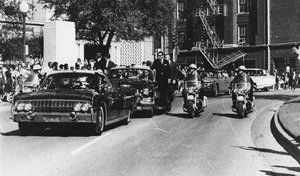
Rolling along in the presidential motorcade on Nov. 22, 1963, Secret Service agent Clint Hill recently recounted observing a grassy area to his left when he heard the first shot. As he swung his gaze toward the car in front of his, the one carrying John F. Kennedy, he saw the president grab his throat and realized something was wrong. Following his first instinct, he said, he ran to the president’s car, jumped in, pushed the first lady onto the back seat and shielded the presidential couple with his body. “I saw the wound on his head and saw that his eyes were fixed, and it was then I thought that the wound was probably fatal,” said the retired agent, who will be at Warwick’s on Dec. 3 at 7:30 p.m. for a talk and signing of the new book “The Kennedy Detail: JFK’s Secret Service Agents Break Their Silence.” His friend and fellow special agent Jerry Blaine, who wrote the book, will join him. Blaine was in Austin, Texas when he heard the news. “None of us said a word to each other on the way back to Washington,” said Blaine. “We were in shock.” After years of silence, Blaine said he decided that, due to the alarming number of young people who believe in the myriad conspiracy theories surrounding that fateful event, it was time to set the record straight with his first-hand account of the assassination. “This is a story that had to be told,” said Blaine. “There are not many of us [agents] left, and we were afraid the cottage industry of conspiracy theory was going to run away with history.” It was a moment in history that many of those who were involved were reluctant to talk about, Blaine said. Though former Secret Service agents have an annual reunion meeting, Blaine said no agents had talked about the events of Nov. 22 until recently, when Blaine and six former agents convened to open old wounds. “I knew how hurt some people were; you almost hated to ask them about it and there are still two agents that won’t talk about it,” said Blaine. “In fact, one of the reasons that we came out with the book is that we had never talked to each other at all about it and we felt it was time. We never even talked to our families.” Blaine said the process of writing the book, for which Hill wrote the forward, was “very therapeutic.” According to Hill, most of the other published accounts of that day should not be given much credence. “There are many books out there by people saying what they think, but they don’t really know, and they weren’t there,” Hill said. Hill, however, said he knows the details all too well. In 1990, after years of suffering from depression and alcohol abuse, Hill went back to Dallas to revisit the scene of the nightmare that has caused such turmoil in his life. After observing all the points of interest — the infamous Texas School book Depository, the street on which he rode — he said he was finally able to put his demons to rest. Blaine said he hopes to put some of the “outrageous” speculation about that day to rest. “What we wanted to do was to set history straight. All of these theories have just detracted from the positive aspects of President Kennedy,” he said. “No one could ever believe in history again if we had gone on without talking about this.”


