


FIRST (For Inspiration and Recognition of Science and Technology) Robotics unveiled its eagerly anticipated new challenge to robotics teams Jan. 6 at High Tech High International in Point Loma.
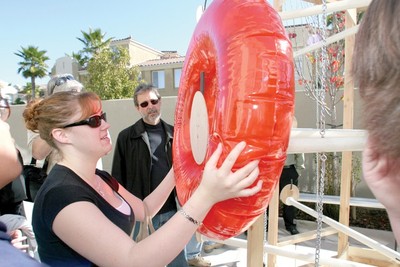
Sixteen high school teams from San Diego County ” along with their mentors, instructors and community partners ” attended the kick-off to hear the new challenge and view a life-size replica of the new playing field.
FIRST is a nonprofit organization committed to inspiring students of all ages in the areas of science and technology. Through FIRST, more than 1,300 North American teams participate in a total of 32 regional events held throughout March and the championship event, held mid-April in Atlanta, Ga.
This year, San Diego participants will not have to travel far to compete at regionals, as the event will take place at the ipayOne Center March 22-24.
The 2007 challenge, called “Rack ‘N’ Roll,” calls for students to create robots designed to hand-inflate colored tubes on pegs configured in rows and columns on a 10-foot-tall center “rack” structure. Extra points are scored by robots being in their home zone and lifted more than 4 inches off the ground by another robot before the end of the two-minute-and-15-second match.
According to David Berggren, teacher of principals of engineering at High Tech High International and instructor for the school’s team ” named the Holy Cows ” the challenge consists of 15 seconds of autonomous play, meaning preprogrammed operation, and two minutes of radio-controlled operation.
School teams are randomly selected to form three-robot alliances that will then compete against each other.
“The thing about FIRST is “¦ they’re always touting gracious professionalism and teams working together,” Berggren said. “So you may be playing “¦ banging into somebody one match and then in the next match they might be your partner to play.”
Students now have six weeks to build their robots, which will be shipped to their respective regional events on Feb. 20. Each team is given the same amount of time regardless of the regional competition date.
Most teams have to come up with all or part of their funding for the competition. The High Tech High team received partial funding from the school, NASA and private donors, with other companies donating materials and supplies, according to Berggren.
The Preuss School at University of California, San Diego is fielding a team with one of the longer lists of corporate sponsors and donors, including the University of California at San Diego/Calit2, Fish & Richardson law firm, General Motors, The UCSD Machine Perception Laboratory, Qualcomm, The Annenberg Foundation, San Diego Gas and Electric, Space and Naval Warfare Systems Center, San Diego; Northrop Grumman; GeoCon and The San Diego County Fair.
Berggren explained that judges of the competition look not only at the robot but also at the team as a whole.
“They look at how your team runs,” Berggren said. “They really like teams that are run like businesses. We have marketing departments. We brand ourselves. We have Web sites. We do animations. There’s a ton to it besides just building a robot.”
For more information about FIRST, visit www.usfirst.org.
For information on the San Diego challenge, visit www.regional.sandiegorobotics.com.


