


 Johnny McDonald | Exploring Balboa Park
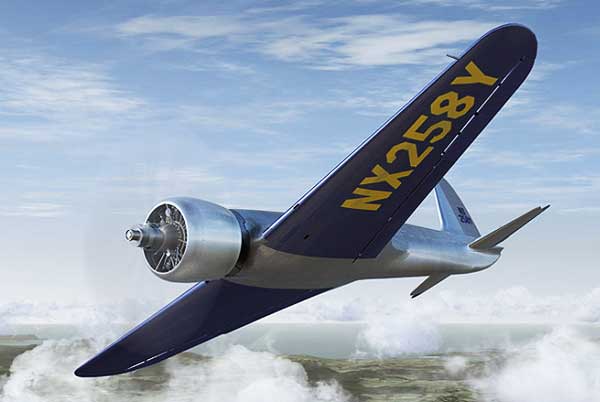
Millionaire flyer Howard Hughes became a worldwide headliner in the 1930s when his special-built plane soared to cross-country and speed records.
Aviation’s innovator – and sometimes movie mogul – flew nonstop from Los Angeles to Newark in seven hours, 28 minutes and 25 seconds. Then he reached 352 mph over a closed course.
This would become the last aircraft built by a private individual to set the world speed records. Every aircraft to hold the honor since has been of a military design.
That bit of flight history is being revived in a cluttered workshop below the main floor of the San Diego Air & Space Museum.

A workforce of 20 volunteers is undertaking the task of building a replica of the Hughes H-1, a project that might take several years to complete.
Never mind that the real H-1 is in the Smithsonian Museum, they feel this will serve well enough here.
Bob Parker, a crew member working on the tail assembly, joked that those not even born yet may be able to work on this airplane. His humor may have been based on the 11 years it took to complete a P26 fighter replica, now displayed in the museum. He agreed that other priorities like restoration of a Corsair, building a Bell X-1 supersonic, a GB racer replica and a Ford Tri-Motor restoration were pushed ahead.
As the crew studies limited plans and photographs, Parker said they aren’t pressured into any deadlines. Scheduling might be interrupted for a time for an additional restoration job, like the recently acquired P51 Fighter and PBY Catalina Flying Boat.

Joining Parker with the tail section are Jim Bodie, Vito Alrieri and Chris Sundahl. With the fuselage, you’ll find Steve Ball, Neil Vann and Bill Weston. Duane Shockey, Jack Eckstein, Dan LeMay and Dwight Boecker surround the wooden wing components.
“It’s really a complicated project, probably the most complicated we’ve taken on,” Parker said. “The curvature in its design makes the building difficult. The H-1 is polished metal so we can’t make any errors on the skin. That means no dents or missed rivets.
“All the paining will be done at the Gillespie Field Annex and because it is a model, they’ll have to paint on all the doors and hatches from patterns,” said Parker. “Whatever they have to work with. We just build planes from scratch.”
He added that the graphics department and computer designers will just have to guess how some things come together.
Parker had no previous aeronautical experience before coming to the museum six years ago, he just liked the idea after leaving the grocery business.
Several of the volunteers, however, are former Convair workers. They remember assembly lines and time-card punch drills, but those ranks are thinning because of age.
Elsewhere in the Park – Park rangers discuss Balboa Park’s historical and botanical treasures on free one-hour tours, originating from the House of Italy’s visitor center, Tuesdays and Sundays, starting at 11 a.m. … Views of nature-based imagery by amateur and professional photographers will be featured at the Natural History Museum’s “Best of Nature” exhibit, starting Sept. 24. Two rounds of judging took place to select the winning photographs, which range from landscape and wildlife to abstract and impressionistic.
After an award winning, 38-year sports-writing career with the San Diego Union and authoring three books, Johnny McDonald now considers writing a hobby. He enjoys covering aspects of the port district, convention center, Balboa Park, zoo, and stories with a historical bent. You can reach him at [email protected].


