


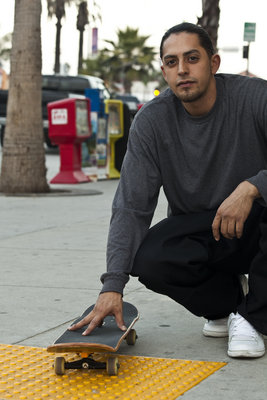
Often yellow and covered with little bumps for traction, detectable warning surfaces are those rectangular patches most commonly found where the sidewalk slants into the street. Also referred to as tactile warning systems, these surfaces are designed to alert visually-impaired pedestrians when they near live traffic and are required in the public sphere in order comply with the Americans with Disabilities Act Accessibility Guidelines (ADAAG). Anthony Pone, 25, is a Pacific Beach resident and often uses a skateboard as his primary mode of transportation. Although Pone did not previously know the yellow patches of bumps were designed to alert the blind, he questions how effective they are and notes they regularly affect his everyday travels on his skateboard. “They make you ollie really far to get off the sidewalk. You have to get around them somehow,” said Pone. “The way they are randomly placed doesn’t really make sense if they are designed for the blind, they should wrap around entire corners on sidewalks that do not ramp down.” Detectable warning surfaces can cost anywhere between $75 and $255. If a citizen requests the city install one in a public area, a disability unit is dispatched through the Street Division. In other cases, they could be installed as part of a street resurfacing project.


