


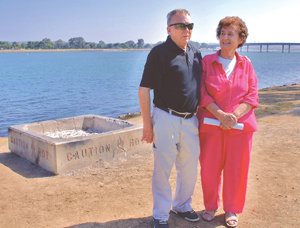
Competing ideas have same goal, different approaches The citizens of San Diego have spoken — and they’ve been heard. On the heels of petition drives and outrage from Ocean Beach to La Jolla, city residents made it clear libraries, recreation centers and fire pits are essential services and not excess fat to be trimmed to close a projected $56.7 million deficit in the city’s $1.1 billion 2012 operating budget. And their message apparently did not fall on deaf ears when it comes to a majority of the City Council. The outcry to save neighborhood services reverberated throughout City Hall. There are now two rescue plans on the table as the council moves toward a June 6 or 7 final budget showdown. One plan is from District 2 Councilmember Kevin Faulconer, who is also chairman of the City’s Audit Committee. The other plan comes from a group of councilmembers that includes Tony Young, Todd Gloria, David Alvarez and Lorie Zapf. Both plans — which spare libraries, recreation centers and fire pits — target estimated savings of $13.5 million. In his original 2012 budget, Mayor Jerry Sanders proposed eliminating $14 million in funds for libraries, recreation centers and fire pits. The plan would have closed library doors all but two days during the week and every other Saturday. Recreation center hours would have been reduced from 40 hours to 20 hours a week beginning Sept. 6. Fire rings would been eliminated entirely. To preserve library and recreation center hours at current levels, the two rescue plans have similarities – collecting $3 million in tax revenues, reducing non-public safety employee overtime and eliminating their cell phones. Where the plans depart is the council group plan includes additional marketing revenue and reducing funding for long-term disability and workers’ compensation. Faulconer’s plan does not tap those resources, but lists public-private partnerships specifically to save fire pits, transfer hotel transient-occupancy tax from council offices to the general fund, a one-time collection of $1.3 million in delinquent parking citations and cutting arts funding by $620,000 — a 10 percent reduction from the mayor’s budget proposal. “Libraries, recreation centers and beach fire pits are part of the fabric of our community,” said Faulconer in a written statement. “Restoring core city services to their current levels — along with the scheduled end to the rolling fire-engine brownouts — is one of several steps I am taking to ensure local tax dollars are used to protect our neighborhoods, our children and our quality of life.” FIRE PITS For the second consecutive year, private donors stepped forward to keep the beach fires burning. Last year when city budget cuts threatened to douse the fire pits, donors raised $120,500 to ensure the pits would be maintained through June 2011. Funding then came from private donors: $2,896; La Jolla Community Foundation, $4,700; reserves from the office of District 1 Councilwoman Sherri Lightner, $6,452; reserves from Faulconer’s office, $16,452; and the San Diego Foundation, $90,000. This year, a “Save Our Fire Pits” initiative spurred $64,500 in donations. The collaborative is led by the San Diego Convention & Visitor’s Bureau (ConVis); the San Diego County Hotel-Motel Association and the city. Funds raised to date is from The San Diego Foundation, $35,000; ConVis, whose advertisements feature the fire pits, $25,000; and the La Jolla Community Foundation, $4,500, which will fund the cost of the fire pits along La Jolla Shores. While the $64,500 is not enough to keep the 186 fire pits operational for the entire fiscal year, it gives officials time to build on a public-private partnership through the “Save Our Fire Pits” campaign. Most of the city’s 186 fire rings are along the shoreline in Ocean Beach, Mission Bay, Mission Beach, Pacific Beach and north to La Jolla Shores. The annual cost of maintenance is $150,000. To make a donation online, visit the San Diego Foundation website at www.sd-foundation.org, or mail checks with “Fire Pits” in the memo line to the foundation at 2508 Historic Decatur Road, Suite 200, San Diego, 92106. TOT REALLOCATION Another line item in Faulconer’s plan reallocates $220,000 in hotel transient-occupancy tax (TOT) revenue. The TOT money would be transferred from the eight City Council offices and the mayor’s office to the general fund, according to Matt Awbry, audit committee consultant and policy director for Faulconer’s office. The TOT money is used by each office in their respective communities for activities like arts and culture events and street fairs, Awbry said. BOTTOM LINE Will the two different budget proposals to preserve neighborhood services become a point of contention? “There’s a lot of consensus on the council,” said Tony Manolatos, communications director for Faulconer. “We’ll put this all to bed in pretty short order.”


