


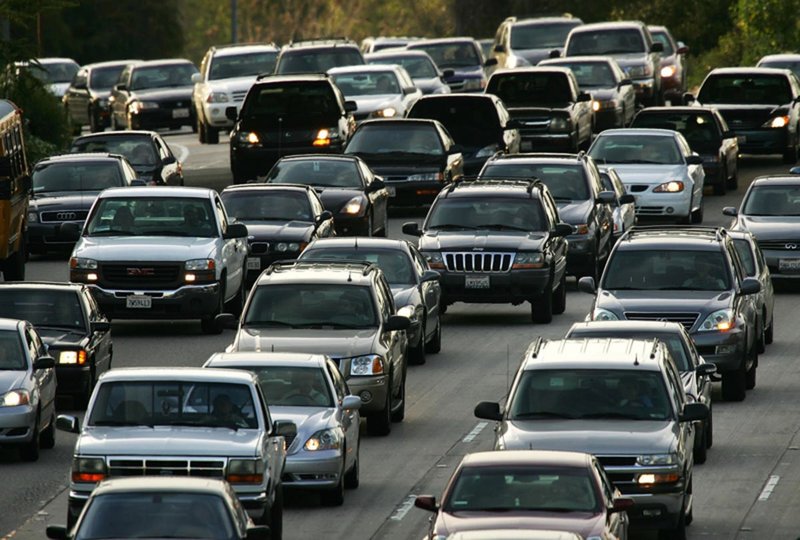
AMC’s television show “Hell On Wheels” is a favorite in our household. The wife likes westerns; I like history. The series traces the rough-and-tumble challenges of constructing the Transcontinental Railroad across America from the Atlantic Ocean to the Pacific Ocean in the mid 1800s. Those of us who live on the Peninsula are experiencing our own hellacious road work and traffic problems across our zip codes. The current “cone zones” on the point are a major pain in the place that meets the saddle. It’s an inconvenience but a necessary one to replace old water pipes with new ones. Eventually, the road work will be finished but with several new multi-story residential projects under way, traffic congestion is probably going to get worse. Add increased bicycle usage with the new “three-foot bicycle boundary law,” and driving on the Point has become running a gauntlet. Worst yet, road crews haven’t even started work on Rosecrans. Here’s a solution that other cities have used with success. London, Stockholm and Milan have enacted “congestion charge” zones to put the brakes on overcrowded roads. Before you scoff, know that during a seven-month trial, Sweden reduced its traffic flow by 20 percent, improved their air quality by 10 percent and saw a significant increase in public transportation usage. England has several posted congestion zones where hefty fees are charged on “most motor vehicles” between 7 a.m. and 6 p.m. Mondays to Fridays. These zones are enforced through the use of Automatic Number Plate Recognition (ANPR). In 2011 President Obama was fined nearly $100 after driving through a London congestion charge zone in a presidential state car during a visit to Buckingham Palace. Beijing, with severe traffic congestion, is now also considering congestion zones. Speeding is another red flag problem on the point. Newly installed flashing radar speed signs (Catalina and Canon Streets) “raise the speed awareness of oncoming drivers” but with “little effectiveness.” Some residents have suggested adding speed bumps and or more stop signs. City engineers say adding stop signs, speed bumps and closing streets (for cut-through traffic) negatively impact neighborhoods and often move problems to new locations and should be seen as last resorts. Studies have shown that some motorists actually increase their speeds to make up for the inconvenience of stopping and that more than 50 percent don’t even stop! The intersection of Catalina, Hill and Santa Barbara streets is a good example. “Traffic calming” measures and programs seem to work to reduce speeding. Example: Bird Rock, in La Jolla, found that by removing stop “conditions” at key intersections and replacing them with “roundabouts,” traffic speed was reduced “midblock to low-30s and speeds at intersections to 15-20 mph.” They also added curb extensions, tree plantings and other landscaping to help reduce the visual width of blocks resulting in a “traffic calming” effect. Historically, the last time we’ve seen speeds and congestion in our area this bad was in 1915, when “the fastest race-car drivers in the world” competed on the dirt roads of Point Loma as part of a promotion for the Panama California Expo, which celebrated the canal opening connecting the Atlantic Ocean with the Pacific Ocean. – Mike Ryan, Vice Chair, Peninsula Community Planing Board


