


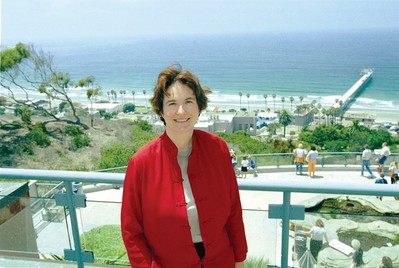
According to local businessman and philanthropist H. William Kuni of The San Diego Foundation, it’s time for San Diego to get smart. Climate Smart.
Kuni’s brainchild, the Climate Smart initiative, was launched last fall to educate the public about global climate change. Climate Smart brings together philanthropy, research, public education and financial incentives to combat the coming climate crisis at the local level. The San Diego Foundation, San Diego Regional Energy Office (SDREO), San Diego Natural History Museum and Birch Aquarium at the Scripps Institution of Oceanography (SIO) have joined forces in this venture.
Scientists at SIO are busy modeling exactly what Earth’s future climate will be. On Friday, Feb. 2, researchers will hold a press conference at Birch Aquarium following the release of a special report prepared by the Intergovernmental Panel on Climate Change (IPCC). Two SIO scientists involved in the IPCC will talk about their contributions, followed by analysis of the report by SIO climate experts. The press conference is media only, not open to the public.
Anyone who’s ever been disappointed by rain when the forecast called for sun knows that the weather is tricky to predict. However, it is clear that Earth’s climate is shifting.
“San Diego is particularly vulnerable to any changes in global climate change because of our extensive coastline,” Kuni said.
If greenhouse gas emissions continue unabated, San Diego could be approximately 3 degrees Fahrenheit warmer by the end of this century. In winter, a few extra degrees don’t sound so bad ” but even a few degrees could have drastic consequences for the region.
Sea level at the California coast could rise by up to 3 feet during the 21st century, and more is at risk than Sundays at the beach. Low-lying communities would be in the ocean. The rising saltwater could contaminate important freshwater sources. Much of the local water supply also comes from the Sierra Nevada snowpack, which would decrease in size as less precipitation falls as snow.
Nigella Hillgarth, director of the Birch Aquarium, said, “It’s not so much temperature rise as it is extremes in temperatures.”
San Diego would suffer more frequent storms. Coastal areas would see more rain, while the inland would see less. Wildfires would become more common.
Kuni explained, “There is a unique tipping point, when the changes will become irreversible.”
This “point of no return,” scientists estimate, lies approximately ten years ahead.
Climate Smart aims to take action before it’s too late. First, Climate Smart plans to spread the word about global climate change. The Natural History Museum is hosting a lecture series entitled “Climate Change: Perspectives and Solutions.” Then the Birch Aquarium will unveil a new exhibit this spring called “Feeling the Heat: The Climate Challenge,” which will include “California 2050,” a glimpse into what the future of San Diego could be like.
“We will share a message of hope by showing people what they can do and how they can have an impact,” Irene Stillings of SDREO said of the second phase of the initiative. “We underestimate the power of ordinary people.”
Each of us has a “carbon footprint, ” or the amount of greenhouse gases a person produces. Recycling, using public transportation and conserving electricity all decrease the size of one’s footprint.
However, Stillings said she recognizes that the public alone cannot solve the climate problem. Government leadership is an essential factor.
“The government ” in many respects, they’re followers, not leaders,” Stillings said. “They wait for the citizen to demand something before they take action.”
By educating the citizenry, Climate Smart hopes to indirectly influence public policy.
The solution requires capital as well. Over the next three years, the San Diego Foundation will award up to $500,000 to support climate research with funding from the Blasker-Miah-Rose Grant program.
This past January, SDREO started sharing dollars as well. The Solar Initiative, in association with the state of California, will provide up to $45 million each year in rebates for businesses, government and consumers to install solar panels. SDREO has already distributed millions of dollars in rebates to large businesses that added solar panels to their roofs.
“The key word is catalyst,” Kuni said.
Climate Smart has contributed to the local conversation about global climate change. It’s up to San Diego to decide how to respond.


