


Shakespeare’s works to be performed in unconventional venues
por Alex Owens
“Bard” means “poet,” and in his day, William Shakespeare was named “The Bard of Avon” and known as the national poet of England. In the centuries since, his name has become arguably and inexplicably linked with the nickname “the Bard.”
This fall, The Old Globe is turning the Bard into a bargain with a new program called “Globe for All.”
Between Oct. 28 and Nov. 5, the Balboa Park-based theater company will perform free versions of the classic comedy “All’s Well That Ends Well” at seven different locations that might be considered unconventional by normal theatrical standards, including homeless shelters, detention centers, military bases and senior centers.

(Courtesy The Old Globe Theatre)
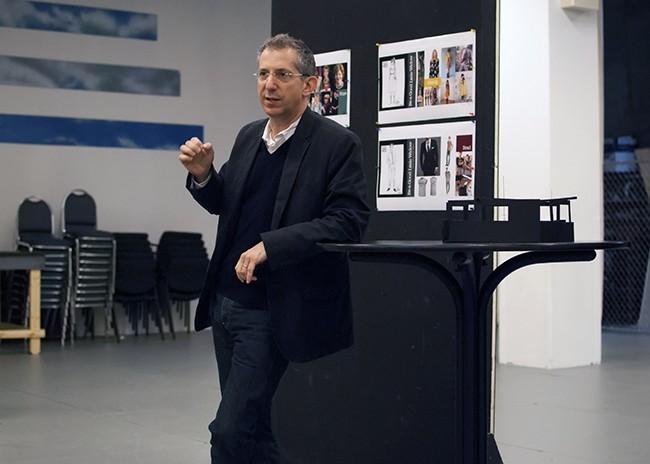
The idea, according to Old Globe Artistic Director Barry Edelstein, is to bring Shakespeare and live theater to people and places that may have never experienced it.
“We will be using available lighting, but no sets,” Edelstein said. “We’re just bringing costumes, props and live musical instruments.”
It might seem low-tech, but it actually harkens back to the Elizabethan era when the performers at the original Globe Theatre in England didn’t have the advantages of modern theaters — they just had good material.
Edelstein is excited about taking Shakespeare to people who haven’t had the opportunity to see the work in a live setting. He believes audiences will respond to the universal themes in the works.
“We at the Globe realized we needed to do more community outreach,” he said. “Our audience that attends the shows and the community demographics don’t match. We have an obligation to be more inventive and serve more San Diegans.
“Some people don’t come to the Globe because they don’t know what it is.”
Edelstein did a similar program when he was director of The Public Theater in New York City between 2008 and 2012. The theater’s “Mobile Shakespeare” brought the Bard to residents of homeless shelters, rehab centers, prisons, and other underserved audiences.
“It’s transformative,” he said. “In many cases, [audience members] have bigger concerns than watching a play, but these people’s lives can be dark and this can bring light. We did a show and one woman, a senior citizen, said it was the first time she’d seen a live performance.”

Edelstein believes “All’s Well That Ends Well” is a good choice as the first play in what he hopes to be an ongoing series.
“First off, I like the play,” he said. “It’s a comedy and a romance, and it’s easy to follow. Later on, we may experiment with tragedies. Or doing shows in Spanish.”
The performances on Nov. 2 and Nov. 4 are open to the public. The others are for special audiences.
The “Globe for All” tour will wrap up with three low-cost live performances available to the general public at the Globe’s Hattox Hall, Nov. 7 – 9. Tickets will be $10.
Edelstein is looking forward to reaching these new audiences.
“The military is a big part of San Diego that is underserved by the arts,” he said.
In addition to the performances for active duty members at the naval base, one of the shows will be performed for homeless veterans at Veterans’ Village of San Diego.
“It’s a marvelous opportunity to experience live theater,” said Marilyn Cornell, clinical director of Veterans’ Village. “Many of our veterans are interested in the arts, and this will be a sober [alcohol free] experience.”
Edelstein said that while “All’s Well That Ends Well” is easy to follow, he will go the extra step to make sure his audience understands the play and the context in which it was written. An hour before each show, there will be one-hour pre-show workshop, where the Globe’s teaching artists introduce Shakespeare to the audience.
“We introduce the characters and the plot and the language and offer ideas how to listen to it,” Edelstein said.
Although the current audience for Shakespeare tends to lean more on the wealthy side, Edelstein hopes the “Globe for All” program reminds people that, in his day, Shakespeare was as mainstream as you could get.
“The original audiences for these plays was from the whole social spectrum,” he said. “Theaters were controversial because of that. Some people have this sense that its overblown poetry, but very little is high-falutin.”
The Globe is looking for other organizations to partner with for the “Globe for All” program. If interested, contact Roberta Wells-Famula at [email protected] or call 619-231-1941 x 2144. For more information visit TheOldGlobe.org.
—Alex Owens es un escritor independiente con sede en San Diego. Se le puede contactar en [email protected].


