


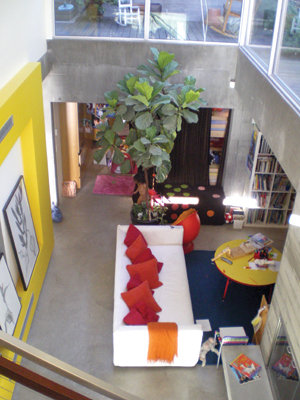
From traditional to natural, Erica and Phillip Baltazar’s La Jolla home “breathes with the environment.” The former New Yorkers turned their 3,000-square-foot space into a four-story, 4,500-square-foot landscape utilizing materials of concrete blocks, walnut and limestone. The introverted residence projects an almost lopsided look with its shared spaces showcasing the best views of the house — rather than the intimate ones of a bedroom — a move that earned the owners San Diego Home/Garden’s 2008 award for Best New Home. The home started upward from the basement, much like “making a sand castle from the ground up,” Erica said, and includes a playroom, rooftop deck, dumbwaiter, four bedrooms and large living spaces. They “took raw elements and made these open spaces,” said the mother of three. This allowed for the communal spaces to feel like living outdoors. The third story features a wraparound porch and nearly floor to ceiling windows that open up to the Pacific. Shielded only partially by bamboo and plated glass, a 16-person table sits smack dab in the room’s center beside a European-influenced kitchen and living space. The Baltazars enlisted James Brown of University Heights’ Public Architects. The designer’s fresh vision caught the Baltazar’s attention. Without too much influence in architectural classics — and with slight south-of-the-border references — the blueprints were unlike anything the family had ever dreamed. Though they expanded their space, they “have backyard envy,” Erica admitted, because the children have to make do with only a rooftop deck and open-air playroom. Yet it’s perfect for the family that thrives in communal spaces rather that intimate ones. Bedrooms are smaller than most La Jolla homes but “we’d rather have open space,” Erica said. The most occupied are often the playroom and kitchen, places perfect for entertaining, a common event in the Baltazar home. Like most coastal homes, it has the view — which will soon be made more spectacular when nearby utility poles move underground. But with its natural elements and an often improperly defined “unfinished look,” this space is unlike most.


