


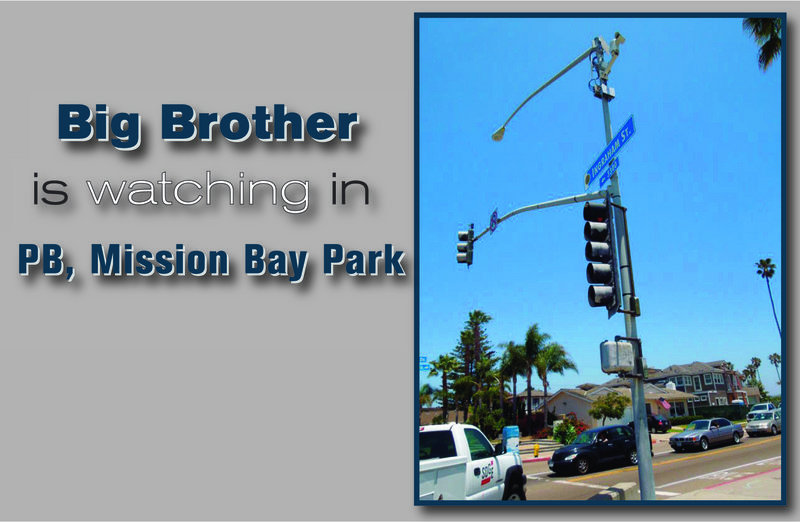
Homeland Security funds 14 surveillance cameras at 12 strategic beach, bay sites City officials have installed surveillance cameras at key waterfront locations from Ocean Beach to De Anza Cove as a result of funding from the Department of Homeland Security. The 14 cameras are atop buildings and light poles in 12 locations: • encircling Mission Bay at Hospitality Point • San Diego Lifeguard Headquarters • Rose Marie Starnes South Shores Boat Launch • entrance to Fiesta Island • Dana Boat Launch • Vacation Island • the north end of the Ingraham Street Bridge • Mission Point • Ocean Beach Pier • Santa Clara Point • Ski Beach • De Anza Boat Launch Funding for the cameras comes from a grant the city received in 2011 from the Homeland Security’s Urban Areas Security Initiative (UASI). Of the $16 million grant, $385,000 pays for the cameras, according to Darren Pudgil, spokesman for Mayor Jerry Sanders’ Office. Pudgil said the city receives a grant from Homeland Security annually, and that camera-maintenance costs will be paid for over time from the city’s budget. The cameras, which will be shared by a cross-section of law enforcement and government agencies — including the U.S. Coast Guard, San Diego police and Homeland Security — will be monitored by San Diego lifeguards. A spokesman for the lifeguards said the cameras have been installed but are not yet operational. The city currently operates some video-monitoring cameras along San Diego Bay at Mission Bay. The Mission Bay cameras were partially privately funded by residents, Pudgil said. The federal government, military and Port of San Diego also have cameras on the bay and coastal waters. “Mission Bay was the next logical location for these types of cameras,” Pudgil said. “San Diego Bay already has a high number of cameras. Mission Bay was chosen for the protection of tourists and residents. We want to make it as safe as possible.” The USAI program, administered by the Federal Emergency Management Agency (FEMA), has allocated grants since 2003 to help “high-threat, high-density urban areas” develop the capacity “to prevent, protect against, respond to and recover from acts of terrorism.” While video monitoring is new to the points around Mission Bay, it is not uncommon for the public to be under the watchful eye of cameras across San Diego. Along the coastline, federal and military installations have video monitoring. Since 2001, the Port of San Diego has received more than $33.6 million through various Homeland Security and port security grants. Some of those funds paid for security cameras, according to John Gilmore, a representative of the Port District. Gilmore said the Port District has about 140 cameras installed at various locations around San Diego Bay, including cargo terminals for security and public safety. The Port District oversees 17 public parks, two maritime cargo terminals at 10th Avenue and National City and owns the B Street cruise ship terminal. The county also uses video-monitoring equipment at some county buildings for general safety and security, according to Gig Conaughton, a county spokesman. However, the county does not monitor general outdoor activities at places like parks. In 2011, surveillance cameras operated by the city of Fullerton in Orange County captured police officers beating Kelly Thomas, a mentally-ill homeless man who died five days later. The video was instrumental in a judge’s ruling in May that two police officers involved in the beating stand trial for Thomas’ death.


