


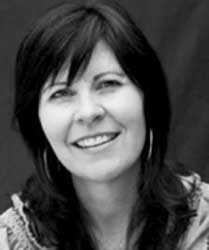
D.G. Wills Bookstore continued its tradition of in-store book readings with an appearance from author Denise Sullivan on Oct. 29. Sullivan joins a list of notables that includes dozens of literary heroes from poet Allen Ginsburg to political humorist Mort Sahl. Sullivan’s new book, “Keep on Pushing: Black Power from Blues to Hip-Hop,” follows African-American popular music through the decades with a focus on songs and artists related to the civil-rights struggle, the anti-war movement and gender rights. She was joined by singer-songwriters Cindy Lee Berryhill and Lisa Sanders, who performed several songs, including Bob Dylan’s classic, “The Times They Are A Changin’” to an enthusiastic crowd who sang along and in one case, joined in on harmonica. Though the cover conjures blues and hip-hop, Sullivan’s subject range includes coverage of rock, reggae, punk and folk, showing the wide range of protest music. “The idea was to create a labor-saving device for anyone who is interested in the intersection of music and political and social movement over the past 50 years,” Sullivan said. While there seem to be rallies and protests on the news daily, Sullivan notes that wasn’t the case until recently. “At the time that I started the research, there was no movement in place that was concerning the problems of our age,” she said. “There were, of course, songs, but there were no particular leaders or anthems like there were in that high water mark for politically and socially conscious songs of the 1960s and 1970s. It just got me wondering and got me thinking. So I launched my investigation, which took me back [in history] and unexpectedly brought it to now, where things are changing almost on a daily basis.” The title of the book comes from a song of the same name penned by Curtis Mayfield for his former group, The Impressions, which became a civil-rights anthem upon its release in 1964. “It’s a phrase that pops up in the civil-rights movement and throughout songs that confront in the liberation movement, so it seemed like a thread that was right to carry forward,” Sullivan said. “That song would be just as relevant today as it was then. The problems are still with us. The song is timeless.” Sullivan hopes the book will spark further interest in the music discussed. “I hope people use it as a point of discovery to go into the vast catalog of American music that pertains to liberation, civil liberties and justice,” she said. “This is a point of entry. The songs are there to be sung. They shouldn’t be put on a shelf.” Sullivan was able to interview a wide range of major artists for the book, including Yoko Ono, Richie Havens, Wayne Kramer and Michael Franti. “They were all more than happy to speak to these issues that are really close to their hearts and also at the core of who they are as artists,” she said. “These are people whose message is inextricably tied to their music.” While socially conscious music may not make it to the public’s ears quite like it did before, Sullivan believes it will always be relevant as a form of political expression. “There was a combined set of forces that drowned out topical music on a commercial level, but to some degree it’s always with us,” she said. “It never goes away as long as there are brave artists who are willing to step up and confront these issues in their songs.”


