


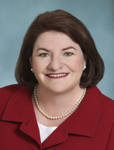
Local residents joined state Assemblywoman Toni Atkins for a community coffee chat at Bird Rock Elementary School on March 22 to discuss issues like education, healthcare, the state budget and keeping business in California. Atkins represents California’s 76th Assembly District, which currently spans from Point Loma to Bird Rock. After redistricting, which will take effect in June, the 76th District will shift north, spanning from So-lana Beach to San Onofre State Beach. Much of the former 76th District will be represented by the 78th District, which will span from Imperial Beach to Solana Beach. Here were some of the topics discussed. Educación “The best way to invest in our economy is to invest in education,” said Atkins, exemplifying strides in innovation, technology, science and medicine at UCSD. “We’re trying not to do more cuts to education.” Atkins urged community members who are concerned about education cuts and the recent onslaught of pink slips handed out to teachers to interact with their respective school board representative, unions and civic leaders about their concerns. “We’re all a piece of this discussion. It has to be local solutions. It all starts here,” she said. “We’re getting further and further away from dialogue and that’s unfortunate because it affects all of us.” Healthcare “California is one of the first states to implement the Affordable Health Care Act,” said Atkins. “We’re going to see an increase in three million people statewide that will be covered.” Although there is much work to be done to educate the new recipients about their coverage, she said the act is promising for job growth in the medical industry, promoting a healthier community and long-term monetary savings. “The healthier we get as a community, the more we save in the long run,” she said of preventative health care measures. “We’re going to create more jobs because we’re going to need more doctors, nurses and IT.” Business “The problem is not that we have many businesses leaving, but what they aren’t doing is expanding,” she said. “California has more regulations than most states.” Atkins said that while California competes with Texas and Florida for new business growth, California is unique in that state legislation emphasizes more stringent environmental standards than those two states, which makes owning a business in California more expensive. The challenge, she said, is in finding the right balance to support in-state business growth and ownership, as well as maintain good environmental practices. Defensa The most recent round of the Department of Defense Base Closure and Realignment Commission (BRAC) was established in 2005 to “ensure the integrity of the base closure and realignment process,” according to BRAC’s website. Atkins, alongside other state representatives, recently offered amendments to an assembly bill, which Atkins introduced herself, that would protect California’s military interests during BRAC’s ongoing deliberations. “We’re trying to have a coordinated approach in California to hopefully not have to close down these bases,” she said. Atkins said California suffered from more base closures than any other state in previous BRAC rounds, with the potential of losing nearly 30 bases. With the new amendments, the bill will help “ensure that California has a clear strategy moving forward to support and retain our vital military installations.” State budget With California facing a $9 billion budget deficit this year, more cuts will have to be made, said Atkins. The state gets its tax revenue from three primary sources — sales, income and property — she explained. “There’s no consistent source when the economy goes down. We’re not in the most solid position because those are our three sources of revenue,” Atkins said. The elimination of redevelopment agencies, as proposed by Gov. Jerry Brown last year, may be a long-term solution for money to trickle back into K-12 schools and other local services. “We are already in the process of unwinding redevelopment agencies,” she said. “Some of the money will come back as early as May, but it will take time for the money to go back to K-12 education and community colleges.” A seven-board committee will oversee the elimination process and determine where to direct funds, she said.


