


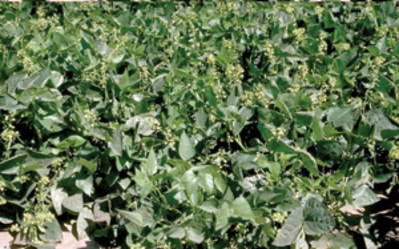
A few weeks ago, Evelyn Weidner, the owner of Weidner’s Nursery in Encinitas and the inspiration behind many of my garden columns, sent me an e-mail about an upcoming fund-raiser she created for the San Dieguito Heritage Museum. This year, the museum will pay tribute to the lima bean with a festival that will take place Sept. 25 through 27. You’re probably thinking what I did: “The lima bean, why?” Evelyn invited me to come up and see the museum and learn more about the event and the lima bean’s link to San Diego’s history. I took her up on her invitation and came away with newfound enthusiasm for this forgotten vegetable. Once a major crop in North County in the early 1900s, thousands of acres of lima beans flourished from Del Mar to Camp Pendleton and inland to Vista, long before housing tracts, flower fields and greenhouses covered the terrain. In the late 1800s, German pioneers who purchased land in Olivenhain with the intent to grow olive trees realized that there was no water available and they survived by planting lima beans. The drought-tolerant plant’s broad leaves captured the coastal fog that crept inland on most days and sustained the crop without water. With the water shortage we are currently experiencing, it would seem that lima beans could once again become an important crop, but public demand has to increase. Maybe Evelyn is on to something. Native to the coastal regions of South America, the lima bean, Phaseolus lunatus (Phaseolus is Greek for bean and lunatus is Latin for moon-shaped), is a highly nutritious and economical legume whose family also includes the snap, string, navy and pinto bean. Rich in photochemicals that include cancer fighting and cholesterol lowering elements, one cup of lima beans make up about 50 percent of the daily requirement for fiber and they are filled with protein, B vitamins and potassium. Lima beans are fully developed seeds found inside the plant’s pod. Not only drought but also heat tolerant, they are robust growers that will mature in 60 to 90 days, depending on the variety. Plants come in both bushy varieties that mature faster and pole varieties that take longer to mature and require support to grow on. Easy to grow in the home garden, they love well-drained soil, sunny, warm weather and will only germinate in soils that reach temperatures 65 degrees F or higher. Pods are harvested when they are bright green, plump, firm and feel well filled to the touch. The shelled beans can be cooked fresh or you can freeze or dry them for later use. Raw lima beans should not be eaten. Evelyn said she is hoping the festival will make “lima bean haters into lima bean lovers,” after they taste all the delicious ways they can be prepared. She makes a Caribbean dish that incorporates lima beans with raisins, toasted almonds, salsa and plenty of cilantro. “Everyone who tastes it says the same thing: wow, I never knew lima beans could taste this good!” she told me. For more delicious and creative ways to enjoy dried lima beans (fresh or frozen are not to be used in the cook-off), join Evelyn at the festival or contact her at (760) 809-0789 or [email protected] if you want an entry form to join the cook-off. The San Dieguito Heritage Museum is located at 450 Quail Gardens Drive, Encinitas. The cook-off will be held Saturday, Sept. 26 from 11 a.m. to 2 p.m. More lima bean events are planned for Friday and Sunday. If you are interested in participating in the cook-off, they are looking for home cooks, professional chefs, restaurants or anyone who is interested in cooking. Lima Bean Hummus (Adapted from a recipe in the Gourmet Cook Book) Makes 4 cups While not eligible for the cook-off because it is not made with fresh lima beans, this dip has a beautiful celadon green color and fresh herb flavor. People never realize they are eating lima beans and love it! Serve with pita chips. 2 (10-oz) packages frozen baby lima beans 1 large onion, chopped 2 garlic cloves, smashed ¼ cup freshly chopped cilantro (fourth) ¼ cup freshly chopped Italian parsley (fourth) 1 tea. ground cumin ¼ tea. cayenne, or to taste (fourth) 3 tab. fresh lemon juice 5 tab. extra virgin olive oil 2 tab. chopped fresh dill 2 tab. chopped fresh mint Sea salt and freshly ground pepper, to taste Combine beans, onion, garlic, salt and 2 cups water in a 3-qt. saucepan and bring to boil. Simmer, covered, about 8 minutes, until beans are tender. Stir in cilantro and parsley and remove from heat. Let stand uncovered for 5 minutes, then drain. Puree bean mixture in a food processor with the cumin, cayenne, lemon juice, 4 tab. of the oil, dill and mint until smooth. Transfer to a bowl and cool to room temperature. Season dip with sea salt and pepper and the lemon juice. Mound into a serving bowl and drizzle with the remaining 1 tab. oil.


