


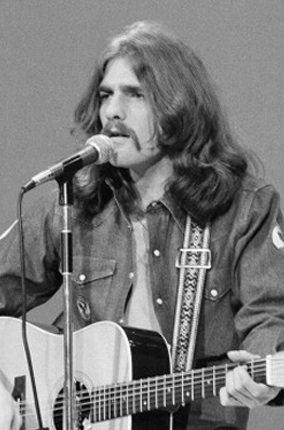
Glenn Frey, a founding member of the enormously successful and internally combative Eagles rock band, died Jan. 18 in New York City, days after two other noted musicians succumbed to cancer. Frey, 67, had been battling rheumatoid arthritis, ulcerative colitis and pneumonia for the past several weeks.
Frey’s death comes shortly after the deaths of famed singer-writer David Bowie, who died of cancer on Jan. 10 at 69, and Motörhead founder and frontman Ian (Lemmy) Kilmister, who learned of his cancer diagnosis hours before he died on Dec. 26.
“Words can neither describe our sorrow nor our love and respect for all that [Frey] has given to us, his family, the music community and millions of fans worldwide,” his publicist said.
Guitarist and Detroit native Frey formed the Eagles with drummer Don Henley in Los Angeles in the early 1970s along with guitarist Bernie Leadon and bassist Randy Meisner. They would become a top act over the next decade, embodying the melodic California sound.
The Eagles’ most recent San Diego concert was in October of 2014, at Viejas Arena. The band’s final performance took place July 29, 2015 in Bossier City, La.
Henley said in a statement that Frey was “like a brother” to him.
“The bond we forged 45 years ago was never broken, even during the 14 years that the Eagles were dissolved,” Henley said. “We were two young men who made the pilgrimage to Los Angeles with the same dream – to make our mark in the music industry – and with perseverance, a deep love of music [and] our alliance with other great musicians and our manager Irving Azoff, we built something that has lasted longer than anyone could have dreamed.”
An Eagles greatest-hits collection from the mid-1970s and “Hotel California,” released in 1976, have sold more than 20 million copies and are among the best-selling albums of modern times. The group’s many hit singles included “The Best of My Love,” ”Desperado,” ”One of These Nights” and “The Long Run,” a prophetic boast from 1979 that they would “go the distance in the long run.” The impulsive Frey and more cerebral Henley shared songwriting and singing duties, with Frey’s drawling tenor featured on “Heartache Tonight,” ”Already Gone” and the group’s breakthrough hit, “Take It Easy.”
The Eagles’ popularity well outlasted their breakup in 1980 and the 14-year hiatus that followed. Their records remained consistent sellers, and they were a top touring act over the last 20 years even though Frey and Henley were the only remaining original members. They were joined on stage by guitarist Joe Walsh, who replaced Leadon in the mid-1970s, and bassist Timothy B. Schmit, who stepped in after Meisner left the group in 1977. Guitarist Don Felder was added in 1974 but parted ways with the band in 2001 amid disputes over money.
The band was inducted into the Rock & Roll Hall of Fame in 1998 and was supposed to have been honored at the Kennedy Center last month, but the appearance was postponed because of Frey’s health problems.
Frey had occasional success as a solo artist, with songs including “The One You Love” and “You Belong to the City,” and he had careers in movies and television. He appeared on episodes of “Miami Vice” and “Nash Bridges,” both featuring his friend Don Johnson, and appeared in the film “Jerry McGuire,” directed by Cameron Crowe, who had befriended him after he interviewed the Eagles for Rolling Stone magazine in the 1970s. Frey’s “The Heat Is On” was a hit from the “Beverly Hills Cop” soundtrack, and his “Smuggler’s Blues” inspired a “Miami Vice” episode of the same name.
Frey, known for his oversized jaw, big grin and wavy dark hair, loved music, girls and the rock ‘n’ roll life. He would meet up with Henley, Meisner and Leadon while all were trying to catch on in the Los Angeles music scene, and for a time the four backed Linda Ronstadt.
The bandmates harmonized memorably on stage and on record but fought often otherwise. Leadon and Meisner departed after run-ins with Frey, and Felder ended up in legal action with the Eagles. The band’s breakup in 1980 happened after Felder and Frey nearly came to blows after a concert in Long Beach, California.
Frey and Henley also became estranged for years, their breach a key reason the band stayed apart in the 1980s. Henley had vowed the Eagles would reunite only when “hell freezes over,” which became the name of the 1994 album they had never imagined making. Frey is survived by his wife Cindy and three children, Taylor, Deacon and Otis, whom Henley said the guitarist loved “more than anything.” — Fox News


