


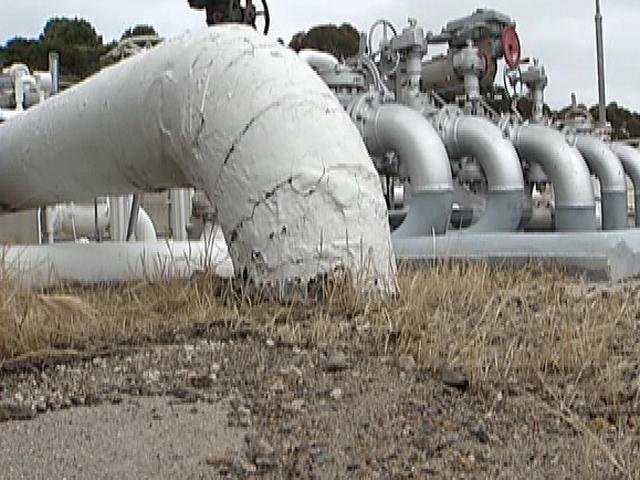
The Navy has released a draft environmental assessment of its fuel pipe relocation project in Point Loma, to which the Peninsula Community Planning Board has responded with a list of concerns.
The Navy says relocating a section of its 17.3-mile fuel pipeline between Naval Base Point Loma and Marine Corps Air Station Miramar from the coastline to Rosecrans Street is essential, as about 4.5 miles of it are in need of repair or relocation to address deficiencies. The Navy said the seismic safety of the pipeline also needs to be enhanced to support its present and future fueling missions.
To address erosion issues along the La Playa waterfront from McCall to Talbot streets, the Navy proposes having the pipeline relocated within the Rosecrans Street right of way.
The relocation proposal has sparked fear from some residents and planners because they say the pipeline relocation project could pose a serious public-safety threat, adding to parking woes and area traffic congestion, since it is likely to be disruptive.
In her written comments to the Navy command on behalf of the planning board, chairwoman Julia Quinn noted there are inconsistencies in the plan document, like a discrepancy in two different sections of the document, one of which says the pipeline relocation will entail 5 miles and the other saying only 3.5 miles.
“This inconsistency in project descriptions has ramifications on the impacts to transportation/circulation along Rosecrans Street and needs to be addressed in a revised DEA that is circulated for public review,” said Quinn, adding the document “does not address how access along Rosecrans Street and intersecting roads will be maintained during construction, which is required for the public to determine impacts to transportation/circulation in our community.
“The planning group, and the community at large, share other concerns about the pipeline project,” said Quinn.
“The DEA states access to a significant number of residential and commercial properties will be impacted during project construction but does not address how access will be maintained to these existing residences and businesses during construction to ensure minimal disruptions to the traveling public as well as emergency response (fire and paramedics) during the construction phase,” she said. “Delays in emergency response vehicles could result in loss of life and property and is an impact that has not been addressed in the DEA.”
Quinn said the lack of a fleshed-out traffic control plan in the DEA is a glaring omission.
“The DEA should contain the traffic control plan at this time to justify the conclusion in the DEA that impacts to transportation and circulation will be less than significant,” Quinn wrote in her letter on behalf of the board.
According to the assessment, the first portion of the pipeline repair and relocation under the proposed project would occur on the portion of pipeline that runs from Naval Base Point Loma to Lytton Street, “where the majority of anomalies have been found during past inspections.”
However, the assessment does not identify the precise locations of identified anomalies.
If the Navy pipeline realignment is approved, the project would be put out to bid and awarded during fiscal year 2015. The project is anticipated to have a two-year timeline, finishing sometime during 2016-17, the Navy said.


