


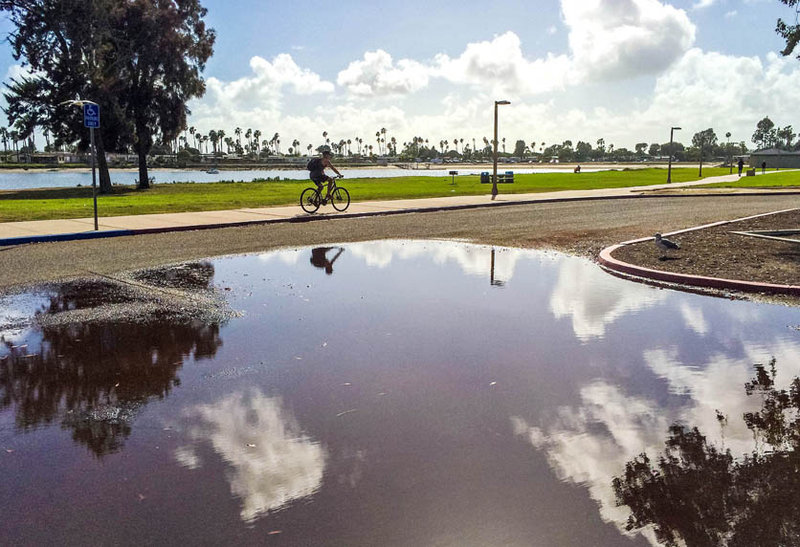
At the April 27 community workshop on the De Anza Revitalization Plan, attendees learned prospective upgrades could include water-quality improvements, RV and tent lodging, enhanced pedestrian and bicycling access and possible marshland relocation.
“We want to develop a plan with uses that can complement each other and work together to achieve that balance,” said project consultant Brooke Peterson, of PlaceWorks, about the revitalization plan that seeks to reinvigorate the popular regional park. Following the workshop, Peterson noted the event “generated great energy and enthusiasm as the city’s project team shared case studies of visionary parks and park features from around the world and then put the community to work charting the future of De Anza.”
After opening presentations in Mission Bay High School’s auditorium, workshop guests came together and collaborated in groups to prioritize future programs and uses, designing their own concept plans for De Anza.
“More than 20 different community concepts were created and will now be used by the project team to develop a series of concept alternatives,” said Peterson of the workshop, which drew more than 200 attendees representing a broad range of regional interests.
Led by the City of San Diego, the project seeks to reimagine, repurpose and revitalize De Anza and the surrounding area.
“The goal of the plan will be to create an iconic recreation destination that maximizes the benefit offered to the region by this extraordinary waterfront amenity that balances recreation, environment and commerce,” said Peterson.
Peterson said the three-year program will develop conceptual revitalization plan alternatives that result in a preferred plan, an amendment to the Mission Bay Park Master Plan and an environmental impact report.
Peterson noted global warming and anticipated sea level rise are also being factored into De Anza regional park’s redesign.
The plan project area includes the De Anza Special Study Area (mobile home and RV park), De Anza Cove Park and the surrounding uses, including Mission Bay Golf Course, Mission Bay Boat & Ski Club, Bob McEvoy Athletic Field and Mission Bay Tennis Club.
The De Anza project area being revitalized comprises 120 acres, including a special study area in the Mission Bay Master Plan, plus the surrounding area to the north and east.
Glen Schmidt, of Schmidt Design Group, followed Peterson’s remarks with a slideshow depicting similar, successful “reclamation” park projects around the country.
Peterson said the project team will be working over the next couple months to prepare concept alternatives, which will be presented for input and feedback from the community at the next workshop in July.
Additional workshops, as well as other outreach in-person and online events, will take place over the next year as the city works with the community to refine and narrow down the alternatives and select a preferred plan.
The effort to redevelop the regional park was delayed by a decadelong court battle between the city and residents of the 500-unit De Anza Cove Resort mobile home park, a 75-acre park on prime real estate jutting into the water in Mission Bay Park west of Interstate 5. Ultimately, the city reached a $3.6 million settlement agreement on one of three lawsuits involving current and former mobile home park residents, allowing them to relocate.
For more information about the plan and the process, visit DeAnzaRevitalizationPlan.com.


