


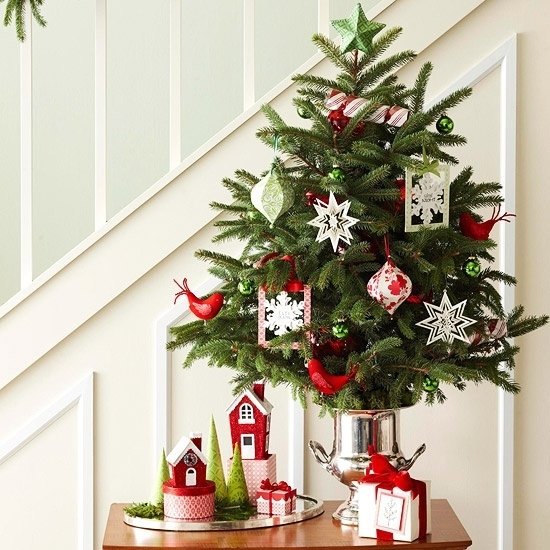
The tradition of bringing pine trees into homes, and decorating them for Christmas can be traced to 16th century Germany, and the Christmas tree has played a nostalgic part in our holiday season ever since. San Diego has ties to Christmas tree history by having the first electrically lit outdoor Christmas tree in 1904 at the Hotel Del Coronado.
Living Christmas trees may not be the easiest choice, but they have been gaining in popularity, mostly due to concern for our environment. After the holidays, living trees can be planted in the landscape where they can become a cherished reminder of a special Christmas past.
If you are considering a live tree, remember that the “cute” little Christmas tree will become a very large specimen in the future. Pine trees have dense root structures and careful consideration should be taken before planting them in your yard. If you do not have room in your yard, think of a place where you can donate your tree.
Coastal Redwood or Sequoia: These trees are native to Southern Oregon and California. They are among the tallest trees in the world and can reach heights of over 300 feet, with trunks 75 to 90 feet in circumference. I purchased one of these trees several years ago, and it now resides atop Mount Palomar, thriving on a friend’s ranch. We gave the tree as a gift after the area was ravaged by a devastating fire. Aleppo Pine: This particular pine thrives along the coast and is a native of the Mediterranean. It can grow to heights of 60 feet. Monterey Pine: A Southern California native, the Monterey can grow up to 60 feet, thrives at the seaside, and has attractive, bright green needles. Italian Stone Pine: Another Mediterranean native, this tree has an asymmetrical umbrella-like head, and can reach heights of up to 60 feet. These trees are available in sizes ranging from 2 gallons up to 15 gallons.
Your potted tree should remain indoors for no longer than two weeks. It should be watered thoroughly before you bring it inside and the soil should be kept moist. Take care to place the pot on top of a plastic pot liner, to protect your flooring. Position the tree away from direct sunlight and your heat source. It is recommended that you use low-heat lights and keep the decorations to a minimum.
Pine trees can be kept in pots but should be transplanted every spring into larger containers, filled with fresh organic (acid-based) soil. Before transplanting, they may be “root-pruned” by cutting vertically through the horizontal circulating root at the base of the root structure. This technique will help to keep their size to a minimum. Feed them periodically with a mild fertilizer, such as fish emulsion or a kelp based fertilizer.
If you have limited space, other small ornamental choices include; Ivy and rosemary that have been formed into “cone” shaped topiaries. Different varieties of evergreens are also available in pots as small as 6 inches. Display these living “trees” in interesting containers for a festive holiday touch.
Have a wonderful Holiday and a Happy New Year!


