


Take a slow, deep breath. Fill your lungs to their capacity and release the air slowly. Now imagine trying to take a full breath through a straw. Before you can accomplish the task at hand, your chest tightens and cramps, restricting your airways so that they are half their normal size “” airways that are filling with mucus, further limiting any intake of air that you desperately need.
This is what happens during an asthma attack, and as anyone with asthma knows, the surge of adrenaline and panic that courses through the body upon realizing you are unable to breathe only worsens the situation and results in short, staggered gasps.
“Someone explained to me once that for an asthmatic, you feel like you’re drowning, you cannot breathe,” said Susan Howard, a Mission Hills resident who lost her daughter to a fatal asthma attack. “As hard as you try, because you can’t get the carbon dioxide out, you can’t get the oxygen in. So you’re gasping, trying to push the oxygen in because you know you need it. Your lungs are working in such a way that you can not expel the carbon dioxide, so you can’t replace the bad air with the good air.”
According to the American Lung Association, Asthma affects 314,000 people in San Diego County, about 84,000 of whom are children. Asthma is the leading cause of school absenteeism due to chronic conditions and the leading cause of hospitalizations in children under 15, which is why the ALA invites community members to join them in breathing the fresh San Diego morning air on Sunday, Sept. 24 as they host their fifth annual Asthma Walk, beginning and ending in Point Loma at Liberty Station, formerly the Naval Training Center.
MediciNova and Team Research San Diego are sponsoring the 5-mile walk, which is now in more than 150 communities throughout the United States to support local education, prevention and patient services.
“Asthma can kill,” said Ross Porter, communications director for American Lung Association of California. “We’ve had four pediatric asthma deaths in the past year here in San Diego County, which is more than we’re accustomed to seeing. Of course, it’s always tragic when a child dies and we believe that all asthma deaths should be prevented.”
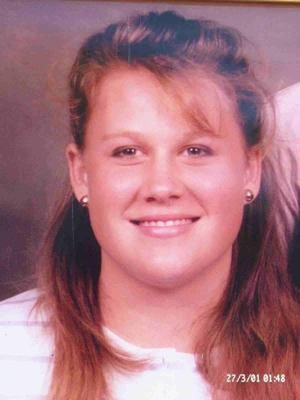
Howard, a 19-year Point Loma resident who moved to Mission Hills one year ago, knows all too well how dangerous asthma can be. Her daughter, Nancy Howard, was born July 29, 1972, and diagnosed with asthma at the age of two. Before she could reach 22, Nancy died from an asthma episode.
“July is a bittersweet month,” Howard said. “[Nancy] died July 8, 1994, just three weeks short of her 22nd birthday.”
While Nancy was diagnosed young, her real medical problems began at adolescence. According to Howard, by the time Nancy had reached age 16, her episodes were much more severe.
“In those last six years of her life she had probably been in and out of the hospital at least 15 or more times,” Howard said. “We were with a variety of allergists and specialists who were working with her”¦. the attacks became more and more difficult for her. They were taking a toll on her health.”
Then, in 1994, Nancy had an attack that needed immediate medical attention. Paramedics were called and Nancy was rushed to the hospital, but she could not be revived, Howard said, adding that she believes Nancy most likely died in the ambulance before arriving at the hospital.
“We had been lulled into a false sense of security that if we got her to the hospital, it would be okay,” she continued. “But sadly, we couldn’t get her there and we couldn’t get her breathing again.”
While Howard noted that asthma research and education has grown over the years, she admits that the facts were not always so clear. People used to believe that children with asthma would “grow out of it,” she said.
“I had someone say to me shortly after [Nancy] died, ‘People don’t die of asthma.’ Well, the reality is they do, and I had proof,” Howard said.
According to Porter, asthma is an underlying chronic inflammation of the airways that becomes dangerous when triggers instigate an asthma episode, causing the sensitive airways to close down as muscles constrict, making breathing very difficult. Porter described the occurrence as a “lung cramp,” similar to a stomach cramp.
Triggers for an asthma attack are varied and depend on the individual. They can include viral respiratory infections such as the flu or bronchitis; bacterial infections, including sinus infections; allergens; irritants, such as pollution, cigarette smoke, perfumes, dust or chemicals; sudden changes in temperature or humidity; emotional upsets, such as stress; and exercise.
Howard described how Nancy’s asthma was tied to her health. Colds could easily lead to bronchitis and that could go right into an asthma attack, she said. Nancy also had dust allergies.
“There were those times that we thought it was under control and her health seemed to be good, but then she’d have one of these very violent attacks,” Howard said.
While grateful for the medications available to asthmatics, Howard said she believes they can be a distraction form the underlying problem because they bring relief and comfort, masking the symptoms without curing the illness.
“I think people are much more educated now as a whole, but there still needs to be more and we can’t minimize what lung diseases can do to people,” Howard said.
In support of furthering advances in science, medicine and technology, Howard, her husband, Bob, and twin daughters, one of whom has asthma, have participated in all five local Asthma Walks.
“We don’t want anyone else to experience what we experienced,” Howard said. “We have found that in order for us to honor who she was, we needed to find positive ways to make changes.”
Registration for the Asthma Walk begins at 7 a.m.; the event begins at 8 a.m. For more information on the Asthma Walk, visit the local American Lung Association Web site www.lungsandiego.org.
To donate to the Howard’s Asthma Walk team, “The Breathe Boosters,” visit the Web site above, click on the Asthma Walk logo and click on the “Sponsor a Participant” tab and search for Robert Howard.


