


Human Rights Watch festival hopes to ‘create change in our global community’
By Anthony King | SDUN Editor
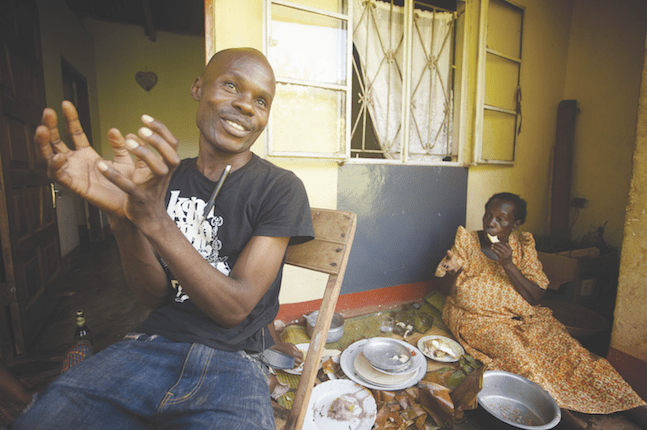
Leading off the Human Rights Watch Film Festival at Balboa Park’s Museum of Photographic Arts (MOPA) is the film “Call Me Kuchu,” documenting the struggle of the LGBT community in Uganda through the stories of five activists.
Kuchu, which loosely translates to “queer,” is a term embraced by some LGBT people in Uganda and a rallying cry for filmmakers Katherine Fairfax Wright and Malika Zouhali-Worrall. The film screens Thursday, Jan. 24 at MOPA, with an opening reception at 6 p.m.
The festival continues through Jan. 28, screening six films over five days in an effort to provide outreach and education as a part of the museum’s mission.
“MOPA strives to inspire, educate, and engage our audience,” said Priscilla Parra, MOPA film and public programs manager. “Presenting a film festival like the Human Rights Watch Film Festival allows us to accomplish this, with the strength of cinematic excellence, in hopes to create change in our global community.”

Additional films being screened include “Reportero,” which follows a Tijuana, Mexico-based reporter, and “The Invisible War,” a documentary about underreported rape in the U.S. military, two films Parra said she is particularly looking forward to showcasing.
“‘Reportero’ explores the risks and consequences of journalists who report on the Mexican drug cartels in and around our neighboring border city,” Parra said, and “‘Invisible War’ highlights a topic new and alarming to me.”
Now in its third year presenting the Human Rights Watch festival, MOPA uses film and photography to educate and change minds, a central component to both nonprofits.
“Film and photography have the ability to inform an audience by documenting often unseen realities of turmoil and distress,” Parra said. “When you are confronted with the perspective of the lives and places being affected, the lens evokes emotion and action.”
Following each screening, guest speakers and filmmakers will be present to discuss the film, offering attendees the chance to have a conversation about the topics they explore.
“Call Me Kuchu” filmmaker Wright will join Human Rights Watch (HRW) LGBT Program Advocacy Director Boris Dittrich in a talkback discussion after the Jan. 24 screening.
“We selected this movie because it’s such a clear picture of discrimination on the basis of sexual orientation and gender identity,” Dittrich said. “We want to show this film in a mainstream … festival because we don’t want to talk only to the LGBT community, we want to show other people as well what it is like to be discriminated [against].”

One activist highlighted in the film is David Kato, who was murdered in 2011 for being gay.
Dittrich visited Kato before his death, and the HRW director said he was saddened by Kato’s murder. “It was in a time that he really had hopes and expectations that things would improve in Uganda,” Dittrich said, “and unfortunately, after his murder, we see homophobia has become stronger and more ardent.”
Wright and Zouhali-Worrall began filming a year before Kato was murdered, and the film provides some of the last and most detailed footage of the activist’s life. He is profiled with his closest friend, Naome Ruzindana; Bishop Christopher Senyonjo; Stosh, a female-to-male transsexual; and Longjones, a kuchu activist compelled to come out after Kato’s death.
“Over the course of two years, we documented the daily lives and courageous work of David and his fellow kuchus,” Wright and Zaouhali-Worrall said in a statement. “In telling this crucial story, we explore the paradox of democracy in a country where a judiciary recognizes the civil rights of individual kuchus, yet the popular vote and daily violence threaten to eradicate those rights altogether.”
At the time, a new anti-homosexuality measure that is since been dubbed the “kill the gays” bill was being introduced. Exploited by the Ugandan media, the bill proposes death for all HIV-positive men and prison for anyone who fails to turn in a known homosexual. The bill has gone back and forth in Uganda’s Parliament and is currently being discussed, making the screening of the film at MOPA’s festival particularly timely.
“When you watch this film, you cannot just go home and forget,” Dittrich said. “You want to do something. You feel engaged, and you want to help people.”
For Dittrich, listening to people’s life stories is one of the best aspects of his job, which takes him around the globe to some of the most dangerous places for LGBT people.
“When I go to these very difficult countries where LGBT people are extremely discriminated [against], what I love doing is talking to them and listening to their stories,” he said. “Sometimes, I’m the first one who really wants to listen to them because they live in an environment where everyone is homophobic.”

Including Uganda, Dittrich said there are over 76 countries that criminalize homosexual conduct. Uganda’s anti-homosexuality bill resonates in those nations as well, however he also said he sees hope when he talks to individuals about advances in LGBT rights in places like the United States.
“In their context, they talk about ‘don’t torture me, don’t discriminate against me [and] don’t throw me in jail,’” he said, but they remain inspired to “fight for social injustice.”
The three other festival films include “Putin’s Kiss,” a personal look at the Kremlin-created Nashi youth movement through the eyes of a Russian teen; “Salaam Dunk,” documenting an Iraqi women’s basketball team; and “Brother Number One,” Rob Hamill’s story of his brother’s death at the hands of the Khmer Rouge in Cambodia.
Tickets for individual films are $4 for MOPA members, $6 for students, seniors and active military, and $8 for guests. Festival passes are also available. For more information visit mopa.org.


