


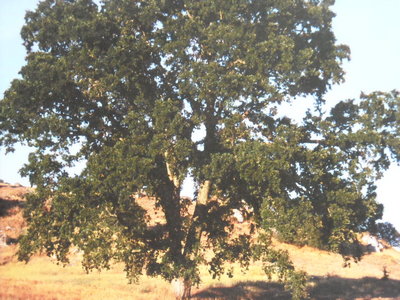
Two thought-provoking art exhibitions, which contrast the past and the future and offer an important opportunity to reflect on where we have been and where we are going, opened recently at the University of Calfornia, San Diego, and both are worth the drive up the hill to see. In the University Art Gallery, located on the west side of the Mandeville Auditorium complex, there is an exhibition of photography (on view until May 20), by renown artist Ken Gonzalez-Day, a faculty member at Scripps College in Los Angeles, and author of “Lynching in the West, 1850-1935,” which may cause readers to reconsider the historic past of the American West. On the other side of campus, in Room 257 of Pepper Canyon Hall, located adjacent to the Gilman Parking Structure, there is a fine example of office art, featuring pieces exhibited in the office work space of Sixth College’s Department of Culture, Art and Technology. This show may help you to imagine a future where many diverse and uniquely different worlds might peacefully co-exist as one. Although America may be the greatest country in the world, as many recent immigrants have professed, we are not without violence and prejudice in our past. For two years, Gonzalez-Day sat eight hours a day in the library and poured page by page over microfilm copies of old newspapers from 1849 to 1870 in order to find examples of lynchings in the American West. These lynchings were usually of “people of color”— Indians, Chinese, Mexicans and blacks — and were perpetrated by the white majority. Gonzales-Day determined the precise locations of the “hanging trees” and went out to photograph them on a large format Deardorff camera, with the aim of determining the possible relevance for these photographic images for people today. For the second part of his show, Gonzales-Day took old picture postcards of lynchings that were widely circulated in historic times and reproduced them, but without the victim in the picture. His idea in erasing the victim through Photoshop was to try to not “re-victimize” the hanged, but put the focus on the spectators who participated in the injustice. While reconsidering the past so as to not make the mistakes of history again is important, so too is imagining possible communities of the future in which everyone, despite their differences, might live in peace. The future-oriented art show, entitled “Many Worlds, Many Times,” curated by Micha Cardeñas and featuring the work of 12 artists, which is on exhibit until June 10, may help provide some possible direction. This show features video, artwork and installations based on the theme of multiple possible imagined future worlds fitting together without any one world or worldview being dominant, superior, or in any way “better.” “I chose a number of artists who enact the multiple worlds explored by the CAT curriculum this quarter. I wanted this show to provide real-life visual examples of the intersections of the best ideas from the different disciplines, for example art and biology, which might be used as the starting point, or a porthole, for a vision of possible imagined communities of the future,” said Cardeñas, the interim director of CAT. Pinar Yoldas, who is originally from Turkey, explored the show’s theme with a piece called “Fabula,” which consists of a series of strange and exotic biological creatures from the future, who are set in lighted water-filled bubbling incubation tubes. “My imaginary creatures are a speculation on the future of intimacy,” said Yoldas, “especially on love and bonding.” For more information, call the University Art Gallery at (858) 534-0419 or Sixth College at (858) 534-1481.


