


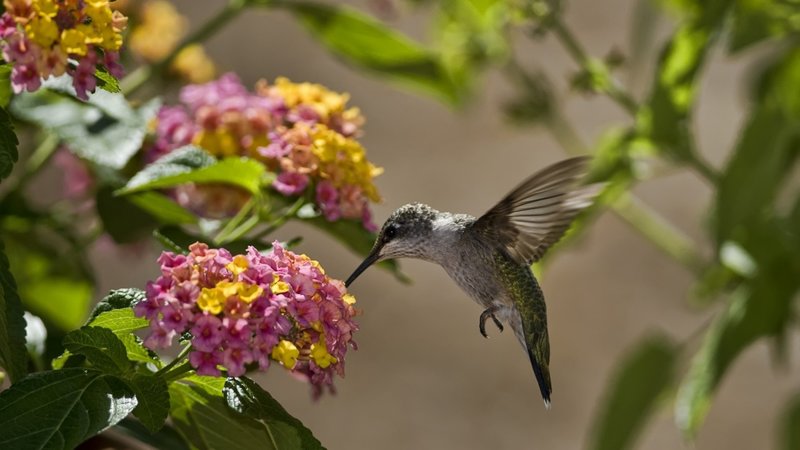
Since we are enjoying new Anna’s hummingbird nests in the garden, I decided to revive an old column I wrote about these amazing tiny garden jewels.
Hummingbirds are nature’s ways of saying thank you for planting flowers. Their jewel-like beauty is created by colorful iridescent feathers that have a prism-like construction that changes hue as they dart in and out of the sunlight. Hummingbirds need flowers to survive since their quick active movements and high metabolism requires them to consume two to three times their bodyweight in flower nectar and small insects each day.
An average garden flower has about 2-4 milligrams of nectar, which means that hummingbirds must visit thousands of flowers each day to extract the 50 grams of nectar they need to survive. For protein, small insects are also on their menu, which is great for insect control.
The smallest birds on the planet, hummingbirds live between 3-5 years, fly 25 to 60 mph, their wings beat at about 80 beats per second and they have the unique ability to hover and fly backward, but they can’t walk, only perch. Territorial and very protective of their feeding area, these tiny creatures will aggressively fight off their competition. They do not have a sense of smell and are attracted to flowers by their color. Red is said to be their favorite.
Five species of hummingbirds common to our area are: Anna’s hummingbirds, which are quite common, Costa’s, Rufouses, Allens and Black-chinned hummingbirds can also be found. Males are more colorful than females and have a magenta or red throat. They are one of the few hummingbirds that sing to attract a mate.
While a hummingbird feeder filled with sugar water will lure them, the feeder should only be viewed as a supplement to their diet, since sugar water lacks the nectar “pollen” proteins found in flowers. Pollen proteins keep the birds healthy and benefit their immune and reproductive systems. Some experts believe that hummingbirds will only occasionally feed from feeders and will rely on flowers for the mainstay of their diet. However, others believe that feeders create unhealthy and dependent “wino” birds. If you have a hummingbird feeder, do not color the sugar water with red food dye.
The best way to invite hummingbirds into your garden is with nectar-producing flowers and a water source. Flowering plants such as: alstroemeria, azalea, California fuchsia, daisies, delphinium, foxgloves, fuchsia, impatiens, jasmine, lobelia, morning glory, nasturtium, nicotiana, penstemon, pentas, petunias, phlox, rosemary, sage, salvia, trumpet vine and tuberous begonias, will all attract hummingbirds to your garden and an added treat is that these flowers attract butterflies.
With all the hummingbird nests we have had in the garden over the years, I always wonder if the babies who grew up here are the ones who come back to build their nests and visit me when I am working in the garden.
Linda is a Realtor with Coldwell Banker and she specializes in historic real estate. A historic homeowner herself, you can take a tour of Linda’s garden on www.LindaMarrone.com


