


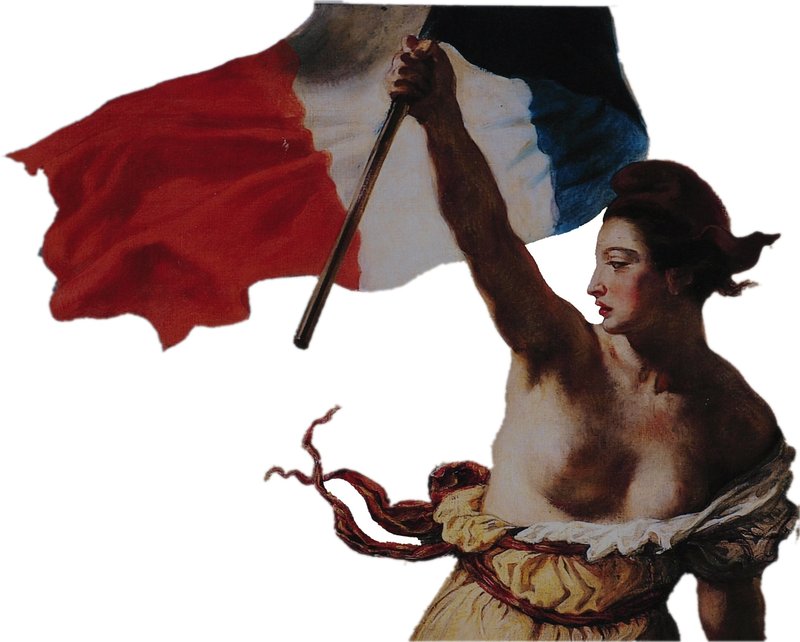
As you may know, I was an editorial liaison in France last July, having gone to the country’s Southwest to help a cultural center with its efforts at becoming an educationally accredited facility. It was my first business trip off the continent in 40 years and my first journey abroad in probably eight. But whatever excitement I felt at the prospect was tempered a little as I landed at Paris’ Charles de Gaulle International Airport on our Independence Day. January’s infamous Charlie Hebdo murders, in which 17 journalists and others were killed in a religious attack on a satirical newspaper, were fresh in Parisians’ minds, and airport personnel had reacted accordingly. On my arrival, paramilitary troops furtively patrolled the facility, their camos and red berets and high-powered rifles sharply distinguishable from the tens of thousands of travelers whose gazes the soldiers took great care not to meet. Some of those kids looked like they were about 18, old enough to drink under French law but relatively unskilled in the ways of a colossally hostile planet. The Theatre du Bataclan and the Stade de France were more their speed – places where they could leave their baby poker-faces at work and enjoy a Friday night in one of the monumentally greatest cities the world will ever know. Some hours later on Nov. 13, they’d have taken sober heed of the meaning behind their public presence on the job. In the face of terrorism’s latest assault on humanity, everything about sympathy for and solidarity with the French has been said, except that it’s writ larger and bolder with each day’s aftermath from the ISIS attacks at seven sites, the most lethal on Paris since World War II. The death toll at this point is steady at 129, with 352 injured, 99 critically. Eighty-nine were killed at the Bataclan rock concert alone. In reprisal, France has launched a series of air attacks on ISIS’ de facto stronghold of Raqqa, Syria. Amid the fallout from a civilian aircraft bombing in October, Russia has echoed French sentiment by pounding ISIS with the largest air assault in decades, deploying its fleet of 25 long-range bombers to do so. (The latest report says attack mastermind Abdelhamid Abaaoud, 28, was killed in an apartment raid north of Paris on Nov. 18. I’m hoisting a glass of Napoleon burgundy as I write.) Finally, it looks like the world’s had enough – and I say that with some hesitation, because the United States has a funny way of redrawing its lines in the sand when push comes to shove. President Obama (whom I voted for twice) appears to want ISIS terrorism to weaken Syrian President Bashar Assad’s dubious place in Mideast affairs, but he’d rather not risk too decisive an Assad defeat lest ISIS take power. Amid the politics of it all, he vacillates while France and Russia do the heavy lifting. Such stances make me long for a recast Marianne – the French so-called goddess of liberty, a symbol of all that is ideal in the West. You can’t go anywhere in France without tripping over her; she’s on postage stamps, French Euro coins, posters and the walls and staves of public buildings, getting her land legs during the French Revolution in support of all things democratic and free. “Liberte, egalite, fraternite,” reads the national motto beneath her silhouetted face – and the thing is, you’d be hard-pressed to find her bearing a weapon in any of her depictions. She might eschew the military angle to France’s damnable problems – but she’s also savvy enough to understand that warfare is the exception that makes the rule. I saw a big poster of her near the airport last summer, and I remember thinking at the same time that those troops’ rifles probably weren’t loaded – ramifications at the airport and in the French courts would have been uproarious if something had gone wrong to hurt a passenger or de Gaulle personnel, especially since those weapons were in the hands of guys barely out of boyhood. With the Nov. 13 attacks, however, I wouldn’t blame whatever administration for ammo’ing up, in public or not. Amid its ongoing state of emergency, France has the libertarian world’s blessing as it goes about its task, its national allegory growing more beautiful by the hour. God bless the French Republic – and vive la Marianne. Martin Jones Westlin is editor of La Jolla Village News.


