


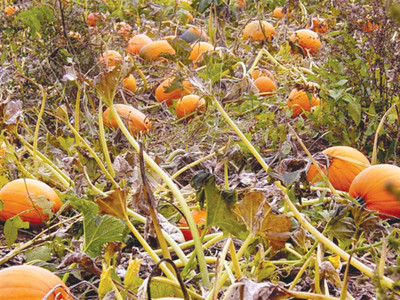
Just as October arrives, brightly colored orange pumpkins begin to appear around town and suddenly, it’s fall in San Diego. While fall is not the perfect time to start growing pumpkins, I thought it might be the ideal time to talk about how to plant these easy-to-grow plants for next year’s fall harvest.
Pumpkins (Curcurbita pepo “” from the Greek Pepon, meaning “large melon”) are native to America and the fruit is the largest in the vegetable kingdom. They come in a variety of sizes, shapes and colors that range from orange, yellow and white to hybrids in blue, green and red.
About 90 percent of the pumpkins grown in the United States are for the Halloween market.
Although they make great decorations, don’t forget to use them in cooking. Pumpkin is a good source of nutrition; it is low in calories, high in fiber and rich in vitamins A and B and potassium. Protein-rich pumpkin seeds are an excellent choice for snacking. Pumpkin is not just for traditional pumpkin pie and toasted pumpkin seeds ” pumpkin flesh can be cooked, puréed and added to soups, breads, cakes and muffins. It can be roasted like any other hard-shelled squash and served as a delicious side dish, or the whole pumpkin can be stuffed with meats or rice and served as a show-stopping entree. The first pumpkin pies were said to be whole pumpkins filled with cream, sugar and spices and cooked in the embers of an open fire.
When choosing which variety to plant, you need to decide how you want to use your pumpkins.
Traditional jack o’ lantern pumpkins are varieties known as the Connecticut Field or Howden. These vivid orange, picture-book specimens can grow anywhere from 10 to 20 and up to 50 pounds and are the most common pumpkin available in stores and farm stands during the fall.
While they make perfect jack o’ lanterns, they are bland tasting and have a watery consistency that is not as desirable for pies or cooking. Other varieties include New England Pie, which has a drier flesh that makes it especially good for pies, and Triple Treat, Lady Godiva and Trick-or-Treat that have edible hull-less seeds. Most varieties with the word “sugar” in them are ideal for cooking; Sugar Pie, Small Sugar and Sweet Sugar are a few examples. The heirloom variety Winter Luxury is another great cooking pumpkin.
While planting time varies with different varieties, the perfect time to plant most pumpkins for a Halloween harvest is from the end of May through July. Pumpkin vines are vigorous growers and take 90 to 120 days from the time they germinate to reach maturity.
Planning the appropriate space in your garden depends on which variety you choose. The Howden or jack o’ lantern variety are typically planted in wide rows where their very long vines are allowed to branch out. These varieties can grow up to 30 feet in length and require spacing of up to 3 to 5 feet between plants. Many of the new hybrids are more compact and display a bush-like growing habit, making them suitable for smaller spaces. These hybrids will take about one-third less space than the larger vine varieties.
Choose a sunny spot in your garden and amend your soil with good organic compost and aged manure products, since pumpkins prefer a rich soil base. Pumpkins love sun “” the more the better, or at least six hours of direct sunlight a day. Before planting, soak your seeds in water overnight to soften the hull and help them sprout faster. Typically, the seeds are planted on their side with the narrow edge facing skyward, but these seeds seem to sprout no matter how you plant them. Cover seeds with about an inch of loosely packed soil, keeping the soil moist but not too wet during the early stages of growth.
In about seven to 14 days, your seeds will begin to sprout and two small oval “seed leaves” will emerge. Thin your immature plants, choosing the strongest and largest plants, and space them according to the seed packet instructions. Once the plant is developed, water and fertilize regularly. Pumpkins are approximately 80 to 90 percent water and love to be watered as they mature. Mineral-rich “fish emulsion” is a good way to keep your plants healthy “” approximately one-quarter cup to 1 gallon of water every three to four weeks.
As your plants mature, remove the smallest fruit, leaving about two or three pumpkins per vine, and pinch off the tip of the main vine to stop it from growing longer. This technique will encourage the remaining pumpkins to grow larger and ripen.
To help create the “classic” pumpkin shape, you may need to move the pumpkin from sitting on its side and set it on its base, or flower end. Move your pumpkin only after it is well established, approximately one month into its growing cycle. Although this is suggested to help shape the fruit, it is also suggested to handle the fruit as little as possible. Always wear gloves when tending your pumpkin plants since the vines have small, prickly thorns.
When the pumpkins begin to display their rich orange color and the skin becomes very hard, it is time to harvest. If you can break the skin with your fingernail, the pumpkin is not ready to pick. Leave three to five inches of vine attached to your pumpkin, as this stem end will help to keep the fruit from drying out. When the pumpkins are ripe, their lush green vine will appear tattered, brown and dying. This is normal and does not affect the quality of the fruit.
When you use your pumpkin, remember to save some of the seeds to plant the following year. Wash the seeds and drain in a strainer. Dry them on a screen for approximately two to three weeks in a cool, dry place, turning them periodically. Store the seeds in an airtight jar in a cool, dry and dark place. Remember to date the jar. Properly stored seeds can last for several years. Never dry your seeds in the oven.
You don’t need to grow pumpkins to enjoy this delicious soup, which tastes just as great using canned pumpkin. It is a wonderful addition to a Halloween or Thanksgiving menu and makes a stunning presentation when served from a large, hollowed-out pumpkin or in small individual pumpkins as bowls.
Brandied Pumpkin Soup
Makes about 2 quarts
1 small pumpkin (2.5 lbs. to 3 lbs.) or 2.5 cups canned pumpkin
One-quarter cup unsalted butter
Half-cup finely chopped white onion
1 tab. freshly grated ginger root
Quarter tsp. freshly grated nutmeg
3.5 cups chicken or vegetable broth
1 cup half & half
2 tab. brandy (if you want to omit the alcohol, use apple cider)
Salt & white pepper to taste
Garnish: a dollop of sour cream or yogurt and a sprinkling of chives
If using fresh pumpkin, preheat oven to 375 F. Cut pumpkin in half crosswise and remove seeds and fibers. Place halves, cut side down, in a well-greased backing dish. Bake 40 to 45 minutes, until tender. Cool, scrape flesh from shell and puree. Measure 2.5 cups.
Melt butter in a large, deep saucepan. Add onion and ginger, cook until onion is transparent. Stir in chicken broth and nutmeg. Bring to boil. Blend in pumpkin and half & half.
Reduce heat and cook until soup is heated through, stirring occasionally. Add the brandy, salt and white pepper. Soup may be made up to three days ahead and refrigerated. Reheat over low heat, do not boil.


