


Is your tuna environmentally sound?
The Marine Stewardship Council has named the American Albacore Fishing Association (AAFA) as the first tuna fishery in the world to ever be MSC certified, according to MSC officials.
The council recognized American Tuna in Point Loma, co-founders of the AAFA, for its commitment to preserving future supplies of fish through simple but effective fishing practices.
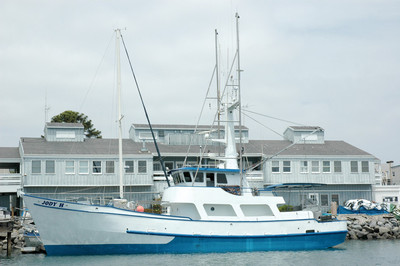
The San Diego-based company is made up of six fishing families living in San Diego who continue the traditional “pole-and-troll” method of catching albacore, said Natalie Webster, an American Tuna family member.
“The pole-and-troll fishing is literally catching every albacore, every time, with a pole,” she said.
The physically exhausting fishing practice can bring in a harvest of 150 to 200 tons of albacore each season, depending on sea conditions.
With the albacore fishing season coming to an early close this year because of weather conditions, most of the families’ vessels are currently docked in the harbors in and around Point Loma, she said.
Notching MSC certification has brought much recognition to the company. The company prides itself on high-quality tuna that is caught and canned in the U.S. during a time when many fisheries have moved their operations off shore, she said.
The certification includes with it a checklist of guarantees after the fishery completes an assessment of sustainable fishing practices ” that is, a pole-and-troll method that helps assure there will be plenty more fish in the sea next season.
The MSC assesses each applicant against a standard of three core principles it uses to determine sustainability, said Jessica Wenban-Smith, an MSC representative, in an e-mail.
The council evaluates the impact of the operation on the marine environment to make sure fishing activity causes no long-term problems for ocean ecology.
The MSC also evaluates management controls in place to check, among other criteria, whether the vessels adhere to local and national laws, Smith said.
Included within these three areas are criteria, subcriteria and performance indicators the council uses to evaluate the applicant. The findings are posted online at www.msc.org. The certification is valid for five years, according to the website.
Being MSC certified also allows the consumer to trace the tuna back to the original vessel that harvested it.
While American Tuna was the first to secure the MSC certification, there are currently 24 other fisheries around the world that have also earned the certification. Another 34 are under assessment, Smith said.
As more people around the world demand proof of sustainability practices from fisheries, Smith said she expects more fisheries would seek the certification.
She said one of the goals of the program is to make it easier for consumers to make the best environmental choice by picking seafood from a sustainable source.
As more fisheries seek certification, the movement would bring attention to U.S.-based fisheries like American Tuna who extol the benefits of eating tuna caught and canned using sustainable practices, Webster said.
“Were not only trying to educate the public about this wonderful sustainable American fishing [practice] “¦ but also because it’s good for you. A good choice for your health and your sustenance,” Webster said.
American Tuna can be found at Whole Foods Markets in La Jolla and Hillcrest.
The six families involved in American Tuna represent up to three generations of pole-and-troll fishing families that have joined together to bring a familiar history to the San Diego tuna industry. The city was once known as the “tuna capital of the world,” according to a statement from American Tuna.
For more information, visit www.americantuna.com or www.americanalbacore.com.


