


Longtime Point Loma resident and urban planner Mike Stevens’ ideas for improving the community were endorsed on Tuesday, Oct. 10, when the City Council voted unanimously to allow him to proceed with a controversial mixed-use project.
The decision has been a long time in the making, as Stevens first presented the project to the Peninsula Community Planning Board (PCPB) for review in 2004. After appearing on the board’s agenda eight times, the project was denied on October 20, 2005. Stevens continued to return to the monthly meetings through July 2006 in an attempt to receive the board’s approval.
According to city project manager Cory Wilkinson, a project typically sees a subcommittee once and meets with the full board twice.
“Mike [Stevens] was not a typical applicant,” Wilkinson said. “As a former member of the board, he wanted to work with the board to demonstrate conformance with the Peninsula Community Plan. He went to the board a number of times with updates and seeking input to ensure complete and full disclosure of the project.”
Stevens’ disclosure did not work in his favor. After receiving approval from city staff and the Planning Commission “” which heard the proposed project on July 13 of this year and voted 6-0 to approve “” the PCPB appealed the decision on the grounds that it was out of step with the community.
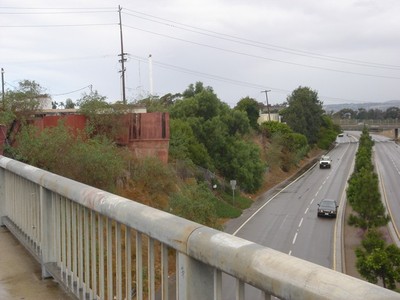
The project in question proposes to build 28 condominium units and six ground-floor commercial units on a triangular, one-acre site located between Voltaire and Wittier streets and bordered by Nimitz Boulevard. Stevens said that he paid particular attention to the Peninsula Community Plan, even going through the document page-by-page looking for references to Voltaire Street, when designing his project, which also includes landscaping, public improvements and street improvements.
According to PCPB Chair Cynthia Conger, increased traffic is a major concern and Stevens misrepresented a traffic document as a formal traffic impact study. Conger said the board asked for a true formal study of the area, which they never received.
At the City Council hearing, Walter Okitzu of Katz, Okitzu & Associates, the company hired by Stevens to conduct the traffic study, ensured that the report was consistent with city requirements. He argued that a formal traffic impact study was not required since the project would contribute far less than the San Diego standard of 1,000 daily trips. The project anticipates generating an additional 254 daily trips in and out of the site, according to Okitzu.
PCPB member Geoff Page spoke to the council about the traffic conditions and questioned the peak hours studied. He presented pictures of traffic along Voltaire Street at the schools’ start and end times, which most residents consider peak traffic hours.
While Stevens’ agreed that there are times when traffic is terrible, he and other business owners spoke of the ease of traffic during most hours of the day. He added that the project proposes numerous traffic improvements to the area, which should alleviate some concerns.
According to reports to the Planning Commission, Stevens proposes numerous improvements which would allow for a more free flowing Voltaire Street with less medians and traffic lights and additional turning lanes. Conger, however believes that these changes could create more problems “” due to the limited width of the street “” and possible accidents as vehicles attempt to turn across congested Voltaire during heavy traffic or the fast free-flowing low traffic times.
Stevens said that while parking and traffic were important his goal for this project was to emphasized people, not the automobile. He explained that bicycling is a huge part of his life and he wanted to encourage residents to bike and walk more, which is also included in the Community Plan.
“We’re designed to walk,” he said.
To emphasize foot traffic and bike traffic, Stevens’ project includes not only a bike storage area for residents, but also a shower area for employees of the commercial units to encourage them to bike to work. Stevens also includes a pedestrian walkway through the center of the project that connects Voltaire to Whittier, which has been a goal of Stevens’ for a long time.
“I wanted to get every whistle and bell that I’ve wanted my whole career,” Stevens said.
Despite Stevens’ desire to create a community centered on walking and biking he understands that the automobile is a part of life, which is why it was important for his project to have sufficient parking.
The site proposes 13 vehicle parking spaces and three motorcycle spaces at surface level available for commercial use. Underground residential parking consists of 58 vehicle spaces, 14 spaces would be tandem parking assessable, and three motorcycle spaces. Based on municipal codes the project is required to provide 64 parking spaces: 57 residential and seven commercial. Underground parking would be assessable at the end of Whittier Street and on Voltaire Street. Surface parking would only be assessable from Voltaire Street.
Despite Stevens’ available parking, residents are still concerned with the projects impact on parking in the area, specifically along Whittier Street, where resident Fae Ryan said street parking is already difficult.
Stevens said that he welcomed ideas and criticism of his project from the community, especially when it came to traffic and parking.
“People who drive a community usually know how to fix [problems],” he said.
While the PCPB did not approve of the project, many Voltaire corridor business owners spoke in Stevens’ favor at the hearing. Despite what traffic or parking problems this project could create, they expressed approval of Stevens’ attempt to beautify an area in need.
“This site absolutely and positively in my mind needs rejuvenation,” said District 2 Councilman Kevin Faulconer. “I think that this type of project can help”¦ and will be important for this area.”
“I know that you were trying to develop something that not only complies with the letter of the plan, but also the spirit of the Peninsula Community Plan, and I appreciate that people can have differing opinions on that,” Faulconer continued.
After hearing representatives from both sides, the City Council voted unanimously to deny the appeal from the PCPB of the Planning Commissions decision and approved Stevens’ application. The decision of the City Council is final.
“Stevens used the system to benefit himself, [and] is negatively impacting the safety, health and welfare of the community to do so,” Conger said after the hearing.
While the approval of the project won’t make everyone happy, Stevens is ready to break ground within six months and complete construction by 2008.


