


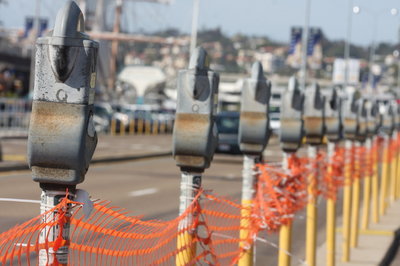
The San Diego City Council adopted an ordinance in March to implement a parking meter utilization improvement plan, which officials said would provide tools to better manage on-street parking, improve the usage of parking meters and facilitate neighborhood input in setting rates. The plan, which could generate nearly $1 million annually for parking and transportation improvements, calls for fluctuating pricing systems, time restrictions and hours of operation to achieve an 85 percent utilization rate, which is considered ideal for metered spaces. According to published reports, the current rate is 37 percent. “We’re not here to raise parking meter rates,” said Beth Murray, deputy director in the city’s Planning and Community Investment Department. “The primary purpose of the plan is to provide tools to better manage parking.” Murray said that in a downtown pilot program, average meter rates were reduced to 70 cents and average utilization rates doubled. Under the new ordinance, parking meters can be enforced from 8 a.m. to 11 p.m. Monday through Sunday, including holidays. Rates can now vary from 25 cents to $2.50 per hour. A provision allowing the city’s general fund to be reimbursed for eligible expenses that exceed parking revenues using proceeds generated by the plan was included in the ordinance. Currently, meters generate $7.4 million in income for the city. Meter revenues can usually only be used for parking and traffic-related expenses on streets that have them. Additionally, the mayor will now have discretion in using neighborhood feedback to adjust rates and hours of operation on the city’s more than 5,500 meters, without having to notify the City Council of any changes. About 67 percent of meters are located downtown and 27 percent in the uptown area, which includes the neighborhoods of Hillcrest, Middletown and Mission Hills. Designated community parking districts exist in the downtown, La Jolla, Mid-City, Old Town, Pacific Beach and uptown communities. Gary Smith, president of the Downtown Residents Group, which promotes quality of life issues in the downtown area, urged the council to approve the measure and said that the organization would be glad to help other districts get up to speed on all the different techniques learned in the downtown area. “As you know from the statistics that you have seen, we have been relatively successful,” Smith said. “We hope we will be even more successful when we can expand out of the test areas and into a larger area of the city.” District 2 Councilman Kevin Faulconer said the pilot program was successful downtown because the neighborhood had the local control and lowered their rates, which led to better utilization and more support for the program. “You want that local control and not the bureaucracy at City Hall setting those rates,” said Faulconer. Under the plan, the mayor cannot unilaterally set rates without first going through the local parking districts. District 3 Councilman Todd Gloria clarified that since the uptown community doesn’t have an advisory committee to make decisions regarding its parking district, the neighborhood will not see any adjustments in parking rates until a new parking advisory group is formed to represent the area. Anne Garwood, a resident of Hillcrest, opposed the passage of the plan stating that Hillcrest is disadvantaged compared to other communities in San Diego that do not have meters. Garwood added that the pilot program was conducted downtown, which she said is very different from Hillcrest. “Give downtown what they want, but take Hillcrest out of the scenario,” Garwood said. “When everybody else has parking meters in similar communities, with similar restaurants and similar shopping as Hillcrest does, then come back to us and change us.” The vote passed 5-2. Councilmembers Sherri Lightner and Carl DeMaio cast the dissenting votes, while Marti Emerald was absent.


