


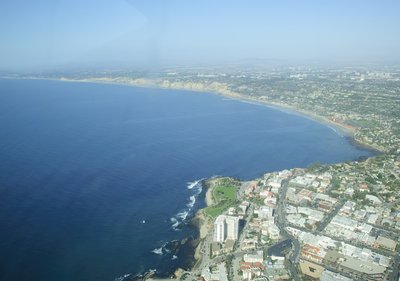
In a historic decision, the California Fish and Game Commission (FGC) voted Dec. 15, to adopt a network of 36 new marine protected areas (MPAs) in Southern California, stretching from Santa Barbara to the Mexican border. The new plan increases protection for marine life along the San Diego coast from about 1 percent to slightly more than 7 percent, said Meagan Wylie, San Diego Coastkeeper’s marine conservation manager. “In San Diego, what we ended up with was a huge victory,” she said. “And the biggest victory was the marine reserve that was put in place in south La Jolla.” The reserve’s boundaries were increased by two city blocks, extending from Palomar Avenue to Missouri Street in Pacific Beach, bringing it to slightly more than seven square miles. “The reason the reserve is so important is because La Jolla is one of the top biological hot spots in all of Southern California,” Wylie said. “It’s a kind of underwater powerhouse.” Advocates for expanding protected areas say the final plan was a compromise between environmentalists and the fishing industry, but not everyone agrees with that assessment. Bob Fletcher, former president of the Sportfishing Association of California, said he believes the process has been tilted toward advocates for protection from the beginning. “The final product is not something [the fishing industry] would ever have recommended and it will have a devastating effect on both recreational and commercial fishermen,” he said. “Frankly, it’s a corrupt process. It was touted as a wonderful, public-private partnership and an open and transparent process, and it was anything but that.” Fletcher, who represents a coalition of fishing and boating organizations under the banner of the Partnership for Sustainable Oceans (PSO), argues that closing more areas to anglers will only serve to concentrate fishing in other zones, possibly causing over-harvesting in the areas that remain open. The final plan leaves areas in northern La Jolla open for fishing, while protecting the areas of the reef that, according to Wylie, are “less important to consumptive interests but provide a lot of benefits to the marine life that lives there.” Advocates for protection also say that by protecting these particular areas, the ecosystems within them will thrive. Eventually, the species in those ecosystems will venture outside of the protected areas, potentially replenishing the depleted biodiversity everywhere. Wylie said that though she was thrilled with the decision, some amendments to the original plan left coastal protection advocates slightly discouraged. At Swami’s in Encinitas, for example, the size of the protected area was increased to 10.5 square feet, but the level of protection was reduced. The region was designated a State Marine Conservation Area, instead of a State Marine Reserve, so spearfishing and coastal fishing will be allowed. “[The Swami’s decision] was a little bit disappointing, but it’s something we can live with,” she said. Fletcher said that, in addition to being one-sided, the plan doesn’t account for what he believes to be the most pressing issues for coastal health. “The plan does nothing to address major water quality concerns,” he said. “Coastal pollution is the major culprit in the declining health of the ocean.” He said members of the PSO plan to take steps to prove that the process by which the decision was made was illegal. “It’s a process that was jaded from the start and we will continue to raise these issues in the courts and in future meetings,” he said. “It was not balanced and objective, and we can conclusively prove that.”


