


HouseCalls
By Michael Good

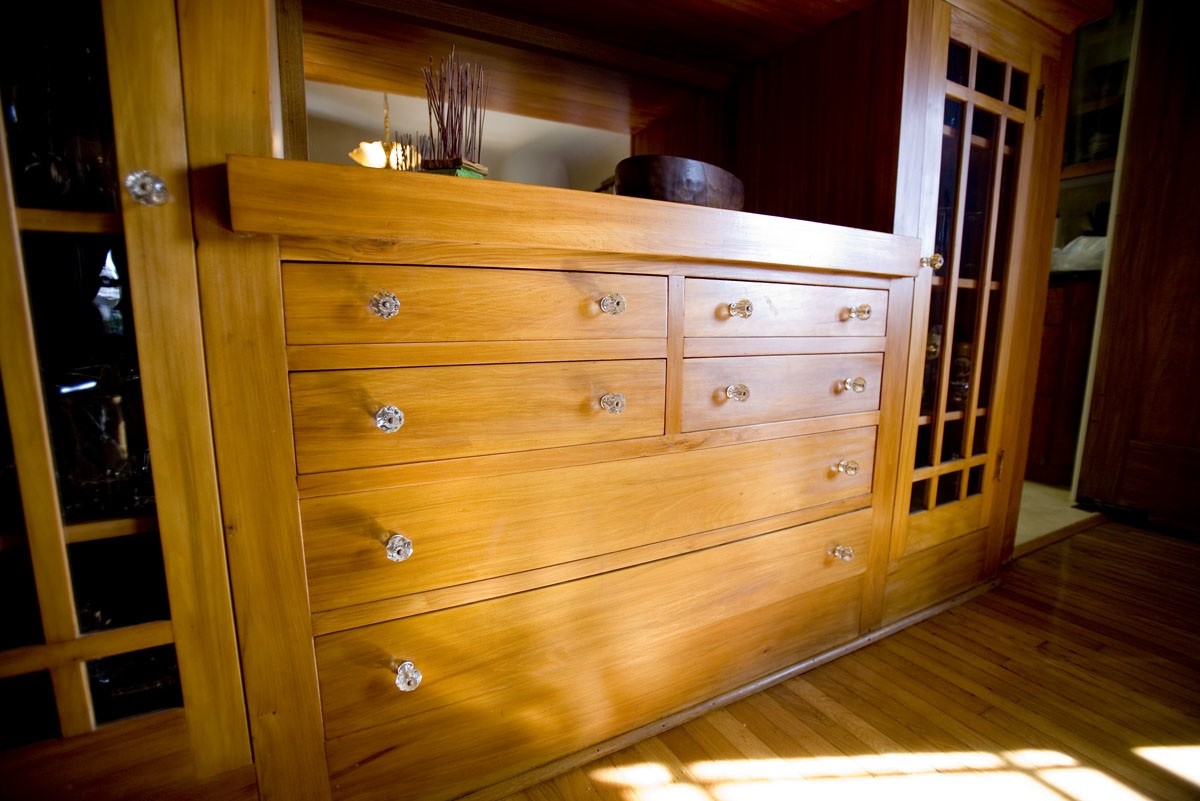
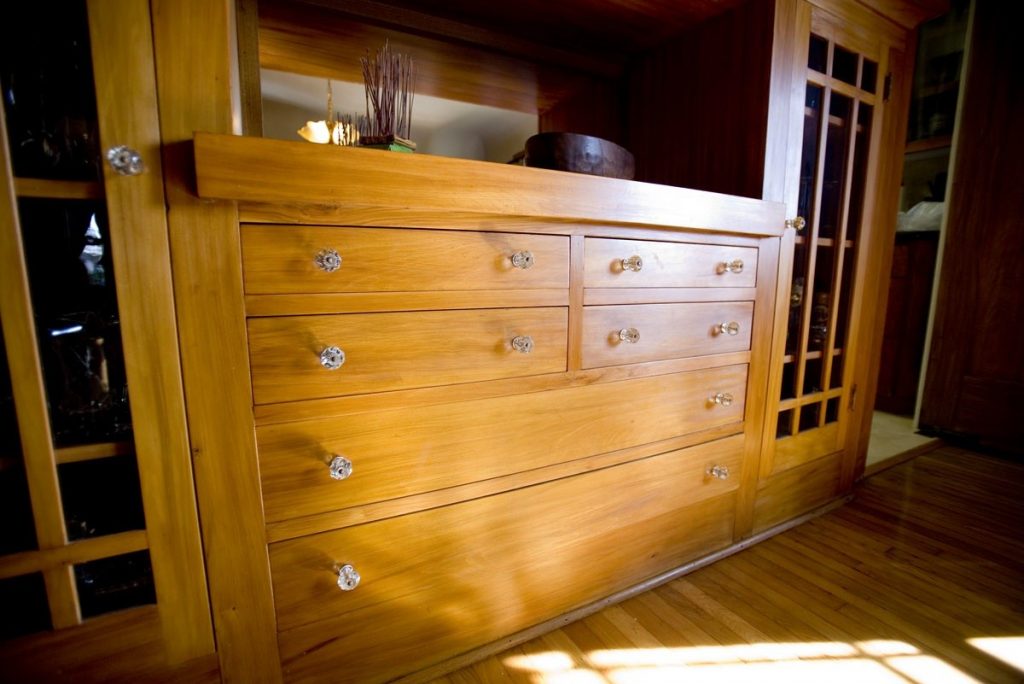
Wood trim makes the historic home historic. Without it, all you’ve got is an old house—and a bare spot where your china cabinet used to be.
What’s up with love, anyway? Some say it makes the world go round. Others say it’s just a polite word for the biological imperative to go forth and procreate. Scientists tell us on a chemical level it has more in common with fear than affection—the release of endorphins, the jolt of adrenalin, the racing heart. You might as well be falling off a cliff as falling in love. For dogs and babies, it seems to involve food. For a couple of guys in a bromance, it involves sporting events and beer. For the women I’ve known, it involves a misunderstanding. A big misunderstanding. And I’m still sorry. For Subaru, it has something to do with engineering. At least I think that’s what they’re saying in those ads. But I’m no engineer.
The point is: When it comes to the really important stuff, nobody knows anything. You’ll hear a lot of claims, some sketchy facts, some bad poetry. But enlightenment? That’s up to you.
Which brings us to the subject of wood. Or to be specific, architectural millwork. It doesn’t exactly make the world go round, but it does make the historic home historic. Unfortunately, like all the other big topics, wood trim is shrouded in a fog of misinformation. Someone has probably told you your wood is worthless. Or priceless. Or something it’s not—like “Gumwood.” Previous occupants have torn it out, put it back where it doesn’t belong, thrown pieces of it under the house or in the garage or attic, sold it to salvage yards, turned it into garage cabinets, painted it, sanded it, stripped it and knocked it around, called it names and generally abused it. Then you came along and loved it for what it is. Or what you think it is. You’re not sure. Talk about unconditional love! For an unidentified wooden object!
So what’s up with wood trim, anyway?
Basically, the wood trim in your old house is there for four reasons: One, to protect plaster walls. Two, to cover the gaps that inevitably occur during construction (and those that exist in order to allow for expansion and contraction, such as the gap between wood plank floors and baseboards). Three, to provide storage and seating. And four, because it’s beautiful. When your house was originally built, the wood trim was part of a design scheme that had its basis in the classical architecture of the Greeks and Romans. The Greeks thought correct proportion could be logically studied and codified. This system of esthetics was taught in industrial arts classes at the turn of the last century, and was part of the basic knowledge of trim carpenters in the early 1900s.
The shape of molding and its angle is determined by its relation to the eye of a standing person, so molding below the eye, such as the shoe, stands proud of the baseboard and curves outward. Molding above the eye coves inward and angles toward the viewer. (Molding at eye level should appear flat.) If this sounds complicated, you’re right.
The molding in a typical Craftsman-style bungalow is made up of eight basic shapes: Scotia, Cavetto, Ogee, Reverse Ogee, Astragal, Torus, Ovolo and Fillet. These shapes could be combined to form a plate rail, picture rail or crown molding. In earlier architectural styles—high-style Georgian, for example—the components of a Greek temple—columns, plinth, pedestal, architrave, frieze and so on—were carefully replicated in the trim around interior doors. Some of these elements appear in San Diego houses from the 1920s, particularly those in the Colonial Revival style. But in most early 20th century houses, these elements were simplified (the fluted, column-like door casings of the Victorian era became a simple, straight, unadorned casing of the craftsman era). Nevertheless, architects and master builders from the early part of the 20th century would have been conversant with all these elements and understood what style they belonged to. The more skilled and innovative builders, such as Irving Gill or Richard Requa, then modified or streamlined these elements to create something new and uniquely their own.
For today’s old-house owner, molding serves an additional purpose. It tells the story of your house. Architects, master builders and carpenters all signed their work (sometimes literally, with a pencil, but most often with design elements unique to them). Millwork inside the house—the china cabinet, for example—often mirrored millwork visible from outside the house—windows, for example. So the proportions of the partitions in the china cabinet doors and the mullions in the front windows often matched. Some builders had design themes that carried from one project to the next, and one part of the house to the next. Nathan Rigdon, for example, liked columns. His porches had classical round cement columns worthy of the Parthenon. His china cabinets had octagonal columns. (Sometimes he used octagonal columns to divide rooms, or to hold up the fireplace mantel.) If you have octagonal columns in your house, it’s reasonable to assume it was either built by Rigdon, or by someone associated with him.
The millwork in your house also reveals your house’s style. There are dozens of different recognizable house styles. One guide, Identifying American Architecture, lists nearly 40, from the early 1600s to the 1940s, each with its own interior treatment.
The millwork you have will also tell you what you’ve lost. Every house has missing trim. The scrap of crown molding over the bathroom door tells you what the crown in the rest of the house looked like, and the picture rail as well. And despite what you’ve been told, if you don’t have much trim in your bungalow, it’s not because your builder was too cheap to put it there. You just have to figure out what it looked like and where it went, and then you can put it back. Anything is possible. Sometimes if you sit there long enough and stare at it, your wood will speak to you. It might even tell you what it is.
Not sure what your wood is telling you? E-mail us with a photo (or to schedule an appointment) at [email protected].


