



By Christy Scannell
SDUN Editor
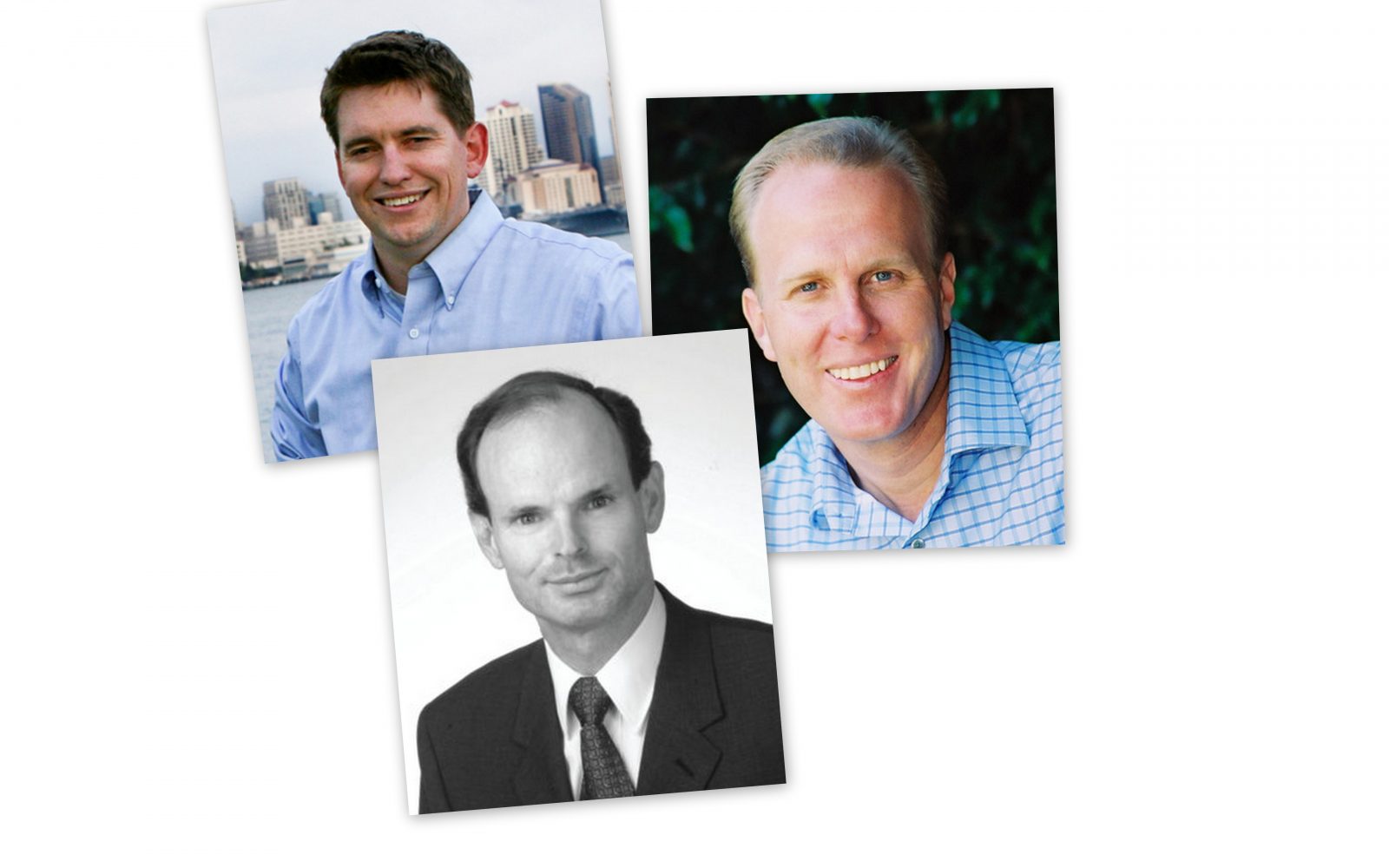
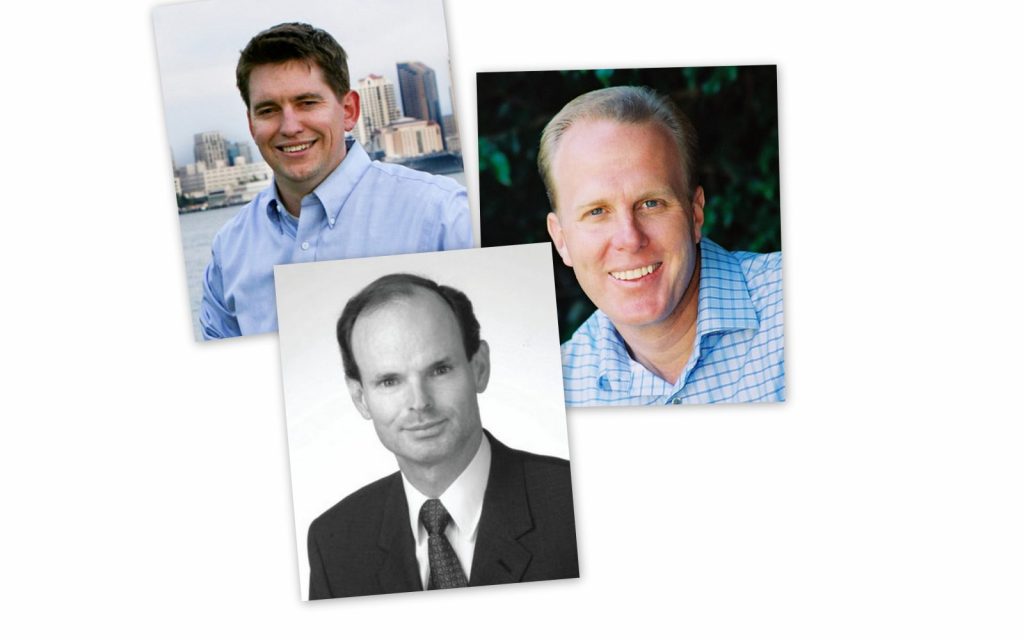
At the June 8 primary election, voters will choose between three candidates for District 2 City Councilmember: incumbent Kevin Faulconer, mechanical engineer Patrick Finucane and Pacific Beach property manager Jim Morrison. SDUN Senior Editor Christy Scannell asked the candidates about city issues, and what they perceive as Uptown’s needs and distinctives.
Q: While San Diego has been called “Enron by the Sea,” some measures have been taken to restore its financial credibility. What further action needs to be taken to ensure the city’s stability?
Faulconer: As chairman of the city’s audit committee, I’ve led the fight for financial reform. We now have instituted an independent audit committee comprised of citizen members. And we now have an independent auditor that reports to the audit committee, not to city management. And those changes have been extremely important for openness and transparency. When I took office the city was frozen out of the capital markets and had its credit ratings suspended. Both of that has now changed. And so San Diego is now leading the way for other cities in terms of municipal disclosure but there’s a lot more to do. My key focuses will continue to be to look at pension reform as well as retiree health care reform. Those are key to our long-term financial health.
Finucane: San Diego is facing record deficits in the next five years. The No. 1 thing SD needs to do is balance the revenue with the spending. So currently we are in a situation where we have cut services for the last five years and we still haven’t addressed the fundamental problem of lack of revenue based on the level of spending. Our major problem is that a lot of expenses that are in the general fund for San Diego are not in the general fund for other California cities. The general fund is made up of property taxes, sales taxes and various other ones. But in San Diego we also include trash in that, we also include storm water compliance in that, which other cities don’t. They take that out of the general fund by paying for it with user fees. And I think San Diego is eventually going to need to do something like that.
Morrison: I’d like to see us go back to putting some money in the bank. When I first started on the planning committee in the early ’90s, our council representatives informed us that the city had a billion dollars in the bank. It seems like almost every municipality is investing in Wall Street and for higher gain. I’d like to see us go back to something that we can actually in a time of economic downturn or emergency go to an actual bank and obtain some funds.
Q: Downtown and Uptown struggle with how to care for the homeless. Many proposals exist to help solve the problem but what do you think is the bottom-line answer for serving San Diego’s homeless population?
Faulconer: Once again I’ve tried to be a leader on that issue where we convened a task force that led to asking providers for proposals on how to best serve our homeless population. I sit on the Land Use and Housing Committee and we are looking at – the important thing to remember is homelessness unfortunately is a citywide issue – so we are moving forward on a downtown permanent intake center. And I am optimistic that we will be able to have that completed. But what’s important is that every part of the city will need to do its share to attack this problem. We want to make sure that we give people the help that need that help but also incentivize people to transition out of homelessness.
Finucane: Ultimately addressing the homeless population needs to be a combination of services and outreach. Because many homeless people have underlying mental or addiction problems and without addressing that we are never going to be able to get a handle on the homeless population. Unfortunately we also have been avoiding spending any real city resources on it. The winter shelter is a drop in the bucket compared to the number of people who are homeless on the streets. But fundamentally mental health-type issues are generally more of a county issue and so San Diego needs to work closer with county government to provide the services that homeless people need.
Morrison: My unique program in regards to the homeless is actually putting them back to work. I’d like to see a more aggressive campaign from the City Council and the Mayor’s Office in regards to enticing companies to come to San Diego and/or grow the companies that are here. In the short term there is a proposal for a homeless shelter at the World Trade building in downtown San Diego and I’d like to see that move forward. But in the long run I miss the 1990’s when everyone was working and I’d like to see us put everyone back to work.
Q: Which two issues in your part of Uptown require the most urgent action and what is your plan to address them? (Uptown’s District 2 neighborhoods include Old Town, Mission Hills, Bankers Hill/Park West and Little Italy.)
Faulconer: One of the big picture items that I fought very hard for was to update the Uptown community plan and we helped put that plan toward the front of the line and that community outreach has begun. We have some of the most diverse and historic neighborhoods in the entire city. And we need a community plan that reflects that, that respects our history and provides for the right community input. So that is a very important plan that will guide the future of Uptown for the next 20 years. So I think that’s one of the more important issues. We’re working with the community also for example up in Mission Hills for a new Vons that can be integrated into the community. I’m excited about the opportunity for that. And just continue with utility-line undergrounding, historic lighting. There’s a lot of important infrastructure projects happening right now.
Finucane: The biggest issues that are facing our neighborhoods are also the issues that are facing the city in general, which are city finances and future planning for the city. So city finance, the problem is because of our huge pension deficit and liability we are continuing to cut services to neighborhoods. So you can see that neighborhoods don’t get utility undergrounding, the paving of the roads. Fire service, we’re continuing to cut fire protection and police protection. And so I think the biggest issues facing the neighborhoods are caused by the financial problems downtown. The second one I think is huge is future planning for water in San Diego. We import 90 percent of our water. Without future planning, our water prices are going to go through the roof because we’re at the very end of the pipeline. And we continue to add people to development but we’re not developing any new water resources. So that’s why I strongly think that we need to go ahead with local water recycling since we drink water that’s already been reused from Las Vegas. It’s way better to control the quality here locally than just continuing to import water.
Morrison: From what I understand they’re worried about density and height limits, if I understand correctly, from one of the projects that was trying to get off the ground in Hillcrest. Another thing that comes to mind I was reading in your publication in regards to the parking meters. It seems to be like there is infighting going on in regard to splitting off and the funds not being divvied up. Each community feels that they’re not getting their fair share. I’d like to get in and mediate that. Also, I’m worried about because of the lack of horse patrols in Balboa Park that we might see a resurgence in crime. Those were an extreme deterrent in that park.
Q: Where would you take a first-time visitor to District 2’s Uptown neighborhoods that would best showcase Uptown’s qualities?
Faulconer: I think there’s no denying that a visitor would love to see our history in Old Town and I think that’s a good part of San Diego and there’s a lot of great amenities there. And I’d also take them up to Mission Hills as well just to walk around the neighborhood up there on Goldfinch and see the historic homes and the great neighborhood shops that are there. That’s a great slice of San Diego. And I’d probably take them over to the First Avenue Bridge because we just reopened it. That is just such a classic iconic structure San Diego structure and I was glad we were able to retrofit that and restore that bridge to its to its former grandeur.
Finucane: Where I have is Balboa Park and the amenities in Balboa Park, whether it’s the museums or the zoo.
Morrison: I know on Fifth they have some great restaurants. Mr. A’s comes to mind immediately. I’ve had some great dinners there. I would take them there first. That view is second to none.
Q: Which of your personal traits could use improvement to better serve our community and what is your plan to improve that personal trait?
Faulconer: Probably patience. I’m always pushing to get projects done sooner. And the bureaucracy at City Hall takes its toll sometimes and I don’t have a lot of patience with that but I think it’s important and that’s my job to advocate for Uptown and to push for our perspective and to don’t give up.
Finucane: I think one of the things that I need to improve is public speaking. Although I do a lot of public speaking running for office, I always feel I can do a better job of explaining to people complicated issues involved with the city and city finances. I continue to work on being able to explain issues to voters completely and succinctly at the same time.
Morrison: I guess I’m a little bit shy but I am gregarious and I do like to be around people. Maybe reaching out even more to people as opposed to what I’ve done in the past. Finding the time to reach out to people, yes. I would like to work on that more.


